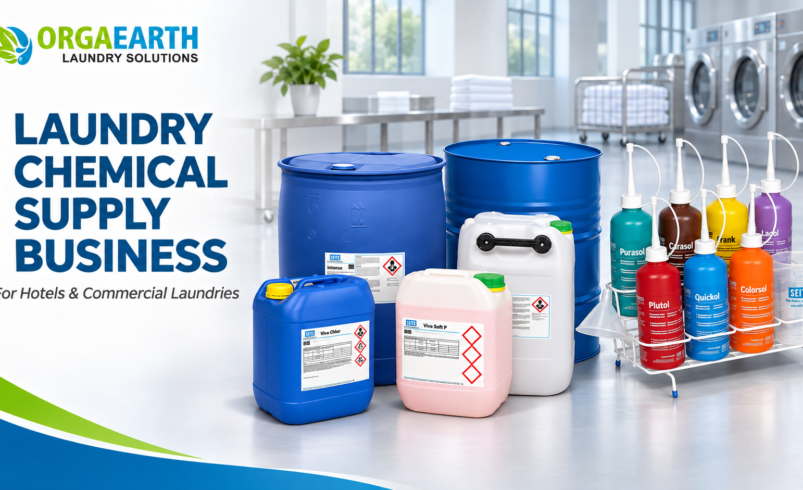

Every hotel with an in-house laundry needs cleaning products to process bedsheets, towels and uniforms. Commercial laundries also depend on regular chemical supplies to keep their operations running.
For entrepreneurs, this creates an interesting opportunity. Instead of selling a product that customers purchase only once, a business supplying laundry chemicals could build repeat relationships with hotels, resorts and professional laundry operators.
However, starting a supply business involves more than buying detergent in bulk and reselling it.
You need reliable customers, suitable products, dependable deliveries and enough working capital to manage monthly orders.
So, is a commercial laundry chemical supply business worth starting in India? Here’s what you should consider before investing.
Is a Laundry Chemical Supply Business Profitable in India?
Professional laundry products are consumables. Businesses that wash linen regularly need to replenish their supplies.
This creates opportunities for repeat sales, particularly when customers operate their machines throughout the week.
For example, a hotel washing hundreds of kilograms of linen daily may purchase detergent, fabric conditioner and other products at regular intervals.
However, recurring demand does not guarantee profitability.
Your earnings depend on product margins, transportation, inventory costs, customer payment terms and the volume each client purchases.
A successful supplier needs to balance competitive pricing with consistent product availability and customer service.
How Can You Start a Commercial Laundry Chemical Supply Business?
There are several ways to enter this market without manufacturing chemicals yourself.
| Business Model | How It Works |
| Independent reseller | Purchase suitable products from suppliers and resell them to commercial customers |
| Authorised distributor | Supply products under an agreement with a manufacturer or brand |
| Supply and technical service | Combine product delivery with appropriate dosing and wash-process guidance |
Each model requires different levels of investment, technical knowledge and supplier responsibility.
Before choosing a model, check purchase terms, minimum order quantities, delivery coverage and any restrictions on resale.
An authorised distribution arrangement should only be advertised after obtaining formal approval from the relevant manufacturer.
Who Buys Commercial Laundry Chemicals in Bulk?
Identifying the right customers is one of the most important steps in building this business.
Potential buyers include hotels with in-house laundries, industrial washing plants, laundromats, retail laundry chains and uniform-processing businesses.
Healthcare laundries may also purchase specialised products for validated cleaning processes.
The purchasing decision is usually made by a business owner, procurement manager, laundry supervisor or plant manager.
Remember that hotels outsourcing their washing may not buy chemicals directly. In those cases, the contracted laundry operator could be your actual customer.
Focus on organisations that process garments or linen regularly and have genuine purchasing requirements.
Which Laundry Chemicals Should You Stock?
Commercial customers need products suited to their fabrics, soil conditions and washing programmes.
Common product categories include:
| Chemical Category | Main Application |
| Main-wash detergent | General cleaning and soil removal |
| Alkaline booster | Supporting appropriate heavy-soil washing |
| Destainer | Treating suitable stained or discoloured textiles |
| Laundry sour | Neutralising residual alkalinity |
| Fabric conditioner | Improving fabric feel where appropriate |
| Spotting chemicals | Treating specific stains before cleaning |
Not every customer requires every product.
For example, hotel bedsheets, industrial uniforms and delicate garments may need different cleaning processes.
Product selection should consider fabric compatibility, water hardness, machine type and manufacturer instructions.
Starting with a focused range of proven products may be more practical than carrying excessive inventory.
How Much Laundry Chemical Can Five Hotels Purchase Monthly?
Understanding chemical consumption helps estimate potential sales and stock requirements.
Consider a hypothetical business supplying five hotels.
| Planning Factor | Example |
| Hotel customers | 5 |
| Laundry processed per hotel daily | 200 kg |
| Monthly operating days | 30 |
| Combined monthly linen volume | 30,000 kg |
| Assumed detergent consumption | 10 ml/kg |
| Estimated detergent requirement | 300 litres |
The calculation is:
30,000 kg × 10 ml = 300,000 ml, or 300 litres.
This represents only the assumed detergent requirement. Other products would need separate calculations.
The dosage is illustrative, not a recommendation for any particular formulation.
Actual consumption depends on product concentration, soil levels, water conditions and validated dosing instructions.
This type of calculation helps suppliers estimate reorder frequency and avoid unnecessary inventory.
How Much Investment Is Needed to Start This Business?
There is no universal startup budget for commercial chemical distribution.
Investment depends on the number of products stocked, supplier terms, storage facilities and the locations served.
Major expenses include opening inventory, suitable storage, transportation, customer acquisition and working capital.
You may also need insurance, applicable business registrations, staff training and appropriate chemical-handling arrangements.
A small supplier serving a limited geographical area may operate differently from a distributor handling large institutional contracts.
Before purchasing stock, secure supplier quotations and estimate realistic monthly demand.
How Much Can You Earn From Monthly Chemical Supply Contracts?
Consider a hypothetical supplier serving ten regular business customers.
| Monthly Financial Calculation | Example |
| Active customers | 10 |
| Average monthly sales per customer | ₹20,000 |
| Total monthly revenue | ₹2,00,000 |
| Product purchase cost | ₹1,50,000 |
| Gross profit | ₹50,000 |
| Delivery and operating expenses | ₹25,000 |
| Operating surplus | ₹25,000 |
These are illustrative assumptions, not verified market margins or guaranteed earnings.
The remaining amount is before applicable tax, financing costs and expenses not included in the example.
Cash flow also matters. Customers paying after 30 or 60 days can create funding pressure even when orders are profitable.
How Can You Get Your First Ten Commercial Customers?
Start by listing hotels, laundromats and industrial laundry facilities within a manageable delivery area.
Contact purchasing managers or laundry supervisors and understand their current products, consumption and operational problems.
Rather than competing only on price, explain how suitable chemical selection, dependable deliveries and controlled dosing can support their washing process.
Where appropriate, offer a documented product trial with qualified technical assistance.
Compare cleaning results, dosage and actual cost per kilogram of processed linen.
Focus on building repeat relationships rather than attracting customers through discounts that cannot be maintained.
Should You Sell Cheap or Concentrated Laundry Chemicals?
A lower price per litre does not automatically mean a lower washing cost.
Concentrated products may require a smaller dose, but performance and suitability still need to be verified.
For example, a detergent priced at ₹150 per litre and used at 5 ml/kg costs ₹0.75 per kilogram of linen.
A product priced at ₹100 per litre and used at 10 ml/kg costs ₹1 per kilogram.
These hypothetical figures demonstrate why dosage matters.
Customers should also compare cleaning quality, rewash frequency, textile compatibility and technical support.
The objective is reliable washing performance at a sustainable processing cost.
How Can You Secure Monthly Chemical Supply Contracts?
Regular supply agreements help both suppliers and customers plan purchases.
A clear agreement should define product specifications, expected quantities, delivery schedules, pricing and payment terms.
It should also explain how shortages, damaged containers and product complaints will be handled.
Avoid treating estimated monthly consumption as guaranteed sales unless minimum purchase commitments are included.
Maintain stock records and review consumption regularly so replenishment follows actual demand.
What Safety and Legal Requirements Should Suppliers Consider?
Chemical distribution requires appropriate handling and storage practices.
Suppliers should maintain relevant product safety data sheets, follow container-labelling requirements and store incompatible chemicals separately.
Employees responsible for handling products need suitable safety training and protective equipment.
Business registration, taxation, storage, transport and other permissions depend on the chemical formulations, quantities and operating location.
Check applicable requirements with the relevant authorities and suppliers before starting operations.
How Orgaearth Can Help You Source Professional Laundry Chemicals
Orgaearth Laundry Solutions supplies professional cleaning products for hotels, hospitals, laundromats, commercial laundries and dry-cleaning businesses.
Its range includes commercial detergents, fabric-care products, spotting solutions and specialised garment-cleaning chemicals.
Businesses evaluating suitable formulations can explore professional laundry chemicals from Orgaearth and enquire about available products, application requirements and technical guidance.
Orgaearth also offers chemical dosing solutions for commercial laundry operations.
Entrepreneurs interested in reselling products should independently confirm supplier terms and whether any authorised distribution arrangement is available.
Conclusion: Is a Laundry Chemical Supply Business Worth Starting?
A commercial laundry chemical supply business can offer opportunities for recurring revenue, particularly when customers operate laundries throughout the year.
However, sustainable profitability requires dependable suppliers, responsible product selection, competitive operating costs and careful cash-flow management.
Start by understanding local demand and identifying customers with regular purchasing requirements.
With the right products, service approach and commercial planning, entrepreneurs can build a supply business around the continuing needs of professional laundries.
Frequently Asked Questions
1. Is a laundry chemical supply business profitable?
It can be profitable when repeat orders and product margins cover purchasing, storage, delivery and operating expenses. Actual earnings depend on customer volume and costs.
2. Can I sell laundry chemicals without manufacturing them?
Yes. You may operate as a reseller or under an authorised distribution agreement, subject to supplier terms and applicable requirements.
3. Which laundry chemicals are commonly used in hotels?
Hotels may use professional detergents, suitable boosters, destainers, neutralisers, fabric conditioners and spotting products according to their wash programmes.
4. How much investment is needed to start?
Investment varies according to opening inventory, supplier minimum orders, storage arrangements, transport and working capital.
5. How do I find hotels that purchase laundry chemicals in bulk?
Identify hotels with in-house laundry facilities and contact their procurement or laundry managers to discuss consumption, product requirements and purchasing arrangements.
6. How much detergent does a commercial laundry use per kilogram?
There is no universal dosage. Consumption depends on the formulation, fabric type, soil level, water quality and manufacturer’s recommendations.
7. Are concentrated laundry chemicals better for commercial businesses?
They can offer lower cost per wash when correctly dosed, but performance, fabric compatibility and overall process costs must also be evaluated.
Contact Us:
Orgaearth Laundry Solutions
Plot no. 774, Udyog Vihar, Phase 5, Gurugram, Haryana, India-122016
Email: marketing@orgaearth.com
Contact No.- +91 7042912777