

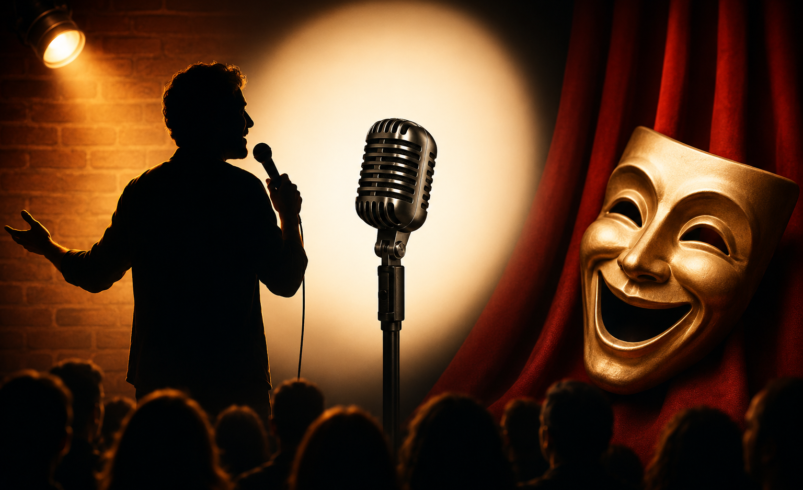

Stand-up comedy is one of the most unique forms of entertainment in the world. Unlike movies, television shows, or theatrical performances, stand-up comedy places a single performer directly in front of an audience with the sole purpose of making people laugh. There are no elaborate sets, special effects, or supporting actors. A microphone, a stage, and a comedian are often all that is needed. Yet creating a successful stand-up performance is far more challenging than it appears.
The art of stand-up comedy combines storytelling, observation, timing, creativity, confidence, and audience connection. Great comedians have the ability to transform everyday situations into hilarious experiences that audiences can relate to. Through humor, they make people see familiar situations from a completely different perspective. This ability to create laughter while connecting emotionally with audiences is what makes stand-up comedy a true art form.
Over the years, stand-up comedy has evolved from small club performances into a global entertainment industry. Today, comedians perform in theaters, arenas, comedy festivals, and on streaming platforms that reach millions of viewers worldwide. Despite these changes, the essence of stand-up comedy remains the same: one person sharing thoughts, stories, and observations in a way that creates laughter and connection.
The Origins of Stand-up Comedy
The roots of stand-up comedy can be traced back centuries. Humor has always been a part of human culture. Ancient storytellers, court jesters, and performers entertained audiences with jokes and witty observations long before modern comedy clubs existed.
Modern stand-up comedy began to take shape during the nineteenth and early twentieth centuries through vaudeville shows, music halls, and variety performances. Entertainers would perform short comedy routines between musical acts and other performances. These early comedians developed many of the techniques still used today, including punchlines, audience interaction, and storytelling.
As radio and television became popular, comedians gained larger audiences. The rise of comedy clubs in the mid-twentieth century created dedicated spaces where comedians could perform regularly and experiment with new material. These venues helped shape stand-up comedy into the art form recognized today.
Why Stand-up Comedy Matters
Many people view comedy simply as entertainment, but stand-up comedy serves a much deeper purpose. Humor helps people cope with stress, navigate difficult situations, and find joy in everyday life. A great comedian can make audiences laugh about challenges they face while offering new perspectives on common experiences.
Comedy also plays an important social role. Throughout history, comedians have used humor to discuss cultural trends, politics, relationships, technology, and social issues. Because laughter creates openness, audiences are often more willing to consider ideas presented through comedy than through serious discussion.
Stand-up comedy brings people together regardless of age, background, or profession. A room full of strangers can become connected through shared laughter. This ability to unite people through humor is one of the reasons stand-up comedy continues to thrive across cultures and generations.
The Foundation of Every Great Joke
At the heart of stand-up comedy lies the joke. While jokes may seem simple, crafting an effective joke requires skill and structure. Most jokes follow a basic format consisting of a setup and a punchline.
The setup creates an expectation in the audience’s mind. It introduces a situation, idea, or story that appears to be heading in a predictable direction. The punchline then surprises the audience by delivering an unexpected twist. This surprise creates laughter because it challenges assumptions and catches listeners off guard.
Successful comedians understand that joke writing is not just about being funny. It is about guiding the audience’s expectations and then cleverly changing direction at exactly the right moment. The more skillfully this process is executed, the stronger the audience’s reaction tends to be.
The Importance of Timing
Timing is often considered one of the most critical elements in stand-up comedy. Even a well-written joke can fail if delivered at the wrong moment. Great comedians know precisely when to pause, when to speak quickly, and when to allow the audience time to react.
A pause before a punchline can build anticipation. A pause after a joke can allow laughter to develop naturally. Timing also helps comedians control the rhythm of their performance and maintain audience engagement.
Experienced comedians spend years refining their timing. They learn how different audiences react, how long to wait before delivering a punchline, and how to adjust their performance based on the energy in the room. These subtle skills often separate good comedians from truly exceptional performers.
Observation as a Source of Humor
Many of the best stand-up routines come from simple observations about everyday life. Observational comedy focuses on common experiences that audiences recognize immediately. Topics such as family interactions, workplace situations, technology frustrations, travel experiences, and social behavior often become material for stand-up performances.
The strength of observational comedy lies in its relatability. Audiences laugh because they recognize the truth behind the comedian’s observations. The comedian acts as a mirror, reflecting ordinary situations in a way that highlights their humor.
Successful observational comedians pay close attention to the world around them. They notice details that most people overlook and transform those details into entertaining stories and jokes.
Storytelling in Stand-up Comedy
Storytelling has become an increasingly important part of modern stand-up comedy. Rather than relying solely on short jokes, many comedians build entire routines around personal experiences and narratives.
Storytelling allows comedians to create emotional connections with audiences. A funny story often includes relatable characters, interesting situations, and unexpected outcomes. As audiences become invested in the narrative, the humor becomes even more effective.
The best comedy stories feel natural and conversational, yet they are often carefully crafted and rehearsed. Comedians refine every detail to maximize both engagement and laughter. This combination of authenticity and structure makes storytelling one of the most powerful tools in stand-up comedy.
Building a Unique Comedy Voice
Every successful comedian develops a unique voice. This voice reflects their personality, perspective, experiences, and style of humor. Some comedians are energetic and expressive, while others are calm and understated. Some focus on personal stories, while others specialize in social commentary or absurd observations.
A unique comedy voice helps performers stand out in a competitive industry. Audiences are more likely to remember comedians who offer a distinct perspective rather than simply repeating familiar jokes and ideas.
Developing a comedy voice takes time. Most comedians spend years experimenting with different styles before discovering what feels authentic to them. Once they find their voice, it becomes a defining element of their career.
The Role of Audience Interaction
Unlike many forms of entertainment, stand-up comedy involves direct interaction between performer and audience. Comedians constantly read audience reactions and adjust their performance accordingly.
Audience interaction can take many forms. Some comedians ask questions, respond to comments, or engage in spontaneous conversations. Others simply use audience laughter and energy to guide the pace of their performance.
This interaction creates a unique experience every time a comedian performs. No two shows are exactly alike because every audience responds differently. The ability to adapt in real time is a valuable skill for any stand-up comedian.
The Challenge of Performing Live
Performing live is one of the most demanding aspects of stand-up comedy. Unlike actors following a script or musicians playing rehearsed songs, comedians rely heavily on audience reactions. If a joke fails, the silence is immediate and impossible to ignore.
This vulnerability makes stand-up comedy both challenging and rewarding. Comedians must develop resilience and confidence to handle unsuccessful performances. Every comedian experiences failed jokes, difficult audiences, and disappointing shows.
These experiences are often essential for growth. Failure provides valuable feedback that helps comedians improve their material and delivery. Many successful comedians credit their toughest performances for teaching them important lessons about their craft.
Writing and Refining Material
Writing comedy is a continuous process. Professional comedians constantly create new material, test jokes, and refine routines. A joke that seems hilarious on paper may not work well in front of an audience. Conversely, an offhand comment during a performance may generate unexpected laughter and become part of a future routine.
Comedy writing involves experimentation, revision, and persistence. Comedians often perform the same material multiple times while making small adjustments to wording, timing, and delivery. These refinements can significantly improve audience reactions.
The willingness to revise and improve material is a hallmark of successful comedians. Great comedy rarely emerges fully formed. It is usually the result of extensive practice and refinement.
The Influence of Personal Experiences
Personal experiences provide rich material for stand-up comedy. Many comedians draw inspiration from their childhood, relationships, careers, travels, and daily challenges. Sharing personal stories creates authenticity and helps audiences connect with the performer.
Humor often emerges from difficult or embarrassing experiences. Situations that were frustrating or uncomfortable at the time can become highly entertaining when viewed through a comedic lens. This ability to transform personal challenges into laughter is one of comedy’s most powerful qualities.
By sharing their experiences, comedians remind audiences that everyone faces similar struggles. This sense of shared humanity contributes to the emotional impact of stand-up comedy.
Comedy and Cultural Reflection
Stand-up comedy often reflects the culture and society in which it exists. Comedians comment on trends, behaviors, technologies, and events that shape everyday life. Through humor, they capture the spirit of a particular time and place.
Because comedy responds quickly to cultural changes, it often serves as a record of social attitudes and concerns. Topics that dominate public conversation frequently appear in stand-up routines. This relevance helps comedy remain fresh and engaging.
Cultural reflection also encourages audiences to think critically about the world around them. Humor can highlight contradictions, challenge assumptions, and inspire discussion without becoming overly serious.
The Rise of Digital Comedy
The internet has transformed the world of stand-up comedy. Social media platforms, video-sharing websites, and streaming services allow comedians to reach global audiences. Performers no longer rely solely on television appearances or live shows to gain recognition.
Digital platforms have created opportunities for emerging comedians to share clips, build audiences, and develop careers independently. Audiences can discover new talent from anywhere in the world with just a few clicks.
While technology has changed how comedy is distributed, the core principles of stand-up remain unchanged. Strong writing, effective delivery, and genuine audience connection continue to define successful comedians.
The Psychological Benefits of Laughter
Laughter provides numerous psychological and emotional benefits. Research has shown that laughter can reduce stress, improve mood, and strengthen social connections. Stand-up comedy contributes to these benefits by creating environments where people can relax and enjoy shared experiences.
Humor allows audiences to temporarily escape everyday pressures. It encourages positive emotions and helps people view challenges from a different perspective. For many individuals, attending a comedy show or watching a stand-up special is an effective way to recharge mentally and emotionally.
The ability to improve well-being through laughter demonstrates the broader value of stand-up comedy beyond simple entertainment.
The Future of Stand-up Comedy
Stand-up comedy continues to evolve as new generations of performers bring fresh perspectives and innovative styles. Advances in technology, changing audience preferences, and global connectivity will likely influence the future of the industry.
Virtual performances, online content, and international audiences are expanding opportunities for comedians. At the same time, live comedy remains highly valued because of the unique energy created by direct interaction between performers and audiences.
The future of stand-up comedy will likely combine traditional performance techniques with modern platforms, ensuring that humor remains accessible to people around the world.
Conclusion
The art of stand-up comedy is far more complex than simply telling jokes. It combines creativity, observation, storytelling, timing, audience awareness, and personal expression into a unique form of performance. Great comedians have the ability to transform ordinary experiences into memorable moments of laughter while creating meaningful connections with audiences.
From its historical roots to its modern digital presence, stand-up comedy continues to entertain, inspire, and unite people across cultures. Its power lies not only in generating laughter but also in helping audiences see the world through a different lens. As long as people seek joy, connection, and perspective, stand-up comedy will remain one of the most influential and enduring forms of artistic expression.