
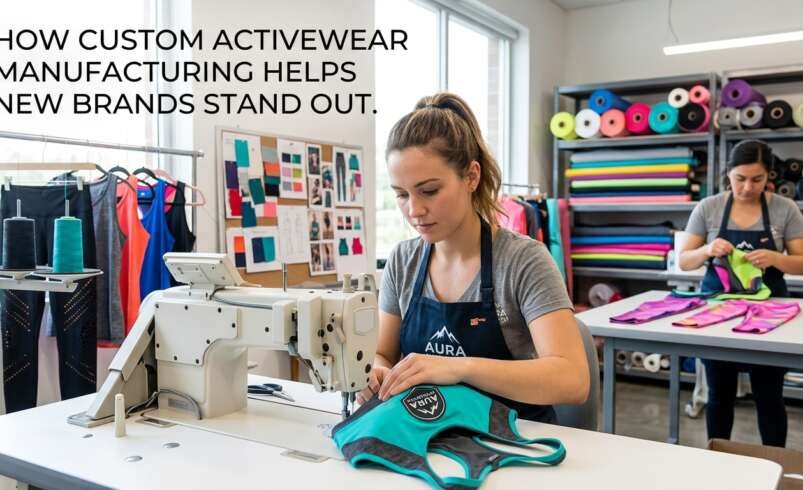

Launching an activewear brand today is about far more than putting a logo on leggings, sports bras, or performance tops. Consumers have become increasingly selective about what they wear to the gym, on a run, during travel, and throughout their everyday routines. They notice fabric performance, fit, stitching, comfort, durability, design details, and even how consistently a brand delivers from one collection to the next.
For new apparel companies, this creates both a challenge and an opportunity. Competing solely on price is difficult when established brands already have significant purchasing power and global recognition. A more sustainable strategy is to build a distinctive product identity through thoughtful design and dependable manufacturing. Custom activewear manufacturing gives emerging labels the ability to develop products around their own specifications instead of relying entirely on generic, ready-made inventory.
When the manufacturing relationship is managed correctly, customization can influence nearly every part of the customer experience. Fabric selection can support a particular training environment, patterns can be refined for a specific customer profile, trims can reinforce visual identity, and packaging can make an order feel more premium. The result is an activewear collection that gives customers a reason to remember the brand rather than treating it as another interchangeable option.
Why Differentiation Matters for New Activewear Brands
The activewear market contains everything from global sportswear corporations to independent online labels and specialized fitness communities. That means a new company can quickly become lost in a crowded category if its products look and feel indistinguishable from competing collections.
Differentiation starts with understanding exactly who the collection is intended for. A brand serving distance runners may prioritize lightweight moisture management and unrestricted movement. A strength-focused label may emphasize squat-proof fabrics, reinforced seams, supportive waistbands, and exceptional abrasion resistance. A lifestyle-oriented company might care more about soft hand feel, flattering silhouettes, neutral colors, and designs that transition from workouts to everyday activities.
Custom manufacturing makes it possible to translate that positioning into physical products. Instead of adapting a brand concept to whatever a supplier already has available, founders can work toward specifications that support the intended market.
- Distinctive silhouettes: Custom patterns can create recognizable shapes and proportions.
- Performance-focused materials: Fabrics can be selected according to stretch, recovery, breathability, weight, and moisture management.
- Consistent branding: Labels, trims, color palettes, and finishing details can be coordinated across a collection.
- Targeted functionality: Pockets, support zones, drawcords, panels, and closures can be designed around actual customer needs.
- Better product storytelling: A clearly defined manufacturing specification gives marketing teams tangible product benefits to communicate.
For an emerging label, these details can become part of its competitive moat. Customers may discover the brand through social media, influencers, or paid advertising, but repeat purchases are much more likely when the physical product delivers on the promise.
Custom Fit Can Become a Powerful Brand Advantage
Fit is one of the most important variables in apparel because customers experience it immediately. A garment can have attractive photography and compelling branding, yet still generate disappointing reviews if the waistband rolls, the fabric becomes transparent during movement, or the sizing differs significantly between products.
Custom activewear manufacturing allows brands to treat fit as a product-development discipline rather than an afterthought. A company can establish detailed measurements, grading rules, rise specifications, inseam lengths, waistband construction, compression levels, and other technical characteristics before production begins.
This is particularly valuable for brands serving a clearly defined audience. For example, an activewear company built around petite consumers may want shorter inseams and proportionally adjusted rises. A performance label targeting taller athletes may require extended lengths. A modest activewear brand may need different coverage requirements than a conventional gymwear company.
The process generally becomes stronger when founders use physical samples instead of approving designs based only on digital files. Pre-production samples can be worn, washed, stretched, and evaluated under realistic conditions. Feedback from these tests can then be translated into revisions before a larger production run.
That iterative process helps reduce a common problem for young brands: spending heavily on inventory before discovering that a product needs fundamental changes. The objective is not simply to manufacture quickly. It is to establish a repeatable product standard that can be maintained as the business grows.
Fabric Selection Shapes Performance and Perceived Quality
One of the clearest ways custom manufacturing can separate a new activewear label from competitors is through material selection. Consumers may not know the technical name of a particular textile, but they can immediately recognize how a garment feels and performs.
Important considerations include stretch and recovery, fabric weight, breathability, moisture management, opacity, abrasion resistance, softness, and colorfastness. The right combination depends on the product’s intended use.
| Product Type | Important Material Characteristics | Customer Benefit |
|---|---|---|
| Training Leggings | Four-way stretch, recovery, opacity, abrasion resistance | Secure movement and dependable coverage during demanding workouts |
| Performance Tops | Breathability, lightweight construction, moisture management | Improved comfort during high-intensity activity |
| Sports Bras | Supportive stretch, recovery, comfort, durability | Better stability without excessive restriction |
| Warm-Up Layers | Light insulation, flexibility, moisture management | Versatility before and after training |
| Gym Shorts | Durability, mobility, lightweight feel | Freedom of movement during training |
Material choices can also influence brand perception. A heavier, structured textile may communicate premium durability, while an exceptionally soft brushed fabric can support a comfort-first positioning. Recycled fibers may reinforce a sustainability narrative when supported by credible sourcing and documentation.
The key is alignment. A brand should not select a fabric merely because it is fashionable or inexpensive. The material needs to support the actual customer promise. If a company markets leggings for intense training, for instance, performance characteristics should take priority over superficial appearance.
Brand Identity Can Be Built Into Every Production Detail
A memorable activewear brand rarely depends on a logo alone. Strong visual identities are created through repeated design decisions that customers can recognize across multiple products.
Custom manufacturing gives founders control over those decisions. Color standards can be defined for seasonal collections, while custom labels, woven tags, heat transfers, embroidery, packaging, hardware, and other components can be coordinated into a unified system.
Consider a new fitness label that uses a distinctive muted color palette. If every collection repeats those tones while introducing different silhouettes, customers begin to associate the palette with the company. The same principle can apply to seam placement, logo positioning, zipper pulls, waistband construction, or signature paneling.
Accessories can extend that identity beyond garments. A customer who purchases a matching training bag, wallet, or travel accessory may continue interacting with the brand even when they are not wearing its clothing. This creates additional opportunities to build brand recognition through products that remain visible during commutes, trips, fitness classes, and everyday activities.
For brands expanding beyond clothing, working with specialized duffle bags suppliers can provide a practical route into complementary fitness and travel products. A coordinated duffle can carry the same colors, logo treatment, lining, and design language as an activewear collection, turning an individual apparel purchase into part of a broader lifestyle ecosystem.
Accessories Can Increase the Commercial Value of an Activewear Collection
Activewear brands often begin with a small number of garments because apparel establishes their core identity. As the customer base develops, however, accessories can become an important way to increase average order value and create additional touchpoints with customers.
Accessories have several commercial advantages. They generally do not require the complex size selection associated with apparel, making the purchase process simpler. They can also complement existing products without forcing a brand to create an entirely separate visual identity.
- Gym bags can complement training apparel and support fitness-focused positioning.
- Travel accessories can connect activewear with broader lifestyle use.
- Small leather goods can introduce premium products at different price points.
- Wallets and card holders can function as practical branded gifts.
- Matching accessories can support seasonal collections and promotional bundles.
This broader product strategy can be particularly useful for new brands attempting to increase customer lifetime value. A customer who initially purchases one pair of leggings may later buy a matching jacket, sports bra, training bag, or accessory. Each additional product creates another opportunity to strengthen the relationship.
Premium accessories can also make sense for collaborations and corporate programs. Limited-edition products featuring a fitness studio’s branding, event identity, or community colors can create a more complete merchandise offering than basic printed garments alone.
Premium Small Leather Goods Can Extend the Brand Beyond the Gym
There is an important distinction between building a fitness brand and building a lifestyle brand. Fitness apparel may be the entry point, but a successful company can eventually become part of customers’ broader daily routines.
Small leather goods provide one route for making that transition. A well-designed purse, card holder, or wallet can carry a brand identity into environments where activewear may not be appropriate. That creates a bridge between performance, travel, work, and everyday fashion.
For brands interested in a premium positioning, product details matter. Leather selection, edge finishing, stitching, lining, hardware, closures, and logo treatment can all affect perceived quality. Consistency is equally important: a premium accessory should feel like a natural extension of the apparel line rather than a disconnected product sourced simply to increase catalog size.
Brands targeting regional audiences can also use localized product concepts as part of their merchandising strategy. For example, companies interested in the New York market may explore personalized Leather purses NY as a complementary category that brings customization and lifestyle appeal into the broader brand assortment.
The larger lesson is that manufacturing flexibility allows a brand to evolve. An activewear label does not have to remain confined to leggings and performance tops forever. With careful product architecture, it can develop a coherent collection of garments, bags, and accessories that appeal to the same customer from multiple angles.
Customization Helps New Brands Control Their Product Story
Modern consumers encounter hundreds of product claims every week. Terms such as premium, performance, sustainable, innovative, and comfortable appear throughout the apparel market. Consequently, simply making those claims is rarely enough. Brands need products that substantiate their positioning.
Custom manufacturing can help connect marketing language with physical product attributes. If a company claims that its garments are designed for high-intensity training, its products should demonstrate appropriate stretch, recovery, construction, and durability. If the brand emphasizes minimalist luxury, the finishing details should support that impression.
This alignment is valuable because authentic product differentiation tends to be easier to communicate. Marketing teams can create content around actual construction details, wear tests, fabric characteristics, and design decisions rather than relying on vague promotional language.
It can also strengthen customer education. Product pages can explain why a particular waistband was developed, how a fabric handles movement, or why specific seams are positioned where they are. Behind-the-scenes manufacturing content can show prototypes and testing, giving customers a better understanding of what makes the product different.
Quality Control Protects a Young Brand’s Reputation
Established brands may have enough scale to absorb occasional quality problems, although they still face serious consequences when defects occur. For a new company, the impact can be much greater because early customers often influence reviews, referrals, social media discussion, and word-of-mouth growth.
A robust quality assurance process should therefore begin before bulk production. Clear specifications need to define measurements, tolerances, colors, fabrics, trims, stitching, labeling, packaging, and acceptable defect levels.
Pre-production samples are particularly valuable. They provide an opportunity to assess the finished garment before committing to a larger quantity. Wear testing can reveal issues that are difficult to identify from a flat technical drawing, including uncomfortable seams, insufficient stretch, waistband movement, or unexpected fabric behavior.
During bulk manufacturing, structured inspection procedures help identify deviations before defective products reach customers. Quality control should cover both visual characteristics and functional performance where appropriate.
| Quality Stage | What to Review | Why It Matters |
|---|---|---|
| Material Inspection | Fabric color, weight, texture, defects, and specifications | Prevents inconsistent raw materials from entering production |
| Sample Approval | Fit, construction, trims, branding, and functionality | Creates the production benchmark |
| In-Process Inspection | Stitching, measurements, assembly, and component placement | Allows problems to be corrected before completion |
| Final Inspection | Appearance, measurements, functionality, labeling, and packaging | Protects customers from avoidable defects |
Inventory Strategy Matters as Much as Product Design
New brands face a difficult balancing act. Ordering too little inventory can result in stockouts and missed sales, while ordering too much can trap cash in products that do not perform as expected.
Custom manufacturing becomes more commercially effective when product launches are connected to demand planning. Rather than treating every style as equally important, brands can monitor sales velocity, conversion rates, repeat purchases, return reasons, and customer feedback.
Those metrics can guide future production decisions. High-performing products may justify larger replenishment quantities, while slower styles can be produced more cautiously. Color and size data can also reveal which variations deserve greater inventory investment.
A practical launch process can follow several stages:
- Develop the product concept: Define the target customer, use case, design language, and commercial objective.
- Create detailed specifications: Document measurements, fabrics, colors, trims, branding, construction, and packaging requirements.
- Produce and test samples: Evaluate fit, comfort, durability, appearance, and functionality under realistic conditions.
- Approve the production standard: Establish the final sample as the benchmark for bulk manufacturing.
- Launch with controlled inventory: Use realistic demand assumptions rather than committing excessive capital to untested styles.
- Analyze performance: Track sales, customer feedback, returns, and repeat purchases.
- Replenish strategically: Increase production for proven winners while refining or retiring weaker products.
Why Private Label Manufacturing Can Accelerate Brand Growth
Building an activewear company does not necessarily mean operating a factory. In fact, outsourcing production to an experienced manufacturing partner can allow founders to concentrate on the activities where they create the most value: brand strategy, product direction, marketing, customer acquisition, community building, and retail relationships.
The right production partner can become an extension of the internal product team. Rather than simply receiving an order and producing it, a capable manufacturer can contribute knowledge about fabrics, construction methods, production feasibility, sampling, and quality assurance.
This becomes increasingly important as a company moves from a few initial styles toward a structured collection. More products mean more specifications, suppliers, components, production schedules, and quality checkpoints. Centralizing these processes through experienced private label fitness apparel manufacturers can help emerging brands build a more manageable production system while maintaining control over their product identity.
Private label production can also support brand consistency. Instead of sourcing each product from unrelated vendors, a coordinated manufacturing relationship can make it easier to maintain standards across apparel and complementary merchandise.
Adding Wallets and Small Accessories Can Create New Revenue Opportunities
Once an activewear company has established a recognizable aesthetic, small accessories can provide another way to monetize its customer base. Wallets are especially practical because they are functional, compact, and suitable for gifting.
From a merchandising perspective, wallets can be positioned as standalone products, bundle components, loyalty rewards, event merchandise, or complementary purchases. Their smaller size also allows brands to experiment with colors, materials, embossing, and limited-edition treatments without redesigning an entire apparel collection.
Brands considering bulk wallets should nevertheless evaluate construction quality carefully. Stitch consistency, edge finishing, material durability, hardware, card capacity, closure performance, and branding placement all contribute to the final customer experience.
The strongest accessory programs maintain the same design principles used throughout the apparel collection. If the clothing communicates understated performance, the accessories should not suddenly introduce unrelated visual elements. Cohesion helps customers recognize that every item belongs to the same brand world.
A Strategic Framework for Choosing a Manufacturing Partner
Not every manufacturer is equally suitable for an emerging activewear company. The cheapest quotation may not represent the lowest total cost if it results in inconsistent quality, long delays, excessive rework, or difficult communication.
| Evaluation Area | Questions to Consider | Strategic Benefit |
|---|---|---|
| Technical Capability | Can the manufacturer execute your fabrics, patterns, trims, and construction requirements? | Improves product feasibility and consistency |
| Sampling Process | How are prototypes reviewed and revised before bulk production? | Reduces expensive production-stage surprises |
| Quality Control | Are inspection procedures and acceptable defect levels clearly defined? | Protects customer experience and brand reputation |
| Scalability | Can production increase when successful products gain traction? | Supports growth without unnecessary supply disruption |
| Communication | Are specifications, timelines, changes, and approvals documented clearly? | Reduces misunderstandings throughout production |
| Category Flexibility | Can the relationship support apparel and complementary accessories? | Creates opportunities for broader product development |
It is also important to establish expectations before manufacturing begins. Production quantities, sample approvals, material standards, packaging requirements, lead times, inspection procedures, and revision policies should be documented clearly.
Building a Brand That Customers Can Recognize
The ultimate advantage of custom activewear manufacturing is not customization for its own sake. It is the ability to create a consistent product experience that customers can recognize and trust.
When the fabric feels intentional, the fit is reliable, the construction holds up, the branding is cohesive, and the accessories complement the clothing, the company begins to feel like a complete brand rather than a collection of unrelated products.
That consistency compounds over time. Customers who have a positive experience with one product are more likely to explore another. Strong products generate reviews and user-generated content. Those signals can improve acquisition efficiency. Growing demand then gives the company greater confidence when planning future collections.
For new brands, this creates a powerful cycle: thoughtful design leads to better products, better products strengthen customer trust, customer trust supports repeat purchases, and stronger demand creates opportunities for broader product development.
Frequently Asked Questions (FAQs)
What is custom activewear manufacturing?
Custom activewear manufacturing involves producing fitness and performance garments according to a brand’s specific design, material, sizing, construction, branding, and packaging requirements rather than relying entirely on generic ready-made products.
Why is custom manufacturing useful for new activewear brands?
It gives emerging companies greater control over fit, fabric performance, visual identity, product functionality, and quality. These factors can help a young brand establish a distinctive position in a crowded market.
What should brands test before approving activewear production?
Brands should evaluate fit, stretch and recovery, comfort, opacity where relevant, seam construction, fabric performance, colorfastness, branding placement, and overall durability. Wear testing and washing can reveal issues that are not obvious during initial visual review.
Can an activewear company expand into accessories?
Yes. Bags, wallets, purses, and other lifestyle products can complement an apparel collection and provide additional revenue opportunities. The strongest accessory strategies maintain a consistent visual identity with the core activewear line.
How can a new brand avoid over-ordering inventory?
Launching with controlled quantities, monitoring sales velocity, reviewing customer feedback, and replenishing proven products can reduce the financial risk associated with untested inventory. Production planning should evolve as actual demand data becomes available.
Build a Distinctive Activewear Brand From the Product Out
New activewear brands do not need to imitate the biggest names in the industry to compete successfully. They need a clear customer, a compelling product concept, dependable quality, and a manufacturing system capable of turning that concept into a consistent physical experience.
Custom manufacturing provides the foundation for that strategy. By controlling fabrics, fit, construction, branding, quality standards, and product extensions, emerging labels can create collections that feel intentional rather than generic. Adding carefully selected accessories can further strengthen the customer relationship and expand the commercial potential of the brand.
The opportunity is to think beyond the first garment. Build a product system, establish recognizable standards, test before scaling, and work with manufacturing partners that can support the brand as demand grows. When product quality and brand identity reinforce one another, every new collection becomes an opportunity to stand out more clearly.
Ready to turn your activewear concept into a distinctive product line? Start with a clear manufacturing strategy, define your quality standards, and choose a production partner capable of helping your brand grow from its first collection into a recognizable fitness lifestyle label.