


A Practical Guide to Selecting Tools for More Controlled Canister Workflows
A canister may appear to be a simple storage container, but its everyday performance also depends on how it is filled, opened, organised and maintained. The right Accessories Canister can support these tasks by helping operators handle compatible containers and their contents more consistently.
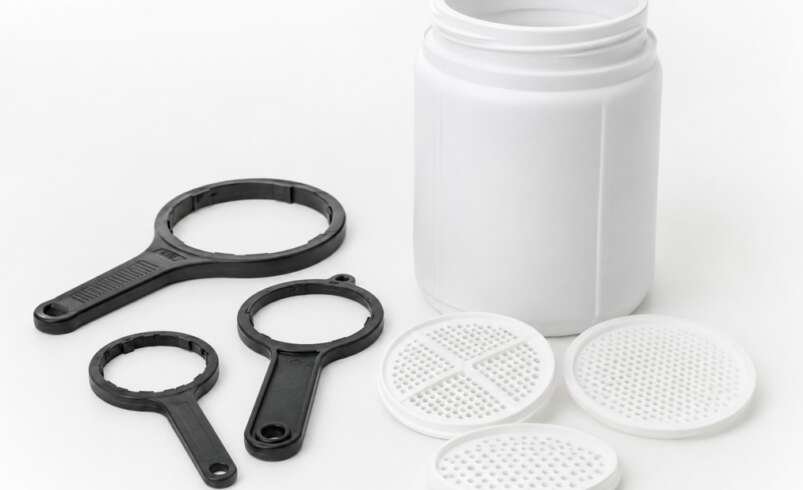
Accessories such as sieve inserts and canister keys perform different roles. An insert may help separate selected dry materials, while a suitable key can make a tightly fitted closure easier to operate. Each component must match the canister, closure and intended application rather than being treated as a universal solution.
What Are Canister Accessories?
Canister accessories are supplementary components or tools designed to work with particular container systems. They do not replace the canister or its closure. Instead, they can support operations such as opening, filling, separating, dispensing or organising stored materials.
The broader Canister range includes different container formats, capacities, materials and neck finishes. An accessory should therefore be selected only after the main container specification has been confirmed.
Important compatibility details may include:
- Canister material
- Nominal capacity
- Neck and thread designation
- Closure dimensions
- Accessory diameter
- Stored substance
- Required operating method
- Cleaning procedure
- Storage temperature
- Applicable workplace controls
An accessory that looks suitable may still fit incorrectly. Product references and technical dimensions should always be checked before use.
How Can a Sieve Insert Support Material Organisation?
A sieve insert creates an internal perforated section within a compatible canister. Depending on the design and application, it may support the separation, drainage or organisation of selected powders, granules or components.
The available canister accessories include an HDPE sieve insert designed for a compatible RD45 container system. This does not mean that every RD45 canister will automatically provide the same fit. Neck geometry, seating position and supplier specifications must also be considered.
Before using a sieve insert, assess:
- Perforation or mesh dimensions
- Particle-size distribution
- Material compatibility
- Required separation efficiency
- Risk of fines passing through
- Potential static generation
- Cleaning access
- Cross-contamination controls
- Mechanical loading
- Ease of removal
The insert should not be used as a substitute for validated filtration equipment where a defined filtration performance is required.
Why Use a Dedicated Canister Key?
Large or tightly applied closures can be difficult to operate by hand. A dedicated canister key distributes force around the closure and may reduce the need for improvised tools that could slip or damage the cap.
Canister keys are available for selected closure and thread formats, including RD45, RD51, RD61 and certain OV closure sizes. The marked size must correspond to the actual closure. Users should also confirm that the key engages correctly without deforming the cap.
Before opening a canister, operators should check:
- Container identity and label
- Condition of the handle and sidewalls
- Closure size
- Evidence of leakage or swelling
- Possible internal pressure
- Required personal protective equipment
- Ventilation requirements
- Spill-response arrangements
A canister key makes closure handling more controlled, but it does not remove chemical, pressure or contamination hazards.
Which Container Format Should Be Used?
Container selection should come before accessory selection. Compact Canister Bottle formats can support smaller-volume storage and handling tasks where a large industrial canister would be unnecessary. Their shape, capacity and thread specification still need to match the intended closure and filling process.
For broader storage comparisons, Containers, Bottles, Tins And Canisters includes multiple packaging formats for laboratory and industrial workflows. Buyers can compare materials, opening styles and capacities before building a complete container system.
The smallest suitable container is not always the best choice. Adequate headspace, filling accuracy, manual-handling limits and product expansion must all be considered.
What Tools Help During Canister Filling?
Clean and controlled filling reduces spills, external residue and unnecessary product loss. Suitable Funnel options can guide compatible liquids or free-flowing solids into a canister with greater control. The funnel outlet must fit inside the opening without blocking air displacement or creating an unstable arrangement.
Where portions must be prepared before transfer, a compatible Measuring Cup can support routine volume handling. Its graduations, material and capacity should match the required level of accuracy. A measuring cup is not automatically a calibrated volumetric instrument.
Additional filling and application products can be explored through Accessories Miscellaneous. Every tool that contacts the product should be assessed for cleanliness, chemical compatibility and contamination risk.
How Should a Controlled Canister Workflow Be Organised?
A repeatable procedure helps ensure that the correct components are used together. A practical workflow may include:
- Confirming the canister, closure and accessory references
- Inspecting each component for damage or contamination
- Verifying chemical and temperature compatibility
- Preparing a clean, stable filling area
- Measuring or transferring the required material
- Installing the insert in its specified position
- Cleaning residue from the neck and sealing surface
- Applying the approved closure correctly
- Inspecting the completed container for visible defects
- Recording component and batch information
This sequence should be adapted to the substance, container design and applicable operating procedure.
How Should Accessories Be Cleaned and Stored?
Reusable accessories should be cleaned using a validated method that does not damage their material. Residues may remain inside perforations, around tool edges or in areas that are difficult to inspect. Inadequate cleaning can transfer traces of one substance into another batch.
After cleaning, accessories should be dried and stored in a protected location. Canister keys should be checked for worn engagement surfaces, cracks or deformation. Sieve inserts should be inspected for blocked openings, distortion and retained particles.
Dedicated or colour-coded accessories may help reduce mix-ups when several products are handled in the same facility. Identification should remain clear throughout the accessory’s service life.
What Should Buyers Confirm Before Ordering?
A focused purchasing review should include:
- Exact accessory name and product reference
- Compatible canister type
- Closure or thread designation
- Accessory dimensions
- Construction material
- Chemical-resistance information
- Intended use
- Cleaning and reuse instructions
- Required quantity
- Storage conditions
- Replacement frequency
- Applicable safety documentation
Compatibility should be confirmed across the complete system. Matching only one feature, such as thread size, is not sufficient evidence that every component will work correctly together.
Building a More Consistent Canister-Handling System
Canister accessories can make routine filling, separation and opening tasks easier to control. Their value depends on accurate matching, appropriate materials, careful inspection and documented working methods. When the container, closure, accessory and handling procedure are assessed as one system, organisations can reduce avoidable errors and create a more organised storage workflow.