

Packaging plays an important role in how customers see a product. A box is not simply used to hold an item; it can protect the product, present the brand, improve the buying experience, and help a business stand out from competitors. This is why many companies are moving away from plain packaging and choosing custom boxes designed around their products and brand identity.
Custom boxes can be made in different sizes, shapes, materials, colors, and printing styles. This allows businesses to create packaging that is both practical and attractive. From eCommerce stores and retail brands to bakeries, cosmetics companies, jewelry businesses, and gift shops, customized packaging can be adapted to many different products.
What Are Custom Boxes?
Custom boxes are packaging solutions designed according to a business’s specific requirements. Unlike standard boxes that come in fixed sizes and designs, custom packaging can be created around the product’s dimensions, weight, shape, branding, and shipping needs.
Businesses can customize many parts of the box, including:
- Box size and dimensions
- Shape and structure
- Packaging material
- Logo and brand name
- Colors and graphics
- Product information
- Internal inserts
- Window cutouts
- Finishing options
- Opening and closing style
This flexibility allows businesses to create packaging that fits their products more effectively while presenting a consistent brand image.
Why Businesses Need Custom Boxes
Modern customers have many choices. When several businesses offer similar products, presentation can help one brand stand apart from another.
Custom packaging gives businesses an opportunity to communicate quality before customers even see the product inside. Professional packaging can create a stronger first impression, support brand recognition, and make products feel more valuable.
For online businesses, packaging is especially important because the delivery box may be the first physical interaction a customer has with the brand.
Build a Strong Brand Identity
Branding is one of the biggest advantages of custom packaging. A business can use its logo, colors, typography, patterns, and other visual elements directly on the box.
For example, a luxury brand might use minimal colors and premium finishes, while an organic skincare company may prefer natural colors and kraft materials.
When customers repeatedly see consistent packaging, they can begin to associate those visual elements with the company.
Custom packaging can therefore become an extension of a brand’s identity rather than simply a container for a product.
Create a Better First Impression
The appearance of a package can influence how customers perceive the product inside.
A plain box may perform its basic function, but a thoughtfully designed package can communicate professionalism and attention to detail. Good packaging can make a product feel more carefully prepared and can increase its perceived value.
This is particularly useful for businesses selling premium products, gifts, cosmetics, jewelry, fashion products, and specialty items.
The goal is not to make packaging unnecessarily complicated. A clean design with appropriate branding can often create a stronger impression than excessive decoration.
Protect Products During Shipping
Packaging must also perform a practical function: protecting the product.
Products can experience movement, pressure, impact, and rough handling during transportation. The right box material and structure can help reduce the risk of damage.
Custom sizing can also reduce unnecessary space around the product. Depending on the item, businesses can add inserts, dividers, padding, or other internal structures.
Corrugated cardboard is commonly used when strength is important, while kraft and paperboard options can work well for many lightweight retail products.
Choosing the right material should depend on the product’s weight, fragility, shipping distance, and storage conditions.
Improve the Unboxing Experience
Opening a package can be an important part of the customer journey.
Custom boxes can make unboxing more interesting by including branded interiors, thank-you messages, product instructions, promotional offers, or custom inserts.
For eCommerce businesses, this can be particularly useful. Customers may photograph or record their purchases and share them online, giving the brand additional exposure.
A thoughtful package can turn an ordinary delivery into a more memorable experience.
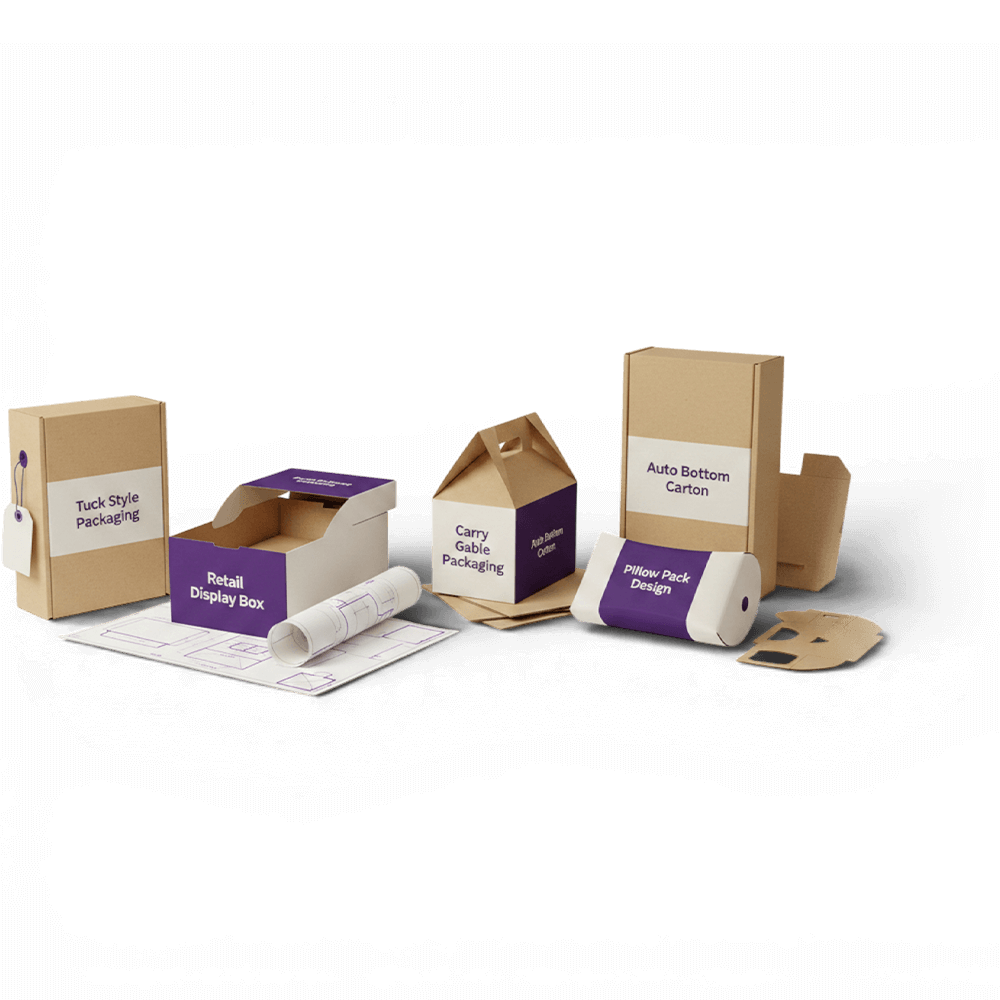
Types of Custom Boxes
Different products require different packaging styles. Some of the most common options include the following.
Custom Printed Boxes
Custom printed boxes allow businesses to display logos, colors, graphics, product information, and other branding elements directly on the packaging.
They are useful for retail products, cosmetics, gifts, electronics, food products, and eCommerce orders.
Kraft Boxes
Kraft boxes have a natural appearance and are popular among businesses looking for simple or environmentally conscious packaging.
They can be used for handmade products, candles, soaps, food items, gifts, and small retail products.
Corrugated Boxes
Corrugated boxes are designed for strength and are commonly used for shipping.
They are suitable for eCommerce businesses, fragile products, electronics, and heavier items that require additional protection.
Rigid Boxes
Rigid boxes have a strong and premium structure. They are often used for luxury products such as jewelry, high-end cosmetics, electronics, and specialty gifts.
Their sturdy construction can also provide an enhanced presentation.
Die-Cut Boxes
Die-cut packaging allows businesses to create unique shapes and structures. This can be useful for brands that want their products to have distinctive shelf or display packaging.
Window Boxes
Window boxes contain a transparent section that allows customers to see part of the product without opening the package.
They can be suitable for food products, toys, cosmetics, bakery products, crafts, and gifts.
Custom Boxes for eCommerce
The growth of online shopping has made branded packaging increasingly valuable.
When customers purchase online, they do not physically interact with the product before buying it. The delivery package therefore becomes part of their first physical experience with the brand.
A custom shipping box can include:
- Company logo
- Brand colors
- Website information
- Social media details
- Thank-you messages
- Product instructions
- QR codes
- Promotional offers
This allows the packaging to serve both a practical and marketing purpose.
Custom Packaging for Different Industries
Almost every product category can benefit from customized packaging.
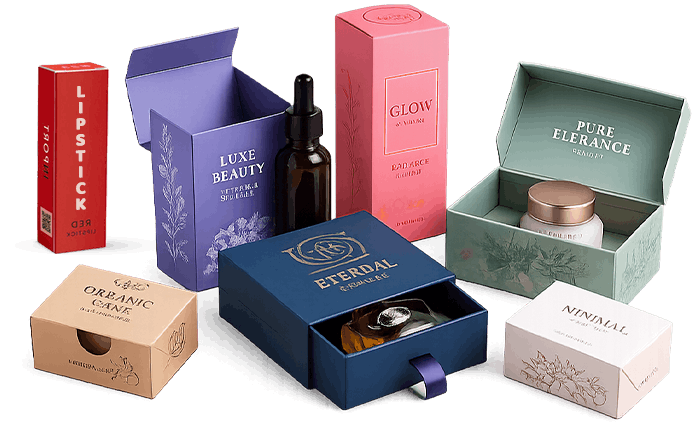
Cosmetics and Beauty
Cosmetic brands often depend on attractive presentation. Custom boxes can display product names, ingredients, instructions, branding, and graphics while protecting bottles, jars, and tubes.
Food and Bakery
Bakeries, restaurants, and food businesses can use branded packaging for takeaway and delivery orders. Attractive food boxes can create a consistent customer experience.
Jewelry
Jewelry packaging needs to balance protection and presentation. Rigid boxes, internal inserts, and premium finishes can help create an elegant presentation.
Clothing and Fashion
Fashion businesses can use branded packaging to make online orders feel more professional. The box can complement the visual identity used across the website, store, and social media.
Electronics
Electronics may require stronger packaging and protective inserts. Custom structures can help keep devices and accessories securely positioned.
Gifts
Gift businesses can use customized shapes, colors, graphics, and finishing options to make their products more attractive and suitable for special occasions.
Printing and Finishing Options
Printing allows businesses to turn ordinary packaging into branded packaging.
Depending on the box material and production process, businesses may choose:
- Full-color printing
- Matte coating
- Gloss coating
- Soft-touch finishes
- Foil stamping
- Embossing
- Debossing
- Spot UV
- Interior printing
These options can be combined to create different looks. However, businesses should select finishing based on their brand and budget instead of adding unnecessary features.
A simple, professional design can often communicate more effectively than an overly complicated one.
How to Choose the Right Custom Box
Choosing the right packaging requires more than selecting an attractive design.
Consider Product Size
Measure the product carefully. A box should be large enough to accommodate the product and necessary protection but not unnecessarily oversized.
Consider Product Weight
Heavy products need stronger materials and construction.
Consider Fragility
Fragile products may require inserts, dividers, padding, or stronger packaging materials.
Consider Shipping
If products are shipped through courier services, packaging should be strong enough to handle transportation and regular handling.
Consider Your Brand
Packaging should match the personality of your business. Premium brands may choose rigid boxes, while natural or handmade brands may prefer kraft packaging.
Consider Your Budget
Custom packaging is available at different price points. Businesses should balance appearance, protection, quantity, and production costs.
Custom Boxes Can Support Marketing
Packaging can work as a form of ongoing brand exposure.
When a branded package moves from a warehouse to a customer’s home, office, or another location, people may see the company’s logo and design.
The box can also encourage customers to interact with the brand. A QR code can direct customers to a website, review page, social media account, or special offer.
This makes packaging more than a protective layer around a product. It can become part of the company’s marketing strategy.
Eco-Friendly Custom Boxes
Many businesses are also paying more attention to packaging materials and waste.
Depending on the product and application, businesses can consider recyclable paperboard, kraft materials, recycled-content options, and other suitable alternatives.
However, environmentally responsible packaging should still protect the product. A package that fails during shipping can result in damaged products, replacements, and additional waste.
The best packaging solution balances protection, presentation, cost, and material efficiency.
Are Custom Boxes Cost-Effective?
The cost of custom boxes depends on several factors, including:
- Box size
- Material
- Quantity
- Printing
- Structural design
- Finishing
- Inserts
- Production requirements
Ordering larger quantities can sometimes lower the cost per unit. However, businesses should consider storage space and sales volume before ordering large quantities.
Custom packaging can also provide value beyond the box itself by supporting branding, product protection, and customer experience.
Common Mistakes to Avoid
Businesses should avoid choosing packaging based only on appearance.
Some common mistakes include:
- Choosing the wrong box size
- Using weak materials for heavy products
- Ignoring product protection
- Adding too many design elements
- Making important information difficult to read
- Ordering too many boxes before testing a sample
- Choosing expensive finishes without a clear purpose
- Ignoring shipping requirements
Before placing a large order, it is a good idea to test a sample. This allows you to check the box size, strength, printing quality, appearance, and overall customer experience.
Why Custom Boxes Are a Long-Term Investment
Good packaging can provide benefits at several stages of the customer journey.
Before purchase, attractive packaging can help communicate brand quality. During shipping, it can protect the product. During unboxing, it can improve the customer experience. After the purchase, branded packaging can help customers remember the company.
This makes custom packaging useful for both new businesses and established brands.
Businesses do not necessarily need the most expensive packaging. They need packaging that fits their products, customers, and brand goals.
Final Thoughts
Custom boxes combine product protection, branding, presentation, and customer experience in one packaging solution. They can help businesses create a professional appearance while making products easier to recognize and more memorable.
Whether you run an eCommerce store, retail business, cosmetics brand, bakery, jewelry company, fashion business, or gift shop, customized packaging can be designed around your specific requirements.
The best box is one that fits the product properly, protects it during transportation, represents the brand clearly, and gives customers a positive experience.
For businesses ready to move beyond generic packaging, custom boxes can be explored as a packaging option tailored to different product and branding needs.
FAQs About Custom Boxes
What are custom boxes?
Custom boxes are packaging boxes designed according to a business’s specific requirements, including size, material, structure, printing, and branding.
Why are custom boxes important?
They can improve product protection, strengthen brand identity, enhance presentation, and create a better customer experience.
Can I print my logo on custom boxes?
Yes. Logos, brand colors, graphics, product information, taglines, and other branding elements can be incorporated into the box design.
What products can use custom boxes?
Custom packaging can be used for cosmetics, food, jewelry, clothing, electronics, gifts, accessories, handmade products, and many other items.
Are custom boxes suitable for eCommerce businesses?
Yes. They can protect products during shipping while also creating a branded and memorable unboxing experience.
Can custom boxes be made in different sizes?
Yes. Custom dimensions are one of the main advantages of customized packaging. Boxes can be designed according to the size and shape of the product.
What materials are used for custom boxes?
Common materials include paperboard, kraft paper, corrugated cardboard, and rigid board. The appropriate material depends on the product and its packaging requirements.
Are custom boxes environmentally friendly?
They can be. Businesses can choose recyclable, kraft, recycled-content, and other suitable materials depending on their product and packaging goals.
How much do custom boxes cost?
Pricing depends on factors such as size, material, quantity, printing, structure, and finishing. Larger orders may offer a lower cost per unit.
Should I order a sample first?
Yes. Testing a sample can help you evaluate the size, material, strength, printing, design, and overall appearance before placing a larger order.