

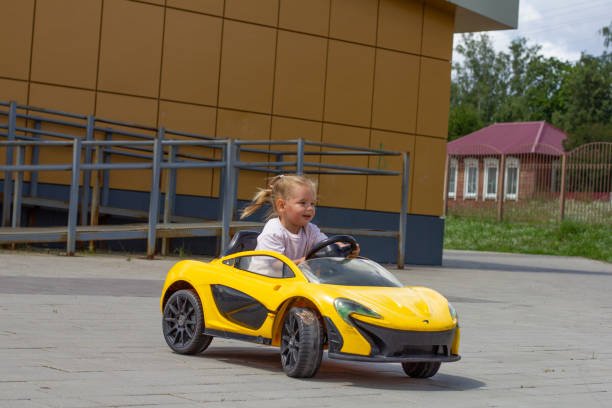

Electric ride-on cars have become popular toys for children across the UK. They allow children to enjoy outdoor play while experiencing simple driving controls.
These vehicles are designed in many shapes and sizes. Some look like small cars, while others resemble SUVs, sports cars, or off-road vehicles.
Choosing the right electric car kids model requires attention to age, size, battery power, speed, safety, and where the vehicle will be used.
What Are Electric Cars for Kids?
Electric cars for kids are battery-powered ride-on vehicles designed for children.
They usually have a rechargeable battery, electric motor, steering wheel, seat, and accelerator pedal.
Depending on the model, children may be able to drive the vehicle themselves. Some models also include a parental remote control.
The remote allows an adult to control or stop the vehicle when necessary.
How Do Children’s Electric Cars Work?
Most children’s electric cars use rechargeable batteries to power one or more motors.
When the child presses the accelerator, electrical power reaches the motor. The motor then turns the wheels.
Basic controls can include:
- Accelerator pedal
- Steering wheel
- Forward and reverse switch
- Start button
- Speed selector
- Battery indicator
The exact controls depend on the model.
Common Types of Electric Cars for Kids
There are several styles available for different ages and preferences.
Small Ride-On Cars
Smaller cars are generally designed for younger children.
They usually have simple controls and lower speeds, making them easier to manage.
Electric SUVs
SUV-style ride-on vehicles often have larger bodies and wider wheels.
Some models are designed for use on grass and other suitable outdoor surfaces.
Two-Seater Electric Cars
Two-seat models allow two children to sit together when the manufacturer’s specifications permit it.
Parents should always check the maximum combined weight before allowing two children to ride.
Off-Road Style Vehicles
Some electric ride-on vehicles have larger wheels and suspension systems.
These features can make them better suited to certain outdoor surfaces, although they should still be used only where recommended.
Battery Power and Running Time
Battery specifications are an important part of choosing an electric car.
Models may use different battery voltages and capacities.
Running time depends on several factors, including:
- Battery capacity
- Motor power
- Child’s weight
- Driving surface
- Speed setting
- Temperature
- Driving habits
Manufacturers usually provide an estimated running time. Actual performance can vary during normal use.
How Long Does It Take to Charge?
Charging time depends on the battery and charger.
Some models can take several hours to recharge fully.
Parents should use the supplied charger or a charger specifically approved for the vehicle.
The manufacturer’s charging instructions should always be followed.
Safety Features to Look For
Safety should be a major consideration when choosing an electric ride-on car.
Useful features can include:
- Seat belts
- Parental remote control
- Low-speed settings
- Automatic braking
- Stable wheels
- Secure seating
- Emergency stop functions
Not every model includes all these features.
Parents should check the specifications before purchasing.
Where Can Children Use Electric Cars?
Children’s electric cars should normally be used in suitable private areas.
Possible locations include:
- Private gardens
- Driveways
- Safe private paths
- Suitable outdoor play areas
They should not be used on public roads.
Parents should also avoid areas with traffic, steep drops, deep water, or other serious hazards.
Choosing an Electric Car Based on Age
Age recommendations vary between models.
Parents should consider more than the stated age range.
The child’s height, weight, coordination, confidence, and ability to follow instructions are also important.
A child should be able to sit securely and operate the controls safely.
Manufacturer guidance should always be followed.
Parental Remote Controls
A remote control can provide an additional layer of supervision.
It allows an adult to control steering, movement, or stopping on models that support parental control.
This can be particularly useful when a child is still learning how to operate the vehicle.
However, a remote control should not replace direct adult supervision.
Electric Cars and Outdoor Play
Ride-on cars can encourage children to spend more time outdoors.
They can also support activities involving steering, coordination, following directions, and imaginative play.
Children may create their own driving games or use the car as part of wider outdoor activities.
The vehicle should always be used within safe limits.
Looking After an Electric Ride-On Car
Regular maintenance can help keep a children’s electric car in good condition.
Parents should check the wheels, steering, seat, battery connections, and cables regularly.
Remove dirt and grass after outdoor use.
The vehicle should be stored somewhere dry and protected from extreme weather.
Electrical components should not be exposed to unnecessary water.
Battery Care
Battery care is especially important for electric ride-on vehicles.
Do not leave the battery charging for longer than recommended.
Follow the manufacturer’s instructions for storage and charging.
If the battery becomes damaged, swollen, unusually hot, or begins behaving differently, stop using the vehicle and seek appropriate technical advice.
What Should Parents Check Before Buying?
Before choosing an electric car kids model, consider the following:
- Recommended age
- Maximum child weight
- Vehicle dimensions
- Battery type
- Motor power
- Maximum speed
- Estimated running time
- Charging time
- Seat design
- Safety features
- Suitable surfaces
- Replacement parts and support
These details can help parents choose a model that matches the child’s needs.
Common Mistakes to Avoid
Buying the fastest or largest vehicle is not necessarily the best choice.
Common mistakes include choosing a model that is too powerful, ignoring weight limits, overlooking charging requirements, and allowing children to use the car without supervision.
Parents should also avoid using ride-on vehicles on unsuitable surfaces.
A model that matches the child’s ability is usually easier and safer to manage.
Final Thoughts
Electric cars for kids can provide an engaging way for children to enjoy outdoor play. Different models offer different sizes, speeds, batteries, controls, and safety features.
The right choice depends on the child’s age, size, experience, and intended environment.
Parents should check manufacturer recommendations carefully and supervise children whenever the vehicle is being used.
With appropriate care and sensible use, an electric ride-on car can become an enjoyable addition to outdoor play.