

Workplace safety is an essential priority in industries where employees may be exposed to fumes, dust, vapours, gases, smoke, or airborne contaminants. Manufacturing facilities, workshops, laboratories, mining operations, fabrication businesses, and processing plants can generate hazardous airborne substances during everyday operations. Without an effective ventilation and extraction strategy, these contaminants can accumulate in the workplace and potentially affect employee health, equipment, productivity, and overall safety. This is why professional fume extraction system design plays an important role in creating safer and more controlled working environments.
Understanding Fume Extraction Systems
A fume extraction system is designed to capture and remove airborne contaminants generated during industrial or commercial processes. Depending on the application, the system may collect welding fumes, chemical vapours, combustion by-products, oil mist, dust, smoke, or other potentially harmful substances.
A properly designed system does more than simply move contaminated air around. It should capture pollutants as close as practical to their source, transport them safely through appropriate ductwork, filter or treat the extracted air where required, and discharge it in a controlled manner. Professional design ensures that each component works together effectively rather than relying on a basic exhaust fan.
Protecting Workers From Airborne Hazards
One of the most important reasons to invest in professional extraction design is worker protection. Employees working around fumes and airborne contaminants may be exposed repeatedly throughout their working day. Depending on the substance involved, prolonged exposure may contribute to respiratory irritation, discomfort, reduced air quality, or more serious occupational health concerns.
An appropriately engineered extraction system can reduce the concentration of contaminants in the breathing zone. Source capture, correctly positioned extraction hoods, suitable airflow, and effective filtration can all contribute to reducing unnecessary exposure.
Professional designers assess the specific process, contaminants, work areas, and operating conditions before determining an appropriate solution. This helps ensure that the extraction system is designed around actual workplace risks rather than using a generic approach.
Effective Source Capture
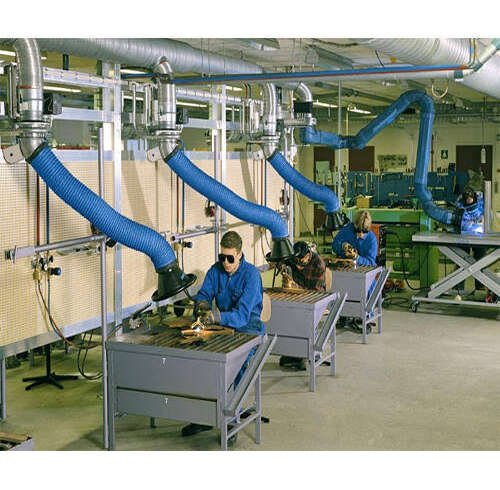
Source capture is a key principle in successful fume extraction. Instead of allowing fumes to spread throughout a facility before removing them, a well-designed system aims to capture contaminants close to where they are produced.
For example, welding operations can release fumes directly at the point where welding takes place. A correctly positioned extraction hood or extraction arm can capture these fumes before they disperse widely into the surrounding workspace.
The effectiveness of source capture depends on several factors, including hood position, airflow requirements, process characteristics, operator movement, and the physical layout of the workplace. Professional design considers these factors to establish an extraction arrangement that is practical as well as effective.
Maintaining Suitable Airflow
Airflow is another critical consideration. An extraction system with insufficient airflow may fail to capture contaminants effectively, while an unnecessarily high airflow rate can increase energy consumption and operating costs.
Professional system design involves determining appropriate airflow requirements based on the number and type of extraction points, the contaminants being handled, ductwork configuration, filtration equipment, and expected operating conditions.
Calculating these requirements correctly helps create balanced airflow throughout the system. It can also help prevent problems such as poor extraction performance, excessive pressure losses, noisy operation, or unnecessary energy use.
Proper Ductwork Design
Ductwork provides the pathway through which contaminated air travels from extraction points to filtration or discharge equipment. Poorly designed ductwork can significantly affect the performance of an otherwise capable extraction system.
Professional designers consider duct diameter, airflow velocity, pressure losses, bends, branches, access points, materials, and system layout. These factors are important because inefficient ductwork can create excessive resistance and reduce the effectiveness of extraction points.
A well-planned duct system also supports maintenance and inspection. Appropriate access points and practical routing can make it easier to identify potential problems and maintain equipment over time.
Filtration and Air Cleaning
Depending on the contaminants involved, extracted air may need to pass through specialised filtration or treatment equipment. Different pollutants require different approaches, so filtration should be selected according to the characteristics of the material being removed.
A professional assessment can help determine whether a system requires particulate filtration, specialised chemical filtration, separation equipment, or another treatment method. Choosing suitable filtration equipment is important for both workplace air quality and responsible handling of extracted contaminants.
Regular maintenance is equally important. Filters can become loaded over time, increasing resistance and reducing system performance. A professionally designed system should consider filter access, replacement requirements, monitoring, and maintenance procedures.
Improving Workplace Comfort and Productivity
Worker safety is the primary consideration, but effective fume extraction can also improve the overall workplace environment. Excessive fumes, smoke, heat, and airborne contaminants can make a facility uncomfortable and may affect employee concentration and productivity.
Better air management can create a cleaner and more comfortable workspace. Employees may find it easier to perform their duties when unpleasant fumes and airborne pollutants are effectively controlled.
In addition, maintaining cleaner air can help reduce contamination of nearby machinery, work surfaces, and products. This can contribute to a more organised and efficient operating environment.
Supporting Compliance and Risk Management
Industrial workplaces often have responsibilities relating to occupational health, safety, ventilation, hazardous substances, and environmental management. While requirements vary according to the industry, process, location, and contaminants involved, businesses need to take reasonable steps to identify and control workplace hazards.
Professional extraction design can support a broader risk-management strategy by addressing airborne contaminants through an engineered control measure. A properly assessed system can provide businesses with greater confidence that extraction requirements have been considered systematically.
It is important, however, that businesses obtain appropriate professional advice for their specific operations and ensure systems are inspected, maintained, and operated according to applicable requirements.
Designing for Long-Term Performance
An extraction system should not only work when it is first installed; it should continue performing effectively as the workplace changes. Production volumes, machinery, processes, and workspace layouts can change over time.
Professional design can consider future requirements and potential expansion. Engineers may also identify opportunities to make systems more accessible for maintenance and adaptable to operational changes.
Planning for long-term performance can help businesses avoid costly modifications later. It also supports a more reliable approach to workplace ventilation and contamination control.
Why Professional Expertise Makes a Difference
Every workplace has different extraction requirements. A small workshop may need a straightforward local extraction arrangement, while a large industrial facility may require multiple extraction points, complex ductwork, filtration equipment, fans, controls, and carefully calculated airflow.
Professional designers evaluate the complete system rather than focusing on individual components. They consider the contaminant source, capture method, airflow, ductwork, filtration, fan performance, discharge arrangements, workplace layout, maintenance requirements, and future needs.
This integrated approach can make the difference between an extraction system that simply operates and one that effectively supports workplace safety and operational performance.
Conclusion
Effective fume extraction is an important part of controlling airborne workplace hazards. From protecting employees and improving air quality to supporting efficient operations and long-term system performance, professional engineering can provide significant benefits. A properly designed system captures contaminants at their source, maintains appropriate airflow, uses suitable filtration, and provides a practical solution for the specific workplace.
For businesses dealing with welding fumes, chemical vapours, smoke, dust, or other airborne contaminants, investing in professional Fume Extraction System Design can be an important step towards creating a safer, cleaner, and more efficient working environment.