
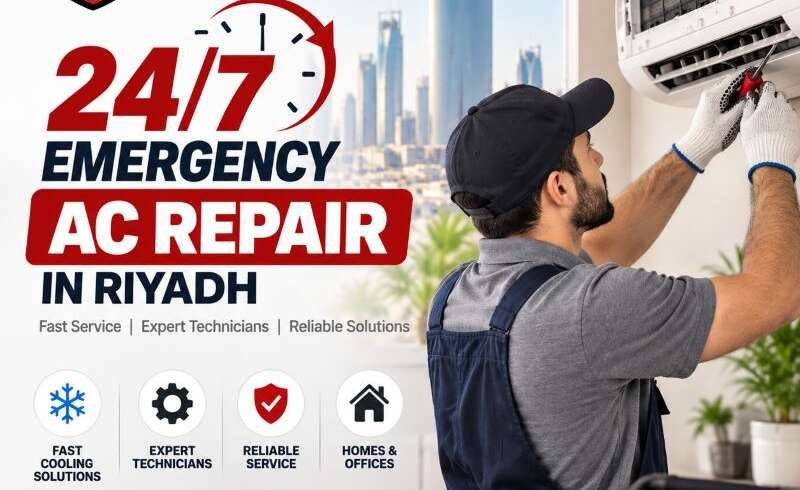

A faulty air conditioner is more than an inconvenience in Riyadh. When an AC stops cooling properly, starts leaking water, develops unusual noises, or repeatedly shuts down, the first step should be finding the actual cause rather than immediately replacing a part or adding refrigerant.
Understanding the common warning signs can help homeowners decide when basic troubleshooting is enough and when professional AC Repair in Riyadh is the better option.
What Are the Most Common AC Problems in Riyadh?
Air conditioners can develop different problems depending on the system, its condition, maintenance history, and the specific fault.
Some complaints are easy to recognize. Others require a technician to inspect the system.
Common problems include poor cooling, weak airflow, water leakage, unusual sounds, electrical issues, and an AC that switches off unexpectedly.
The important point is that the same symptom can have several possible causes.
For example, an AC that isn’t cooling properly doesn’t automatically mean it needs refrigerant.
Why Is Your AC Running but Not Cooling?
This is one of the most common complaints homeowners have.
Before calling a technician, check the basic settings. Make sure the AC is set to cooling mode and that the selected temperature is appropriate. Then check the accessible air filter.
A dirty filter can restrict airflow and affect AC performance. If airflow has become noticeably weaker, filter condition should be one of the first things to inspect.
If the filter is clean and the airflow appears normal but the room still isn’t cooling, the issue could be deeper within the system.
Possible causes can include problems with the outdoor unit, coils, electrical components, airflow, or refrigerant.
At that stage, guessing usually isn’t helpful. A proper inspection is.
Does Every Cooling Problem Mean the AC Needs Gas?
No.
This is one of the most useful things for an AC owner to understand.
Refrigerant isn’t something that should simply be added whenever an air conditioner feels less effective. If refrigerant is low, there may be an underlying reason, such as a leak.
Adding refrigerant without investigating the cause can leave the original problem unresolved.
If a technician recommends refrigerant charging, ask what led to that diagnosis. Was the system checked? Was a leak suspected? What was found?
You don’t need to perform refrigerant work yourself. Ask for an explanation of the fault before approving the repair.
Why Is the AC Airflow Weak?
Weak airflow can make an AC feel ineffective even when the system is technically running.
Start with the filter. A dirty filter can reduce airflow. If cleaning or replacing the accessible filter doesn’t solve the issue, the problem may require further inspection.
The indoor coil, fan and other components can affect airflow, while ducted systems can have additional airflow-related issues.
This is where describing the symptom accurately helps.
Tell the technician whether the airflow is weak from the moment the AC starts or becomes weaker after running for some time.
That information gives them a better starting point for diagnosis.
What Causes Water to Leak From an Indoor AC?
Water dripping from an indoor AC unit should not be ignored.
A condensate drainage problem is one possible cause. A frozen coil can also result in water appearing after accumulated ice melts.
The visible water is only the symptom. The repair depends on identifying where the water is coming from and why.
If the leak continues, switch the unit off if necessary to prevent further damage and arrange an inspection.
Avoid dismantling the indoor unit unless you are qualified to do so.
What Does an Unusual AC Noise Mean?
A new sound from an air conditioner is worth paying attention to, particularly if it wasn’t present before.
Rattling, buzzing, grinding, clicking, or unusual vibration can have different causes.
Instead of simply telling a technician that the AC is “making noise,” describe when the noise happens.
Does it occur when the system starts?
Does it continue while the fan is running?
Does it appear only when the outdoor unit operates?
Those details can help narrow down the problem.
If the sound is accompanied by poor cooling, burning smells, repeated shutdowns, or other unusual behavior, professional inspection is the safer choice.
When Should You Choose AC Service Instead of AC Repair?
The two terms are sometimes used interchangeably, but there is a practical difference.
AC service is usually associated with maintenance, cleaning, inspection, and keeping a working system in good condition.
AC repair addresses a specific fault.
For example, routine filter maintenance is different from replacing a failed electrical component. Cleaning may improve a dirty system, while a refrigerant leak requires diagnosis and repair.
Sometimes a service visit discovers a repair requirement.
That’s why a good AC technician should inspect the system before recommending unnecessary work.
What Should a Technician Check During AC Repair?
A proper AC repair visit should start with the complaint and a diagnosis.
Depending on the system and symptoms, the technician may need to examine cooling performance, airflow, electrical components, coils, drainage, controls, and refrigerant-related issues.
The exact inspection will depend on the fault.
Before approving expensive work, ask the technician to explain:
What is wrong?
You should understand the diagnosed problem.
What needs to be repaired?
Ask which component or part requires attention.
What will the repair cost?
Clarify what is included before work begins.
Will the system be tested afterward?
A repair should be followed by an appropriate operational check.
These questions are simple, but they help prevent confusion between diagnosis and guesswork.
How Can Regular AC Maintenance Reduce Problems?
Maintenance doesn’t guarantee that an AC will never fail.
It does give homeowners an opportunity to identify problems before the system stops working completely.
Start with the basics. Keep accessible filters clean according to the requirements of the particular AC system. Keep the area around the outdoor unit reasonably clear of dust and debris, and pay attention to changes in cooling performance.
If an AC starts behaving differently, don’t wait until it completely stops.
A gradual change in airflow, cooling performance, noise, or operation can be useful information.
For homes and businesses that rely heavily on air conditioning, scheduling professional AC Service in Riyadh can also help identify issues that aren’t obvious during a quick visual check.
How Should You Choose an AC Repair Company in Riyadh?
Don’t choose a technician based only on the lowest price.
Start by checking whether the company actually provides the type of repair your AC requires. Then look for clear communication about diagnosis, pricing, parts, and the work being carried out.
A professional company should be able to explain the problem in understandable terms.
It’s also sensible to ask whether the quoted price includes labor and parts and whether the system will be tested after the repair.
For emergency problems, response time matters too, but speed should not replace proper diagnosis.
One company serving this market is EssenTechs Riyadh, which provides AC and home appliance repair services in Riyadh. Its website lists AC diagnostics, repair, refrigerant-related services, electrical repairs, coil cleaning, and maintenance among its services.
For readers looking for more information about AC problems and repair options, can be added here if the publisher permits a relevant external resource.
When Should You Stop Troubleshooting Yourself?
Basic checks are reasonable.
Changing or cleaning an accessible filter, checking the controller settings, and looking for obvious external obstructions are simple starting points.
Refrigerant work and electrical repairs are different.
If the problem involves refrigerant, electrical components, repeated breaker trips, compressor issues, significant leakage, or persistent mechanical noise, professional assistance is the better choice.
Trying to dismantle an AC without the necessary knowledge can turn a relatively straightforward repair into a more complicated problem.
Final Thought
A poorly cooling AC doesn’t come with a label telling you what failed.
That’s why the best approach is simple: identify the symptom, check the safe basics, and get the system properly diagnosed before approving a repair.
If refrigerant is recommended, ask why. If a part needs replacing, ask which part and what caused the failure. And if the system is simply dirty or overdue for maintenance, an AC service may be more appropriate than a repair.
For Riyadh homeowners, the goal shouldn’t be finding someone who can simply “fix the AC.” It should be finding someone who can identify the problem, explain the repair, and confirm that the system is working properly afterward.