

IPO GMP Performance Tracker: Compare Grey Market Premium with Actual IPO Listing Gains
The Indian IPO market attracts attention from investors who want to understand potential listing gains, market sentiment, and the performance of newly listed companies. One commonly followed indicator is the Grey Market Premium (GMP), which reflects unofficial market expectations before an IPO lists on a stock exchange.
However, does IPO GMP accurately indicate actual listing performance? Comparing estimated listing prices with actual listing prices can help investors understand the relationship between grey market expectations and real market outcomes.
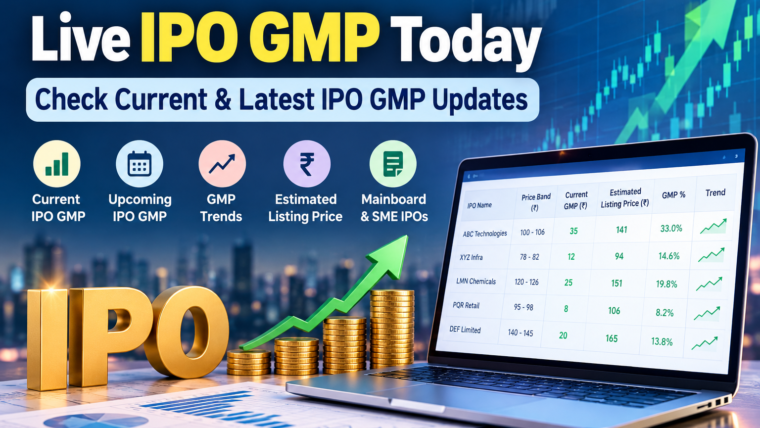
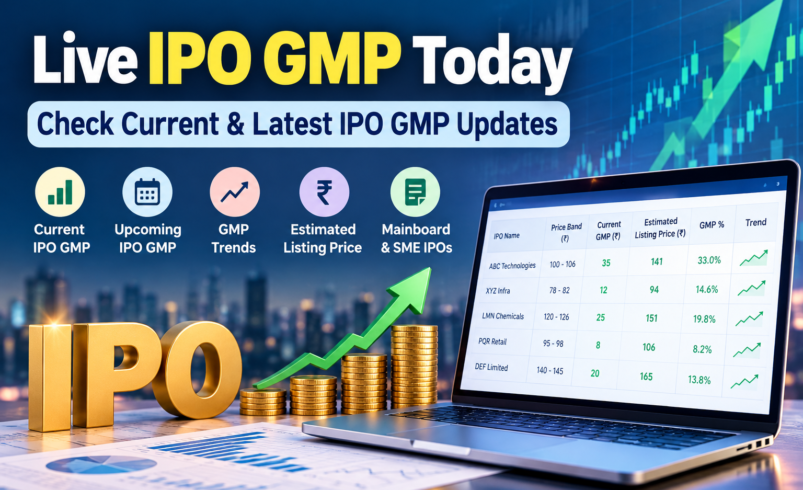
The IndiaIPO IPO GMP Performance Tracker helps users review IPO grey market premium trends, estimated listing prices, actual listing prices, and listing-day closing prices for mainboard and SME IPOs.
Explore the IPO GMP Performance Tracker by IndiaIPO to research IPO performance and compare available data.
What Is IPO GMP?
IPO GMP stands for Initial Public Offering Grey Market Premium. It refers to the unofficial premium at which IPO shares are reportedly traded in the grey market before their official stock exchange listing.
Investors often search for IPO GMP today, live IPO GMP, latest IPO GMP, and current IPO grey market premium to understand sentiment surrounding upcoming public issues.
For example, suppose a company announces an IPO with an issue price of ₹100 per share and its reported GMP is ₹25. The estimated listing price based on GMP would be ₹125.
Illustrative calculation:
- IPO issue price: ₹100
- Reported IPO GMP: ₹25
- GMP-based estimated listing price: ₹125
- Estimated gain based on GMP: 25%
This calculation is only an estimate. The actual listing price may be higher or lower than the estimated price, and GMP does not guarantee listing gains.
Why Track IPO GMP Performance?
Tracking historical IPO GMP performance helps investors examine whether grey market expectations were consistent with actual listing outcomes.
Instead of looking only at the latest GMP figure, investors can compare several important indicators:
- IPO GMP: The reported grey market premium before listing.
- IPO issue price: The final price at which shares are offered to investors.
- Estimated listing price: The issue price plus the reported GMP.
- Actual listing price: The price at which the shares begin trading on the exchange.
- Listing-day closing price: The stock’s closing price on its first trading day.
- IPO subscription status: The level of demand recorded across investor categories.
- Post-listing performance: How the stock trades after its market debut.
Comparing these figures can provide a clearer view of the difference between unofficial expectations and actual market performance.
How Does an IPO GMP Performance Tracker Work?
An IPO GMP performance tracker brings together information about public issues and their listing outcomes. Users can compare available data for different companies and IPO categories.
The IndiaIPO IPO GMP Performance Tracker includes information such as IPO size, subscription figures, GMP, issue price, estimated price, actual listing price, and listing-day closing price.
Investors can use these details to study historical IPO performance and understand how individual IPOs performed against their GMP-based estimates.
1. Compare IPO GMP with the Issue Price
The issue price is the starting point for calculating the estimated listing price based on GMP. Comparing the two helps investors understand the premium being reported in the unofficial market.
2. Review the Estimated Listing Price
The estimated listing price is generally calculated by adding the reported GMP to the issue price. It represents an indicative market expectation rather than an official price forecast.
3. Check the Actual Listing Price
Once the IPO lists on the stock exchange, its actual opening or listing price can be compared with the GMP-based estimate.
4. Analyse the Listing-Day Closing Price
The closing price on the listing day may differ from the opening price. Reviewing both values provides additional context about trading activity on the first day.
5. Compare Mainboard and SME IPO Performance
Mainboard IPOs and SME IPOs can differ in issue size, liquidity, investor participation, and trading conditions. Analysing them separately can help investors understand the characteristics of each segment.
Mainboard IPO vs SME IPO Performance
India’s IPO market includes mainboard public issues and SME public issues. Both categories can be evaluated using issue prices, reported GMP, listing prices, subscription data, and closing prices.
Mainboard IPO performance: Investors can examine how large and established businesses perform after listing, while considering each company’s individual financial position and valuation.
SME IPO performance: Investors can study smaller companies and compare their GMP estimates with actual listing outcomes, taking into account the risks associated with liquidity, business scale, and trading conditions.
To explore available data across both categories, visit the IndiaIPO GMP Performance Tracker.
Does IPO GMP Predict Listing Gains Accurately?
IPO GMP is an unofficial sentiment indicator, not a guaranteed predictor of listing performance. A high reported GMP does not necessarily result in an equivalent listing gain, and a low or zero GMP does not determine how a stock will perform.
Actual listing prices may be affected by several factors:
- Overall stock market conditions.
- Investor demand and IPO subscription levels.
- Company financial performance and valuation.
- Institutional and retail investor participation.
- Industry outlook and broader economic developments.
- Changes in sentiment between the final subscription date and listing.
Historical IPO data can help investors compare estimates with actual outcomes, but past performance does not guarantee future results.
How to Analyse Historical IPO Listing Performance
Investors researching IPO listing gains can follow a structured approach:
- Select a listed IPO from the performance tracker.
- Record its issue price and the available GMP figure before listing.
- Calculate the GMP-based estimated listing price.
- Compare the estimate with the actual listing price.
- Review the listing-day closing price.
- Examine subscription data and company fundamentals.
- Repeat the analysis across multiple IPOs and periods.
For meaningful comparisons, use GMP observations recorded at a consistent time before listing. Also distinguish between listing gains and subsequent stock returns, as they measure different outcomes.
Why Use the IndiaIPO IPO GMP Performance Tracker?
The IndiaIPO tracker provides a dedicated place to explore IPO GMP data and compare estimated listing prices with actual listing information.
Users researching the Indian primary market can use the page to:
- Check available IPO GMP information.
- Review mainboard IPO performance.
- Explore SME IPO performance.
- Compare issue prices and estimated listing prices.
- Examine actual listing and listing-day closing prices.
- Research historical IPO listing gains and losses.
Visit the IndiaIPO IPO GMP Performance Tracker to explore available IPO data and conduct your own research.
Frequently Asked Questions About IPO GMP Performance
1. What is an IPO GMP performance tracker?
An IPO GMP performance tracker is a tool for comparing reported grey market premiums and GMP-based estimated listing prices with actual IPO listing outcomes.
2. Where can I check the IPO GMP performance tracker in India?
You can visit the IndiaIPO IPO GMP Performance Tracker to review available IPO performance data.
3. What is the difference between IPO GMP and listing gains?
IPO GMP is an unofficial premium reported before listing, while listing gains represent the difference between the issue price and the actual listing price.
4. Can IPO GMP guarantee listing profits?
No. IPO GMP is unofficial and can change before listing. Actual listing prices depend on market demand, sentiment, company-specific factors, and broader market conditions.
5. Can I compare SME IPO and mainboard IPO performance?
Yes. Comparing the two segments can help investors study differences in reported GMP, issue prices, subscription levels, and actual listing outcomes.
6. Why should investors analyse historical IPO performance?
Historical comparisons help investors understand how estimates differed from actual results. They can support research but cannot guarantee the outcome of a future IPO.
Conclusion
IPO GMP is widely followed by investors researching upcoming public issues, but understanding its limitations is essential. Comparing reported GMP with actual listing prices and listing-day closing prices offers a more complete view of IPO performance.
The IndiaIPO IPO GMP Performance Tracker helps users explore available information for mainboard and SME IPOs, review estimated listing prices, and examine actual listing outcomes.
Visit the tracker: https://www.indiaipo.in/ipo-gmp-performance-tracker
Disclaimer: This article is for educational and informational purposes only. Grey market premiums are unofficial and do not guarantee listing gains or investment returns. Investors should review official offer documents and consider their financial objectives and risk tolerance before investing.