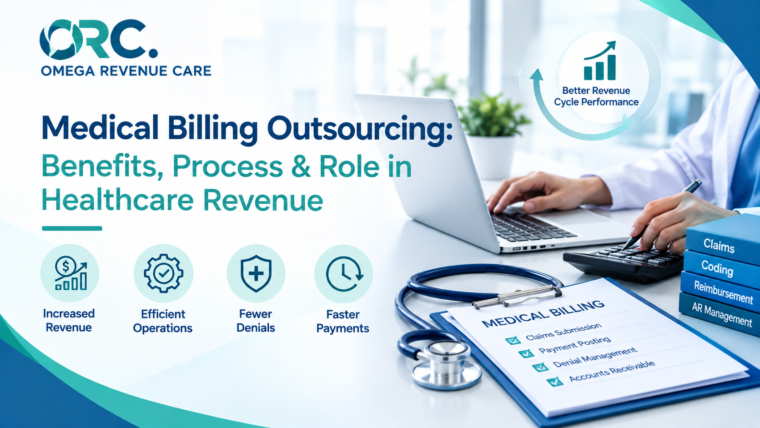



Medical billing is an important part of every healthcare practice. From claim preparation and submission to payment posting and accounts receivable follow-up, billing involves multiple administrative tasks that require accuracy and consistent attention. Medical billing outsourcing allows healthcare practices to delegate these responsibilities to an experienced billing service provider.
By outsourcing billing operations, practices can reduce administrative workload while maintaining an organized approach to their revenue cycle.
What Is Medical Billing Outsourcing?
Medical billing outsourcing is the process of working with an external billing company to manage some or all of a healthcare practice’s billing activities.
Depending on the practice’s requirements, outsourced billing may include:
- Patient and insurance information management
- Medical coding support
- Charge entry
- Claim submission
- Payment posting
- Denial management
- Accounts receivable follow-up
- Insurance verification
- Billing reports and performance tracking
The exact services can be customized according to the specialty and workflow of the healthcare organization.
Why Do Practices Outsource Medical Billing?
Managing billing internally can require dedicated staff, training, technology, and ongoing oversight. Outsourcing provides practices with additional support for these administrative responsibilities.
Some potential benefits include:
Reduced Administrative Workload
Outsourcing billing tasks can allow physicians and internal staff to spend less time handling repetitive billing activities and more time focusing on patient care and practice operations.
Better Claim Management
A structured billing process can help practices organize claim submission, monitor claim status, and identify issues that may affect reimbursement.
Denial Follow-Up
Denied claims can delay payments and increase accounts receivable. Outsourced billing teams can review denial information, identify possible causes, and follow up according to payer requirements.
Accounts Receivable Management
Consistent A/R follow-up helps practices monitor unpaid balances and outstanding insurance claims. This can provide better visibility into the status of pending payments.
How Does Medical Billing Outsourcing Work?
The process generally begins with an assessment of the practice’s existing billing workflow. The billing provider then establishes procedures for receiving patient and billing information.
Depending on the agreement, the workflow may include coding and charge entry, claim submission, payment posting, denial follow-up, and A/R management.
Regular reporting can also help practices review billing activity and understand areas that may require attention.
Medical Billing Outsourcing and Revenue Cycle Management
Medical billing is one part of the broader revenue cycle management process. Effective coordination between registration, insurance verification, coding, claims, payments, denials, and A/R can help create a more organized financial workflow.
Omega Revenue Care provides medical billing services designed to support healthcare practices with billing and revenue cycle activities. Outsourcing selected billing functions can help practices manage administrative responsibilities while maintaining focus on their core healthcare services.
How Omega Revenue Care Can Help
Omega Revenue Care supports healthcare organizations with medical billing and revenue cycle management services. Services can include claim management, denial management, accounts receivable follow-up, billing support, and other administrative processes based on practice requirements.
A consistent billing workflow can help healthcare organizations maintain organized records, monitor claims, and manage outstanding balances more effectively.
Conclusion
Medical billing outsourcing can provide healthcare practices with support for important billing and revenue cycle activities. From claim submission and payment posting to denial management and A/R follow-up, outsourcing can reduce administrative pressure and help practices maintain an organized billing process.
For practices considering outsourcing, the right approach depends on their specialty, billing volume, internal resources, payer mix, and operational requirements.
Frequently Asked Questions (FAQs)
1. What is medical billing outsourcing?
Medical billing outsourcing means hiring an external billing company to manage some or all of a healthcare practice’s billing and revenue cycle activities.
2. What services can be outsourced?
Services may include coding support, claim submission, payment posting, denial management, insurance follow-up, and accounts receivable management.
3. Can small medical practices outsource billing?
Yes. Small practices can outsource billing when they want additional administrative support without maintaining a large internal billing team.
4. How can outsourcing help with denied claims?
An outsourced billing team can monitor denied claims, review denial information, and perform appropriate follow-up based on payer requirements.
5. Is medical billing outsourcing suitable for specialty practices?
It can be used by many types of healthcare practices. The billing workflow can be adapted to the specialty, services provided, payer requirements, and practice needs.