

The digital world has changed the way businesses communicate with customers, promote their products, and build their brands. From social media campaigns to search engine visibility and online advertising, companies now depend on digital channels to reach the right audience. This shift has created a growing demand for professionals who understand modern marketing tools and can turn digital strategies into measurable results.
For students, fresh graduates, working professionals, and entrepreneurs, developing these skills can open the door to a wide range of career opportunities. Learning digital marketing is no longer limited to understanding how to post on social media. It involves gaining practical knowledge of search engines, content, paid advertising, analytics, websites, and customer behaviour.
Why Modern Marketing Skills Matter
Consumer behaviour has evolved significantly over the last decade. People research businesses online, compare products, read reviews, watch videos, and interact with brands through multiple digital platforms before making purchasing decisions.
As a result, businesses need professionals who can understand these digital touchpoints and create strategies around them. Someone with relevant marketing skills can contribute to areas such as website growth, lead generation, brand awareness, customer engagement, and online sales.
The biggest advantage is that these skills can be applied across industries. Retail, healthcare, education, hospitality, real estate, technology, finance, and many other sectors require digital marketing professionals. This makes digital expertise a versatile career skill rather than something limited to one particular industry.
What Can You Learn Through Digital Marketing Education?
A strong learning program should cover both fundamental concepts and practical applications. Some of the most valuable areas include:
Search Engine Optimization
Search engine optimization, commonly known as SEO, focuses on improving a website’s visibility in search engine results. Learners can understand keyword research, on-page optimization, technical fundamentals, content planning, internal linking, and other factors that contribute to organic visibility.
SEO skills are valuable because businesses continuously need sustainable ways to attract relevant visitors to their websites.
Social Media Marketing
Social platforms have become important channels for communication and brand building. Learning social media marketing involves understanding content planning, audience research, platform-specific strategies, engagement, campaign management, and performance measurement.
Professionals who can combine creative content with data-driven decisions can help brands maintain a meaningful presence across social platforms.
Search and Social Advertising
Paid advertising allows businesses to reach specific audiences based on factors such as interests, demographics, search intent, and online behaviour. Understanding platforms such as Google Ads and social advertising systems can help learners develop skills in campaign planning, audience targeting, budgeting, ad creation, and performance analysis.
These skills are particularly useful for businesses focused on generating leads, website traffic, sales, or measurable conversions.
Content Marketing
Content plays an important role throughout the customer journey. Blogs, videos, social posts, guides, infographics, and other formats can educate audiences and support brand visibility.
Learning how to create useful, relevant, and audience-focused content helps marketers communicate ideas effectively while supporting broader business objectives.
Analytics and Performance Measurement
Digital marketing generates large amounts of data. Understanding metrics and analytics helps professionals identify what is working and where improvements are required.
Basic knowledge of website analytics, advertising reports, conversion tracking, and campaign performance can help marketers make decisions based on evidence instead of assumptions.
Choosing the Right Learning Environment
Finding a suitable Digital Marketing Institute in Lucknow can be an important step for anyone planning to build a career in this field. However, choosing a course should involve more than simply comparing course names or certificates.
Learners should look for programs that provide a balanced combination of concepts, practical assignments, current industry practices, and opportunities to work on realistic marketing situations.
A good learning environment should encourage questions and experimentation. Digital platforms change regularly, so students also need to develop the ability to learn continuously rather than depend only on information covered during a course.
It is also useful to consider whether the curriculum covers multiple areas of digital marketing. Understanding how SEO, content, social media, paid advertising, websites, and analytics work together gives learners a broader perspective of the industry.
Why Practical Training Makes a Difference
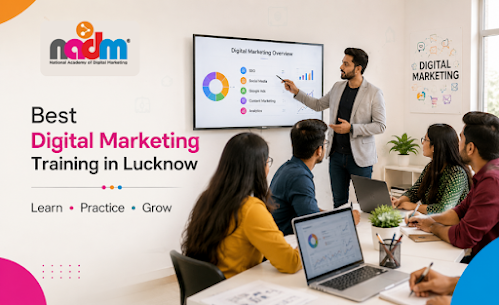
Reading about marketing concepts is useful, but applying those concepts provides a much deeper understanding. This is why practical Digital Marketing Training in Lucknow can be valuable for aspiring professionals.
For example, instead of only learning what SEO means, students can understand how to research search terms, optimize a page, evaluate competitors, and monitor performance. Similarly, advertising concepts become easier to understand when learners work through campaign structures, audience selection, ad messaging, and performance data.
Practical exercises can also help learners understand that marketing rarely follows a fixed formula. A strategy that works for one business may not produce the same results for another. Marketers need to analyse the audience, industry, competition, objectives, and available resources before making decisions.
This problem-solving mindset is one of the most useful skills a learner can develop.
Career Opportunities After Learning Digital Marketing
Modern marketing skills can lead to different career paths depending on an individual’s interests and strengths. Some common roles include:
- SEO Executive or Specialist
- Social Media Executive
- Content Marketing Executive
- Performance Marketing Executive
- Google Ads Specialist
- Digital Marketing Executive
- Content Strategist
- Email Marketing Specialist
- Digital Marketing Analyst
With experience, professionals can move into senior marketing, strategy, account management, or leadership positions. Some also choose to work independently as freelancers or consultants, while others use their skills to promote their own businesses.
The flexibility of the field is one of its major attractions. A learner can begin with a broad understanding of digital marketing and gradually specialize in an area that matches their interests.
Building a Career Beyond Certificates
A certificate can demonstrate that someone has completed a course, but practical ability ultimately matters more when pursuing professional opportunities.
Aspiring marketers should focus on building a portfolio that demonstrates what they can actually do. This could include sample SEO audits, content calendars, social media strategies, advertising campaign plans, website projects, or performance reports.
Personal projects can also be valuable. Creating and managing a small website, experimenting with content, or analysing a marketing campaign can provide experience that classroom learning alone cannot provide.
Communication, creativity, analytical thinking, adaptability, and problem-solving are equally important. Digital marketing combines technology with human behaviour, so successful professionals need both technical understanding and the ability to communicate ideas clearly.
Staying Updated in a Changing Industry
Digital marketing is constantly evolving. Search algorithms change, advertising platforms introduce new features, social media trends shift, and artificial intelligence continues to influence content creation and marketing workflows.
Therefore, learning should not stop after completing a course. Professionals should regularly explore industry updates, test new tools, study successful campaigns, and evaluate their own results.
The goal is not to follow every trend. Instead, marketers should understand which changes are genuinely useful for their audience and business objectives.
Conclusion
Modern marketing skills can provide a strong foundation for people looking to enter or grow within the digital economy. From SEO and social media to advertising, content, and analytics, each area offers opportunities to develop valuable professional expertise.
Choosing the right learning environment and gaining practical experience can make the journey more meaningful. Whether someone wants to pursue a full-time marketing role, freelance career, entrepreneurial journey, or specialized position, a strong understanding of digital marketing can create multiple paths for professional growth.
Most importantly, learners should focus on developing skills that solve real business problems. In a competitive digital landscape, the ability to understand an audience, create effective strategies, analyse results, and adapt to change can be far more valuable than simply collecting certificates.