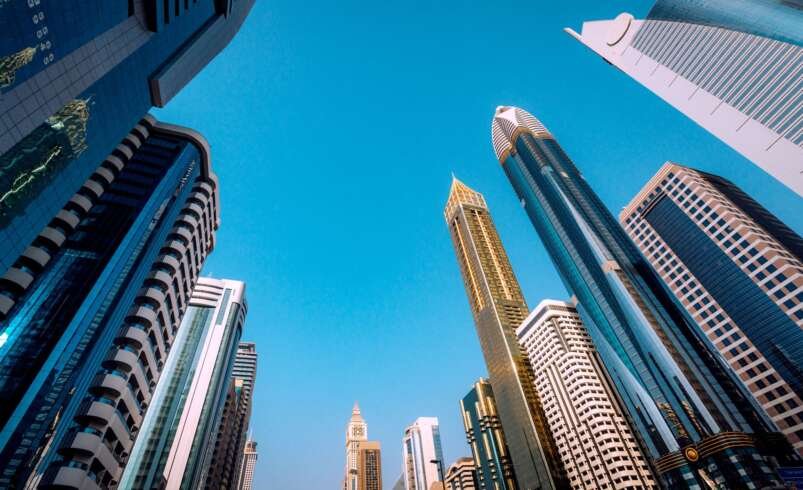

The first half of 2026 confirmed Dubai’s status as a dominant force in global property markets, generating $78 billion (AED 286.43 billion) in sales across 79,229 transactions. Yet, beyond these headline figures, the underlying investment philosophy is shifting. The speculative frenzy of previous cycles is being replaced by a highly calculated, logic-driven approach. Institutional funds, family offices, and seasoned private investors are no longer relying solely on market momentum for capital appreciation; they are scrutinizing the operational fundamentals of their assets. In this mature growth phase, the ultimate defense against yield compression and capital depreciation is robust, institutional-grade asset stewardship.
The Shift to Operational Due Diligence
As Dubai’s population surges and an estimated 6,700 high-net-worth individuals (HNWIs) relocate to the emirate annually, the demand for premium living spaces is unprecedented. However, this sophisticated demographic demands a frictionless, hospitality-grade residential experience. For investors, this means that acquiring a property is only the beginning. Achieving and maintaining high rental yields—which currently average 6.76% across the emirate—requires transitioning from passive ownership to proactive operations.
Institutional buyers now conduct rigorous operational due diligence before finalizing acquisitions. They audit historical tenant retention rates, review maintenance logs, and assess the solvency of community reserve funds. A luxury asset with a history of deferred maintenance or escalating utility overheads will face steep price discounts on the secondary market. Conversely, properties backed by a documented history of predictive maintenance and exceptional tenant retention trade at compressed capitalization rates, proving that operational excellence is a primary valuation metric.
Protecting Capital Through Predictive Facility Engineering
In the demanding climate of the Arabian Gulf, a building’s mechanical, electrical, and plumbing (MEP) infrastructure dictates its operational lifespan and its ongoing operational expenditure (OpEx). Relying on a reactive, “break-fix” maintenance model inevitably results in service outages that alienate affluent tenants and drive up shared power consumption.
Modern asset operators counter this by deploying predictive engineering and advanced Property Technology (PropTech). By utilizing IoT sensors, thermal imaging, and continuous vibration analysis on rotating machinery, facility engineers detect mechanical stress before it escalates into a systemic breakdown. This proactive strategy extends the operational lifespan of heavy equipment, keeps shared service charge allocations stable, and ensures uninterrupted climate control for residents.
Strategic Governance in Co-Owned Developments
The financial durability of Dubai’s vertical real estate is inextricably linked to the governance of the wider tower. The vast majority of the city’s premium assets are structured as Jointly Owned Properties (JOP). In these high-density developments, shared infrastructure—such as central district cooling plants, vertical transportation, and life-safety systems—requires rigorous administrative oversight.
Under the stringent regulatory framework enforced by the Real Estate Regulatory Agency (RERA), maintaining a fully capitalized sinking fund via the government-mandated Mollak portal is non-negotiable. If a building’s Owners Committee artificially suppresses annual service charges to boost short-term investor yields, the reserve fund becomes dangerously undercapitalized. When major capital replacements become necessary, underfunded communities are forced to issue emergency special levies. These sudden cash calls severely damage investor confidence and depress resale values.
Navigating these statutory and financial complexities requires the uncompromising discipline of specialized Owners Association Management. Professional community administrators conduct independent engineering lifecycle audits to establish precise, data-driven reserve fund requirements. By managing transparent vendor procurement and auditing every dirham of communal expenditure, expert managers ensure the building remains solvent, physically secure, and highly liquid on the resale market.
The ESG Mandate and Future-Proofing Assets
As the UAE accelerates its Net Zero 2050 strategic targets, environmental efficiency has transitioned from a corporate social responsibility initiative into a core financial imperative. Large-scale residential and commercial towers account for substantial municipal power and water consumption. Buildings that operate on outdated, inefficient schedules impose an unnecessary financial burden on property owners through inflated utility invoices.
Data-driven building management utilizes smart sub-metering, automated lighting controls, and dynamic chiller plant optimization to curtail wasted energy. These targeted green retrofits dramatically lower community service charges, making units more attractive to prospective tenants while improving owner yields. Aligning operational protocols with international green building standards, such as LEED or WELL, ensures properties maintain relevance in a market that increasingly rewards sustainability.
Securing Long-Term Wealth Preservation
As Dubai’s real estate sector navigates the complexities of a mature 2026 market, the line between physical facility care and financial performance has permanently vanished. With the market pivoting toward logic-driven investments, securing premium returns requires a holistic approach that bridges predictive engineering, rigorous financial governance, and unparalleled tenant relations. By integrating comprehensive Property Management in Dubai, property owners can shield their portfolios from yield compression, ensuring resilient, premium returns and long-term wealth preservation for decades to come.