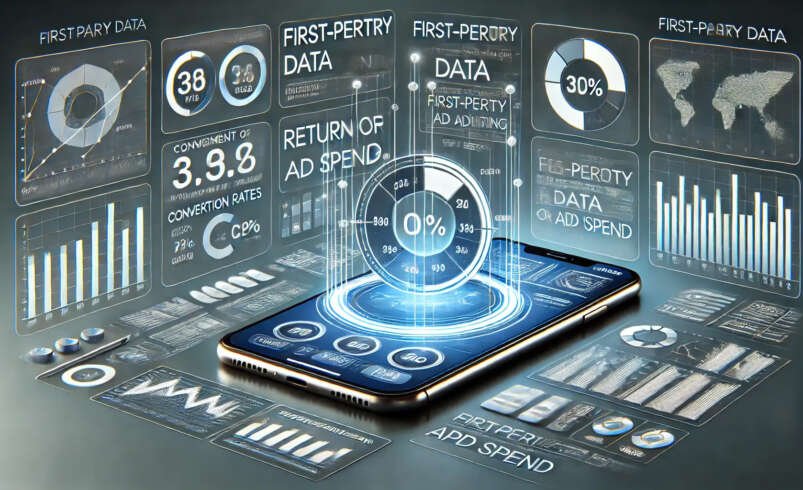

Many ad accounts report only the conversions a browser manages to record: a form fill, a page view, a tap on a phone number. What they rarely see is what happened next. Did the lead answer the sales call, visit the site, enrol or pay?
That gap matters because Google and Meta optimise towards the signals they receive. Feed them cheap form fills, and they will find you more cheap form fills.
First-party data (what customers share directly through forms, purchases, CRM records and conversations) and Conversion APIs (connections that send that data from your systems to ad platforms) close much of that gap. Here are eight ways they improve measurement.
Platform details are accurate as of November 2026.
- Recover conversions the browser misses
A browser pixel only works if its script loads and runs on the visitor’s device. Ad blockers, privacy settings and slow connections cause events to go unrecorded, while people switching between phone and laptop make conversions harder to attribute.
A Conversions API sends the same events from your server or CRM, giving the platform a second, more controlled data source. It complements the pixel rather than replacing it, so run both.
What to watch: platform-reported conversions against your backend lead or order count.
- Stop counting the same conversion twice
Running a pixel and a server connection together creates a new risk: one lead recorded twice. Inflated numbers flatter cost per acquisition and mislead automated bidding.
Meta deduplicates browser and server events when both carry the same event name and a unique event ID. If no one can explain how deduplication is configured, treat reported conversions with caution.
What to watch: sudden jumps in conversions after a tracking change.
- Optimise for qualified leads, not form fills
In real estate, education, healthcare and B2B, a form submission is only the starting point. Define the stages that matter in your CRM:
| Stage | Real estate | Education | B2B |
| Lead | Enquiry form | Brochure request | Contact form |
| Qualified lead | Budget and location match | Eligible applicant | Fits target account |
| Key action | Site visit | Counselling session | Demo |
| Outcome | Booking | Admission | Signed contract |
Send the qualified stages back to Google and Meta as separate conversion events, and bid towards them once they have enough volume. Import and attribution windows limit which stages can drive bidding, so stages reached within days of the click are easier to optimise for.
What to watch: qualified-lead rate and cost per qualified lead, by campaign.
- Feed closed revenue back into bidding
When a sale closes after the click, the ad platform has to be told.
- Google: Offline conversion imports and enhanced conversions for leads match hashed customer details, such as email, back to the ad click. Since June 2026, API-based uploads go through Google’s Data Manager API, so older Google Ads API integrations need checking.
- Meta: Offline events are sent through its main Conversions API.
Send the actual sale value in rupees where possible. Value-based bidding can only tell a ₹5 lakh booking from a ₹20,000 one if it receives the value.
What to watch: return on ad spend calculated on closed revenue.
- Track WhatsApp and phone conversions
In many sectors, enquiries arrive through click-to-WhatsApp ads and phone calls rather than forms. The pixel never sees how those conversations end.
- WhatsApp: Meta’s Conversions API for business messaging can link a limited set of WhatsApp events, including leads and purchases, to the original ad click. Optimisation options are narrower, so check Meta’s current documentation.
- Phone calls: Google Ads supports call conversion tracking and importing call outcomes.
What to watch: the share of WhatsApp and phone revenue attributed to campaigns.
- Improve match rates with consented customer data
A server event only helps if the platform can link it to a real user. Meta states that only matched events are used for attribution and ad delivery optimisation.
Matching relies on customer details such as email and phone number, normalised and hashed before sending, plus an external ID. Meta reports this as Event Match Quality in Events Manager. Low scores often point to missing or badly formatted fields, such as phone numbers without the country code.
What to watch: Event Match Quality for each key event.
- Reconcile platform reports with your CRM
Google, Meta and your analytics tool each apply their own attribution rules, so their totals rarely agree and can add up to more conversions than you received. Treat your CRM as the reference point:
- Use the same event names, lead IDs and stage definitions across every system.
- Review one monthly report comparing platform-reported conversions with CRM-verified qualified leads and revenue.
- Track blended customer acquisition cost (total ad spend divided by new customers).
Better measurement shows which campaigns are associated with sales, not whether the ads caused them. Holdout or geographic tests help estimate that.
- Build measurement that holds up as privacy rules tighten
In October 2025, Google announced it would retire most Privacy Sandbox technologies, including the Attribution Reporting API. No browser-level replacement is available today, which makes consented server-side data more valuable.
India’s Digital Personal Data Protection (DPDP) Rules, 2025 are being phased in, with core obligations such as notice, security safeguards and breach reporting applying from 13 May 2027. Prepare now:
- Collect only the data you need, and tell customers why.
- Restrict who can access customer data.
- Hash identifiers before sharing them, as good practice.
- Have a qualified legal adviser review your consent flow.
Where to start
Begin with a measurement audit. List every conversion action you track, map it against your CRM stages, and note which outcomes never reach the ad platforms. Then fix deduplication, add qualified-lead events and connect offline revenue, in that order.
The harder part is often getting marketing, sales and development to agree on what counts as a conversion. If you want outside help, look for a partner who reports on qualified leads and revenue, not just platform conversions, which is how Wisoft Solutions, a performance marketing agency in Bangalore, approaches paid campaigns.
Frequently asked questions
What is a Conversions API, and do I still need the pixel?
A Conversions API sends conversion events from your server, CRM or messaging tools directly to an ad platform, rather than relying only on the visitor’s browser. For website tracking, run it alongside the pixel with deduplication.
Do I need a developer to set one up?
Not always. Many CRMs and e-commerce platforms offer built-in connectors, and Google supports enhanced conversions for leads through Data Manager and Zapier. Custom CRMs, call systems and WhatsApp workflows may need developer support.
Will better measurement lower my cost per acquisition?
Not automatically. Better signals can help platforms optimise, but results still depend on volume, budget, creative and the offer. The dependable benefit is seeing which campaigns drive qualified leads and revenue.
Are there extra limits for healthcare advertisers?
Possibly. Meta places some advertisers in sensitive categories, such as health, and restricts the events they can share or optimise for. Check your data source category in Meta Events Manager before planning your setup.