
They can make kitchens feel more inviting, brighten hallways, and create a more open atmosphere in living areas. However, these benefits depend on proper installation, suitable materials, and a roof assembly that keeps water outside where it belongs.
For homeowners in North Las Vegas, Nevada, the desert climate makes thoughtful skylight planning especially important. Intense sunshine, high summer temperatures, windblown dust, and occasional heavy rainfall can place different demands on roofing materials and skylight components. A skylight that is poorly installed or inadequately sealed may eventually develop leaks, drafts, or signs of deterioration.
Understanding how skylights work, recognizing early warning signs, and knowing when to seek professional assistance can help homeowners make informed decisions. Whether planning a new installation or investigating moisture around an existing skylight, a careful approach can help protect the roof and the living space beneath it.
Why Does Skylight Installation Require Careful Planning?
A skylight creates an opening in the roof, which means installation involves more than fitting glass into a frame. The surrounding roofing materials, underlayment, flashing, insulation, and interior finish must work together to maintain the building’s weather protection.
Before choosing a skylight, homeowners should consider the roof’s slope, available space, room layout, and the direction in which the opening will face. These factors influence daylight levels, potential heat gain, and the type of skylight suitable for the property.
Choosing the Right Skylight Design
Different skylight styles serve different purposes. Fixed skylights provide daylight without opening for ventilation. Ventilating models can release warm air when appropriately installed and used. Tubular daylighting devices can direct natural light into smaller spaces where a conventional skylight may not be practical.
The right option depends on the room, roof configuration, and homeowner’s priorities. For example, a homeowner looking to brighten a dark interior hallway may have different requirements from someone who wants additional ventilation in a kitchen or bathroom.
Glazing is another important consideration. Energy-efficient glass, appropriate coatings, and suitable frame materials can help manage solar heat transfer and improve comfort. Product specifications should be reviewed carefully rather than assuming that every skylight performs equally well in a hot climate.
How Can the North Las Vegas Climate Affect a Skylight?
North Las Vegas experiences substantial sunshine and high summer temperatures. These conditions can influence the performance of roofing materials, sealants, and skylight components over time.
Repeated heating and cooling can cause building materials to expand and contract. If installation details are inadequate or materials deteriorate, small gaps may develop around joints and flashing. Windblown dust can also collect around roof penetrations and contribute to the gradual buildup of debris.
Although rainfall is relatively limited compared with some other regions, occasional storms can still expose weaknesses in a roof. Water entering through a compromised flashing assembly may travel along roof decking or framing before becoming visible on an interior ceiling.
Homeowners should therefore prioritize installation methods and materials appropriate for the specific roof rather than relying solely on the local climate’s generally dry conditions.
Balancing Natural Light and Indoor Comfort
A skylight can reduce the need for electric lighting during daylight hours, but the amount of energy saved depends on the home’s design, skylight placement, glazing, and daily lighting habits.
Too much direct sunlight can also create unwanted heat or glare. Selecting appropriate glazing and considering the room’s orientation can help balance daylight with indoor comfort. Depending on the application, shades or other light-control options may provide additional flexibility.
Professional planning helps homeowners evaluate these trade-offs before creating an opening in the roof.
What Are the Warning Signs of a Skylight Leak?
Recognizing a potential problem early can help homeowners investigate it before moisture causes more extensive damage. Some warning signs are obvious, while others develop gradually.
Common indicators include:
-
Water stains: Yellow, brown, or irregular marks around the skylight opening or on the ceiling may indicate moisture intrusion.
-
Peeling paint: Bubbling paint or damaged drywall near the skylight can signal repeated exposure to moisture.
-
Damp interior surfaces: Wet patches, soft materials, or persistent dampness deserve prompt investigation.
-
Visible flashing damage: Loose, bent, corroded, or displaced flashing may compromise the connection between the skylight and the roof.
-
Condensation: Moisture on the inside of the glass may result from indoor humidity and temperature differences rather than an exterior roof leak.
-
Drafts or unusual temperature changes: These symptoms can indicate air leakage, damaged seals, or insulation problems.
Not every stain near a skylight means the skylight itself is defective. Roof leaks can originate from nearby shingles, roof penetrations, or other damaged components. Water can then travel before appearing indoors, making the visible stain an unreliable indicator of the exact entry point.
A proper inspection should identify the underlying cause before repairs begin.
Which Repair Approach Is Appropriate for a Leaking Skylight?
The correct repair depends on the condition of the skylight, the surrounding roofing materials, and the source of the moisture. Applying sealant to a visible gap without identifying the cause may provide only temporary relief.
For homeowners evaluating precision-focused Skylight Installation & Leak Repair in North Las Vegas, NV, understanding the available repair approaches can make conversations with a roofing professional more productive.
Repairing Flashing and Roof Connections
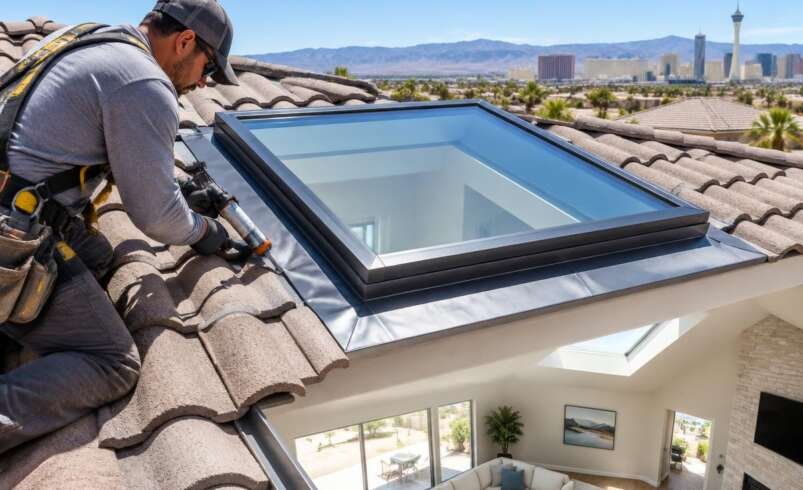
Flashing directs water away from vulnerable joints around the skylight. If flashing is damaged, improperly fitted, or incompatible with the roofing system, water may enter the roof assembly.
Depending on the findings, a repair may involve correcting the flashing installation, replacing damaged components, or addressing deteriorated underlayment. The surrounding shingles or other roof covering may also require attention to restore proper drainage.
The goal is to establish a dependable water-shedding connection between the skylight and the roof rather than merely covering the visible symptoms.
Addressing Worn Seals and Glazing Problems
Weather seals can deteriorate as they age. Cracked seals, damaged glazing components, or loose fittings may contribute to moisture or air leakage.
A qualified professional can determine whether a particular component can be repaired or replaced independently. If the skylight frame, glazing assembly, or other essential components have significant damage, replacement may be the more practical option.
The decision should account for the skylight’s age, condition, product specifications, repair accessibility, and the extent of any surrounding roof damage.
Determining When Replacement Makes More Sense
A skylight may be a candidate for replacement if it has persistent leaks, substantial deterioration, recurring repair needs, or damaged components that cannot be restored reliably.
Replacement can also provide an opportunity to reconsider glazing performance, ventilation needs, and compatibility with the existing roofing system. However, a functioning skylight does not automatically need replacement simply because it is older.
An inspection helps establish whether a targeted repair or a new installation is the more appropriate response.
How Should Homeowners Prepare for a Skylight Installation?
Preparation can help reduce complications during a roofing project. Before work begins, homeowners should understand the proposed scope, expected disruption, material choices, and measures intended to protect the property.
Important questions include:
-
Is the selected skylight compatible with the existing roof slope and covering?
-
How will the installer integrate flashing and underlayment?
-
What glazing or energy-performance features are appropriate for the room?
-
Will the project require changes to interior framing, insulation, or drywall?
-
How will the installer protect the opening if weather conditions change?
-
What product and workmanship warranties apply?
-
Are permits or other local approvals required for this particular project?
Homeowners should also clarify how existing roof damage will be handled if it becomes apparent during installation. A clear scope of work makes it easier to understand which components are being replaced and which existing materials will remain.
What Can Homeowners Do to Reduce Future Skylight Problems?
Regular observation can help identify developing issues, although roof inspections should be performed safely. Walking on a roof without appropriate equipment and training can lead to serious injuries or additional damage.
Inside the home, homeowners can periodically examine the ceiling and interior trim around the skylight for stains, peeling paint, or unusual moisture. After a significant storm, checking for new signs of water intrusion can help identify problems sooner.
From a safe viewing position, it may also be possible to notice obvious exterior damage or debris around the roofline. Detailed inspections of flashing, roofing materials, and elevated components should be left to qualified professionals.
Keeping indoor humidity at reasonable levels can help reduce condensation, particularly in bathrooms, kitchens, and other spaces that generate moisture. Ventilation may be beneficial where appropriate, but persistent condensation should be evaluated rather than automatically attributed to a roof leak.
Homeowners should avoid relying on repeated surface applications of caulk as a substitute for diagnosing a leak. If moisture returns after a repair, further investigation may be necessary to locate the actual source.
How Can You Evaluate a Skylight Roofing Professional?
Choosing a contractor involves more than comparing a single quoted price. Homeowners should look for clear explanations, relevant experience, appropriate insurance, and a repair plan that addresses the specific problem.
A useful estimate should identify the proposed work, the major materials involved, and any limitations or additional repairs that may be necessary. Contractors should be willing to explain why they recommend repairing an existing skylight or replacing it.
It is also sensible to ask about applicable warranties, project cleanup, protection for interior spaces, and procedures for unexpected weather. Homeowners can independently verify relevant licensing requirements and insurance documentation rather than relying on unsupported marketing claims.
Be cautious of recommendations that promise a permanent solution without inspecting the roof or identifying the source of the leak. Reliable decisions are based on observable conditions, appropriate materials, and a clearly explained scope of work.
Conclusion
Skylights can bring valuable natural light into a home, but their long-term performance depends on sound installation and effective integration with the roofing system. In North Las Vegas, heat, sunlight, material movement, and occasional storms make proper flashing, suitable glazing, and regular attention especially important.
Homeowners who notice water stains, damaged seals, or other warning signs should investigate the cause before moisture spreads into surrounding materials. Likewise, anyone planning a new skylight can benefit from evaluating roof compatibility, energy performance, and installation details in advance.
The most practical approach is to address problems based on their actual cause, select materials appropriate for the property, and work with a qualified professional who can explain the available options. Careful planning and timely maintenance can help homeowners protect their roofs while continuing to enjoy the daylight a well-designed skylight provides.
More details are available at: Local Business Directory