
Market Overview
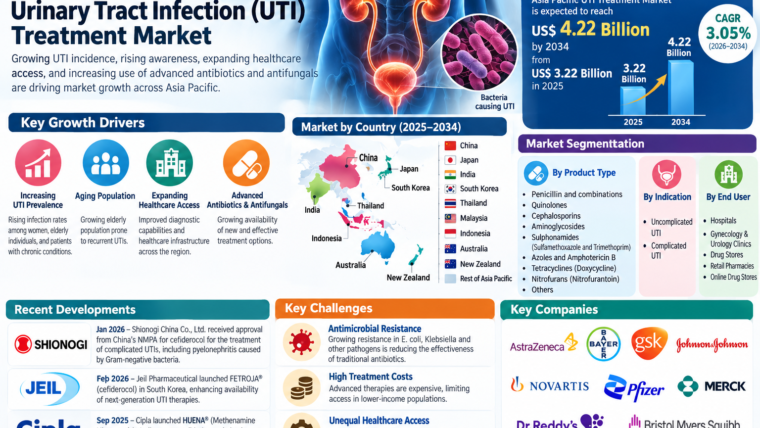
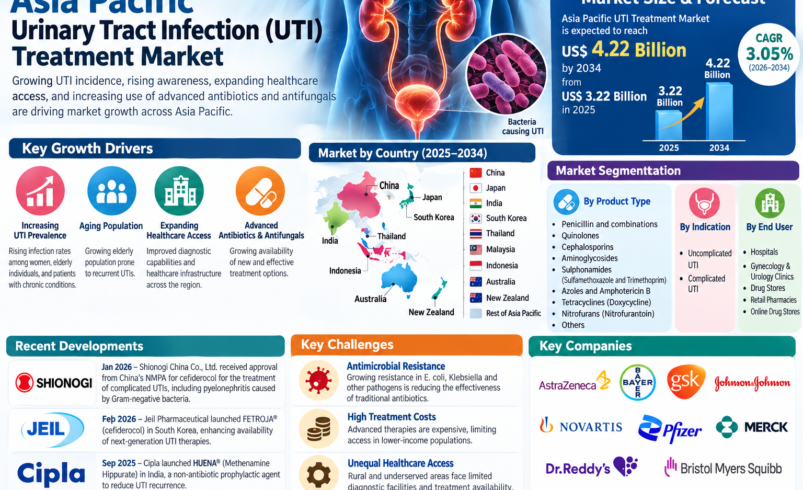
The Asia Pacific Urinary Tract Infection (UTI) Treatment Market is witnessing steady growth, driven by increasing infection rates, rising awareness of urinary health, expanding healthcare infrastructure, and growing demand for effective antimicrobial therapies. According to Renub Research, the market is projected to increase from US$ 3.22 billion in 2025 to US$ 4.22 billion by 2034, registering a compound annual growth rate (CAGR) of 3.05% during 2026–2034.
Urinary tract infections affect different parts of the urinary system, including the bladder, kidneys, ureters, and urethra. Most UTIs are caused by bacteria and are treated with appropriate antibiotics. Complicated infections, particularly those involving resistant organisms or underlying medical conditions, may require more advanced treatment and closer clinical monitoring.
Across Asia Pacific, women, older adults, and people with chronic health conditions represent important patient groups. Increasing healthcare utilization, improvements in diagnostic capabilities, and the development of new treatment options are supporting demand. At the same time, antimicrobial resistance, unequal access to healthcare, and the cost of innovative medicines remain important challenges for the industry.
Asia Pacific UTI Treatment Market Size and Forecast
The Asia Pacific UTI treatment industry is expected to maintain a steady growth trajectory throughout the forecast period. Growing patient awareness, expanding hospital networks, and increasing availability of diagnostic services are encouraging more patients to seek professional medical care.
| Market Indicator | Details |
|---|---|
| Base Year | 2025 |
| Historical Period | 2022–2025 |
| Forecast Period | 2026–2034 |
| Market Size in 2025 | US$ 3.22 billion |
| Forecast Market Size in 2034 | US$ 4.22 billion |
| CAGR (2026–2034) | 3.05% |
| Currency | US$ billion |
| Market Segmentation | Product Type, Indication, End User, and Country |
The market outlook reflects continuing demand for antibiotics, diagnostic services, and treatment options for uncomplicated and complicated urinary tract infections.
Key Growth Drivers of the Asia Pacific UTI Treatment Market
1. Increasing Prevalence of Urinary Tract Infections
The growing burden of urinary tract infections is an important factor supporting market expansion. Women are particularly susceptible to UTIs, while older adults may experience recurrent infections associated with age-related changes, weakened immunity, catheter use, and other underlying medical conditions.
The prevalence of diabetes and other chronic illnesses across several Asia Pacific countries also increases the complexity of UTI management in certain patient populations. These factors contribute to demand for diagnostic testing, prescription medications, hospital treatment, and follow-up care.
As awareness of urinary symptoms improves, more patients are seeking medical advice rather than relying exclusively on self-medication. This trend supports the need for appropriate diagnosis and treatment across outpatient and hospital settings.
2. Growing Antimicrobial Resistance and Demand for Advanced Therapies
Antimicrobial resistance (AMR) is a major challenge for UTI treatment across Asia Pacific. Resistant strains of bacteria, including Escherichia coli and Klebsiella, can reduce the effectiveness of commonly prescribed antibiotics and complicate treatment decisions.
The problem increases the importance of diagnostic testing, antimicrobial susceptibility profiling, and targeted treatment. Hospitals are also seeking therapeutic options for complicated infections caused by multidrug-resistant Gram-negative bacteria.
An important development highlighted in the source material was the launch of FETROJA® (cefiderocol) in Taiwan in February 2024. The treatment is intended for certain difficult-to-treat Gram-negative bacterial infections, including complicated UTIs, subject to its approved indications.
The growing need for effective therapies is encouraging pharmaceutical companies to invest in antibiotic research and expand their treatment portfolios. However, responsible prescribing and antimicrobial stewardship remain essential to preserving the effectiveness of existing and newer medicines.
3. Aging Population and Rising Demand for Recurrent UTI Management
Asia Pacific is experiencing demographic changes, with countries such as China, Japan, India, and South Korea facing growing healthcare needs associated with aging populations.
Older adults can be more vulnerable to UTIs because of underlying illnesses, urinary retention, catheter use, and other risk factors. Recurrent infections also create a need for ongoing medical supervision and appropriate preventive strategies.
The source material identifies Cipla’s launch of HUENA® (methenamine hippurate) in India in September 2025 as a development in non-antibiotic prophylaxis for recurrent UTIs. Such options may expand prevention strategies for selected patients when clinically appropriate.
Growing demand for recurrent UTI management is creating opportunities for pharmaceutical manufacturers, diagnostic laboratories, hospitals, and specialized gynecology and urology clinics.
4. Healthcare Infrastructure Development and Improved Diagnosis
Investment in hospitals, diagnostic laboratories, pharmaceutical manufacturing, and primary healthcare facilities is improving access to UTI treatment across the region.
Urban healthcare centers in countries such as China, India, Japan, and South Korea offer relatively developed diagnostic and treatment services. Meanwhile, improvements in healthcare infrastructure in emerging economies are creating opportunities to expand diagnosis and medication access.
Digital consultations and telemedicine can also improve access to medical advice, particularly for patients who face geographical barriers. However, laboratory testing and in-person assessment remain important when symptoms, recurrent infections, or complicated cases require further investigation.
Market Challenges and Restraints
1. Antimicrobial Resistance and Treatment Limitations
Increasing antimicrobial resistance creates significant challenges for healthcare providers and pharmaceutical companies. Inappropriate antibiotic use, incomplete treatment courses, and non-prescription access where available can contribute to resistance.
When standard antibiotics become less effective, clinicians may need additional testing or alternative treatments. Developing new antibiotics is expensive and time-consuming, which can limit the speed at which new treatment options reach patients.
Stronger antimicrobial stewardship, evidence-based prescribing, and improved surveillance are important for addressing these challenges.
2. Unequal Healthcare Access and Treatment Affordability
Access to advanced UTI diagnosis and treatment varies across Asia Pacific. Major cities often have better-equipped hospitals and diagnostic laboratories, while rural and underserved areas may face shortages of medical professionals, testing facilities, and affordable medicines.
The cost of innovative antibiotics and preventive therapies can also limit their accessibility for lower-income populations. Delayed diagnosis and incomplete treatment may contribute to recurrent infections and more complicated healthcare needs.
Expanding primary healthcare services, improving insurance coverage, and strengthening diagnostic networks could help reduce these barriers.
Asia Pacific UTI Treatment Market: Country Analysis
China
China’s market is supported by its large population, expanding healthcare utilization, and increasing awareness of urinary health. Demand for effective oral and intravenous therapies is influenced by the need to manage community-acquired infections and resistant bacterial strains.
Improvements in infectious-disease monitoring and pharmaceutical development are also supporting the adoption of advanced treatment options.
Japan
Japan’s aging population and established healthcare infrastructure contribute to continued demand for UTI medications and diagnostic services. Recurrent infections among older adults and women remain important clinical considerations.
The country’s emphasis on antimicrobial stewardship, pathogen surveillance, and culture-guided treatment supports the use of appropriate therapies.
India
India’s market is driven by the burden of bacterial infections, increasing healthcare awareness, and expanding access to medical consultations. Women, children, and older adults contribute to demand for UTI diagnosis and treatment.
Urban hospitals and clinics account for substantial treatment activity, while improvements in primary healthcare and digital consultations are helping extend access to medical services. Antimicrobial resistance remains an important concern, reinforcing the need for rational prescribing and appropriate diagnostic testing.
South Korea
South Korea benefits from developed healthcare facilities, diagnostic capabilities, and growing awareness of early infection management. Demand is supported by treatment requirements among women and older adults.
The introduction of advanced antibiotics and continued attention to antimicrobial resistance are important features of the country’s UTI treatment landscape. The source material also identifies the February 2026 launch of FETROJA® in South Korea by Jeil Pharmaceutical as a notable development.
Australia, Thailand, Malaysia, Indonesia, and New Zealand
These markets contribute to the wider regional landscape through their respective healthcare systems, pharmaceutical distribution networks, and demand for infectious-disease treatment. Market opportunities vary according to healthcare access, affordability, diagnostic availability, and the prevalence of urinary tract infections.
Market Segmentation Analysis
The Asia Pacific UTI treatment market can be analyzed across four principal dimensions.
By Product Type
Key treatment categories include:
- Penicillin and combinations
- Quinolones
- Cephalosporins
- Aminoglycoside antibiotics
- Sulphonamides, including sulfamethoxazole and trimethoprim
- Azoles and amphotericin B
- Tetracyclines, including doxycycline
- Nitrofurans, including nitrofurantoin
- Other treatments
Penicillin combinations remain an important category because of their established use in selected infections and their availability in emerging markets. However, antibiotic selection depends on the infection, likely pathogen, susceptibility results where available, patient characteristics, and local clinical guidelines.
Azoles and amphotericin B are antifungal agents and are relevant to selected fungal infections rather than routine bacterial UTIs. Their inclusion represents a broader treatment classification rather than an indication that all UTIs require antifungal therapy.
By Indication
Uncomplicated UTI: These infections generally occur without significant complicating factors. Treatment often involves appropriate oral antibiotics selected according to clinical guidelines and local resistance patterns.
Complicated UTI: These infections may involve underlying abnormalities, catheter use, significant comorbidities, or resistant pathogens. They may require more detailed diagnostic assessment and, in some cases, hospital-based or intravenous treatment.
By End User
The market includes hospitals, gynecology and urology clinics, drug stores, retail pharmacies, and online drug stores.
Hospitals play an important role in managing severe and complicated infections. Specialized clinics support outpatient diagnosis and recurrent UTI management, while pharmacies and online channels contribute to medication distribution in accordance with applicable regulations.
Competitive Landscape and Key Companies
The Asia Pacific UTI treatment market includes multinational pharmaceutical companies and regional manufacturers competing across antibiotic portfolios, research, product development, and distribution.
Key companies identified in the Renub Research source include:
- AstraZeneca plc
- Bayer AG
- GlaxoSmithKline PLC
- Johnson & Johnson
- Novartis AG
- Pfizer
- Merck & Co. Inc.
- Dr. Reddy’s Laboratories Ltd.
- Bristol Myers Squibb Company
Competition is influenced by the availability of effective medicines, regulatory approvals, pricing, manufacturing capacity, distribution networks, and the ability to address resistant bacterial infections.
Pharmaceutical innovation is important, but commercial success also depends on appropriate clinical use, healthcare affordability, and access to diagnosis. Companies that can support responsible antimicrobial use while addressing unmet treatment needs may be well positioned in this evolving market.
Future Outlook: Asia Pacific UTI Treatment Market Through 2034
The Asia Pacific UTI treatment market is expected to expand steadily through 2034, supported by increasing healthcare needs, an aging population, improved diagnostics, and continued development of treatment options.
Several trends are likely to shape future market performance:
- Targeted antimicrobial treatment: Greater attention to diagnostic testing and susceptibility-guided prescribing.
- Advanced antibiotic development: Continued demand for therapies addressing selected resistant bacterial infections.
- Recurrent UTI management: Growing clinical interest in appropriate preventive strategies for patients with repeated infections.
- Digital healthcare access: Wider use of telemedicine for consultations and follow-up care.
- Healthcare infrastructure expansion: Improvements in diagnostic and treatment access across emerging economies.
- Antimicrobial stewardship: Stronger efforts to promote appropriate antibiotic selection and reduce unnecessary use.
The market’s long-term progress will depend on balancing pharmaceutical innovation with affordability, responsible prescribing, and equitable access to healthcare.
Frequently Asked Questions (FAQs)
1. What is the projected size of the Asia Pacific UTI treatment market by 2034?
The market is projected to reach US$ 4.22 billion by 2034, increasing from US$ 3.22 billion in 2025.
2. What is the CAGR of the Asia Pacific UTI treatment market?
According to Renub Research, the market is expected to grow at a CAGR of 3.05% during 2026–2034.
3. What are the major factors driving market growth?
Key drivers include increasing UTI incidence, rising awareness of early diagnosis, aging populations, expanding healthcare infrastructure, improved diagnostic capabilities, and demand for effective treatments for resistant infections.
4. Which countries are covered in the Asia Pacific UTI treatment market report?
The report covers China, Japan, India, South Korea, Thailand, Malaysia, Indonesia, Australia, New Zealand, and the rest of Asia Pacific.
5. Which treatment categories are included in the market?
The market covers penicillin combinations, quinolones, cephalosporins, aminoglycosides, sulphonamides, azoles and amphotericin B, tetracyclines, nitrofurans, and other treatment categories.
6. What are the major challenges facing the UTI treatment market?
Major challenges include antimicrobial resistance, high research and development costs, unequal access to advanced therapies, treatment affordability, and limited diagnostic infrastructure in some rural areas.
7. Which companies are key participants in the Asia Pacific UTI treatment market?
Companies identified in the report include AstraZeneca, Bayer, GlaxoSmithKline, Johnson & Johnson, Novartis, Pfizer, Merck & Co., Dr. Reddy’s Laboratories, and Bristol Myers Squibb.
8. What opportunities exist in the Asia Pacific UTI treatment market?
Opportunities include advanced antimicrobial therapies, improved diagnostic testing, recurrent UTI management, pharmaceutical innovation, and expanding healthcare access in emerging economies.
Conclusion
The Asia Pacific Urinary Tract Infection Treatment Market is positioned for steady expansion, with its value forecast to rise from US$ 3.22 billion in 2025 to US$ 4.22 billion by 2034. Increasing infection-related healthcare needs, demographic changes, better diagnostic capabilities, and growing demand for advanced treatments are supporting the market.
However, antimicrobial resistance, affordability concerns, and disparities in healthcare access remain important obstacles. Continued pharmaceutical innovation, responsible antibiotic use, and stronger diagnostic infrastructure will be central to improving treatment availability and supporting sustainable market development.
For pharmaceutical companies, healthcare providers, investors, and market researchers, understanding country-specific demand, treatment categories, and competitive developments will be important for evaluating opportunities across this evolving regional market.
About Renub Research
Renub Research provides market intelligence and industry analysis to help businesses understand market size, competitive dynamics, growth drivers, emerging trends, and future opportunities.
Explore the full report: Asia Pacific Urinary Tract Infection Treatment Market
The report covers market estimates and forecasts, historical data, product types, indications, end users, country-level analysis, key companies, revenue analysis, SWOT analysis, and recent developments. It also includes 20% free customization, with PDF and Excel delivery and editable formats available on request.