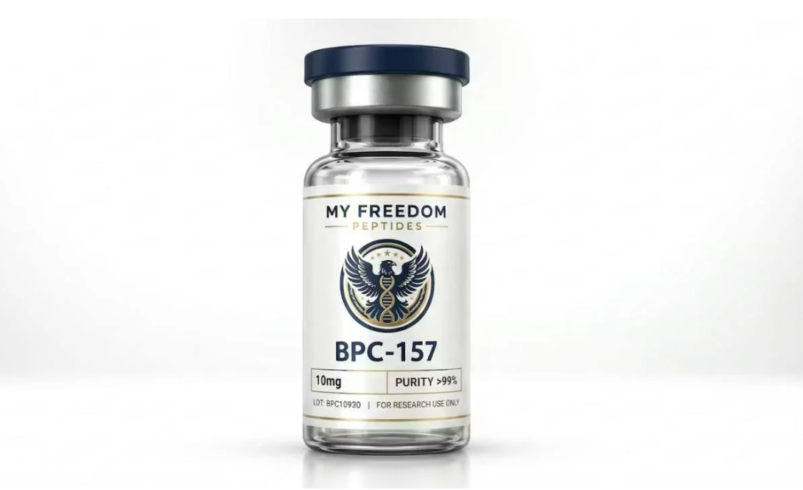

Anyone researching how to buy BPC157 peptide should understand the difference between a commercial product listing and independently established evidence about a research material. Before evaluating a supplier, researchers should consider the stated compound identity, available analytical documentation, intended use, and relevant legal requirements. Responsible procurement relies on verifiable information rather than promotional claims or assumptions about medical benefits.
Understanding the Compound
BPC-157 is a synthetic peptide made up of 15 amino acids. It has attracted attention in preclinical research, where scientists have investigated possible biological effects under experimental conditions.
However, the existence of research interest does not mean that a substance has demonstrated clinical effectiveness. Laboratory studies and animal experiments may help generate hypotheses, but human safety and treatment outcomes require appropriate clinical evidence.
When reading about BPC-157, researchers should consider whether a statement comes from a peer-reviewed study, a scientific review, or a commercial description. These sources have different purposes and should not be treated as interchangeable.
Reviewing Product Information
A detailed product listing should communicate what the supplier claims to provide and identify any available supporting records. Relevant information may include the stated compound identity, quantity, batch identification, handling requirements, and applicable research-use limitations.
Researchers should examine whether the information is consistent and sufficiently specific to support an informed evaluation. Vague terminology does not establish composition or quality, and an attractive product description cannot replace analytical evidence.
When important details are unavailable, researchers should seek clarification before relying on the listing.
Certificates of Analysis
A certificate of analysis may help researchers evaluate specified properties of a material. Depending on the tests performed, the report may provide information about identity, purity, or other measured characteristics.
A useful report should make its scope clear. Researchers should review the sample identification, laboratory information, analytical methods, date, and reported results.
If a supplier claims that testing is independent, the documentation should support that statement. Researchers should also determine whether the report relates to the particular material being evaluated rather than assuming that a general document covers every batch.
Comparing Research Materials
Comparisons between peptide listings should consider more than the product name or advertised quantity. Relevant factors include the availability of documentation, traceability, clarity of labeling, and the limits of the analytical evidence.
A reported purity percentage should not automatically be interpreted as proof of sterility or clinical safety. Likewise, the presence of a COA does not guarantee that all potential contaminants have been assessed.
A careful comparison identifies what is verified, what is claimed, and what remains unknown.
Responsible Handling and Recordkeeping
Research materials should be handled according to appropriate laboratory procedures and relevant safety documentation. Researchers should maintain records of material identity, batch information, storage conditions, and analytical results when these details are relevant to the experiment.
Institutional requirements and applicable laws should guide the work. Unfamiliar materials should not be assumed to be harmless merely because they are described as intended for research.
Medical and Regulatory Context
BPC-157 is not an FDA-approved drug for human use in the United States. Adequate clinical evidence has not established its safety and effectiveness for treating medical conditions.
Commercial availability does not constitute medical approval. Individuals should not use research peptides to self-treat injuries, illnesses, or other health concerns. Questions about treatment should be discussed with a qualified healthcare professional.
Conclusion
Evaluating a BPC157 peptide listing requires careful attention to product identity, analytical records, supplier transparency, and regulatory responsibilities. A research-focused approach helps distinguish documented information from unverified marketing statements and supports responsible laboratory decisions.
This article is intended for educational and legitimate research purposes only. It does not recommend human or veterinary consumption, self-experimentation, or the use of BPC-157 as a medical treatment.