

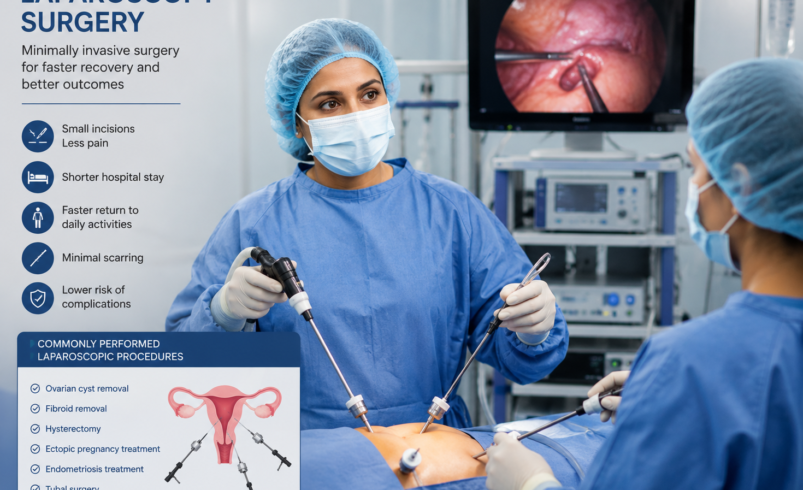

Modern healthcare has transformed the way surgical procedures are performed, offering patients safer treatments and quicker recovery times than ever before. Among the many advancements in medical science, laparoscopy surgery has emerged as one of the most effective minimally invasive surgical techniques. Today, many Rawalpindi private hospitals are equipped with advanced laparoscopic technology, experienced surgeons, modern operation theaters, and comprehensive post-operative care facilities to ensure better outcomes for patients. As healthcare providers continue to adopt innovative surgical methods, laparoscopy has become a preferred choice for treating various medical conditions while minimizing discomfort and recovery time.
Understanding Laparoscopy Surgery
Laparoscopy surgery, often referred to as minimally invasive surgery or keyhole surgery, is a procedure that allows surgeons to operate through small incisions instead of making large cuts as required in traditional open surgery. During the procedure, a thin instrument called a laparoscope, equipped with a camera and light source, is inserted through a small incision. The camera transmits real-time images to a monitor, enabling surgeons to perform precise surgical interventions.
This technique is commonly used for diagnosing and treating conditions related to the abdomen, pelvis, gallbladder, appendix, reproductive organs, and digestive system. Due to its effectiveness and patient-friendly nature, laparoscopy has become increasingly popular in hospitals worldwide.
Why Faster Recovery Matters
Recovery is one of the most important concerns for patients undergoing surgery. Traditional surgical procedures often involve larger incisions, significant tissue damage, longer hospital stays, and extended healing periods. These factors can affect a patient’s daily routine, work responsibilities, and overall quality of life.
Laparoscopy surgery addresses these concerns by minimizing surgical trauma and promoting faster healing. Patients can often return to their normal activities sooner while experiencing less pain and fewer complications.
Smaller Incisions Lead to Faster Healing
One of the primary reasons laparoscopy surgery enables quicker recovery is the use of small incisions. Traditional surgeries may require large openings to access internal organs, resulting in greater tissue damage and longer healing periods.
In contrast, laparoscopic procedures typically require only a few small incisions. These smaller cuts reduce trauma to muscles, skin, and surrounding tissues. As a result, the body can heal more efficiently, allowing patients to recover faster and resume normal activities within a shorter timeframe.
Smaller incisions also decrease the likelihood of wound complications, making the recovery process smoother and more comfortable.
Reduced Post-Operative Pain
Pain management is a major aspect of surgical recovery. Large surgical incisions often result in significant discomfort and require stronger pain medications during recovery.
Because laparoscopy surgery involves minimal tissue disruption, patients usually experience considerably less pain after the procedure. Reduced pain allows individuals to move around sooner, which plays a critical role in preventing complications such as blood clots and muscle weakness.
Patients who experience less discomfort are generally able to return to their daily routines more quickly and with greater confidence.
Shorter Hospital Stays
Another significant advantage of laparoscopy surgery is the reduced length of hospitalization. Many laparoscopic procedures can be performed as day-care surgeries, allowing patients to return home the same day or within 24 hours.
Shorter hospital stays offer numerous benefits, including:
- Reduced healthcare costs
- Lower risk of hospital-acquired infections
- Increased patient comfort
- Faster return to family life
- Improved emotional well-being
Patients often recover more comfortably in their home environment, surrounded by family support and familiar surroundings.
Lower Risk of Surgical Complications
Every surgical procedure carries certain risks. However, laparoscopy surgery generally has a lower risk profile compared to traditional open surgery.
The smaller incisions reduce the chances of:
- Excessive bleeding
- Surgical site infections
- Hernia formation
- Wound complications
- Tissue damage
By minimizing these risks, patients can focus on healing rather than managing post-operative complications, leading to a smoother and faster recovery journey.
Less Blood Loss During Surgery
Blood loss is a common concern during surgical procedures. Traditional surgeries may involve extensive tissue dissection, increasing the possibility of bleeding.
Laparoscopic techniques allow surgeons to operate with enhanced precision and visualization. The high-definition camera provides a magnified view of internal structures, enabling accurate surgical maneuvers while preserving healthy tissues.
As a result, blood loss during laparoscopic surgery is often significantly lower. Reduced blood loss contributes to faster recovery and decreases the likelihood of requiring blood transfusions.
Quicker Return to Daily Activities
One of the most appreciated benefits of laparoscopy surgery is the ability to return to normal activities sooner. Patients undergoing open surgery may require several weeks or even months to fully recover.
With laparoscopic procedures, many individuals can:
- Walk within hours after surgery
- Resume light activities within a few days
- Return to work sooner
- Engage in routine household tasks earlier
- Experience improved mobility during recovery
This accelerated recovery timeline can be particularly beneficial for working professionals, parents, and elderly patients who wish to maintain their independence.
Improved Cosmetic Results
Although health and recovery are the primary concerns, cosmetic outcomes also matter to many patients. Traditional surgeries often leave larger scars that may remain visible for years.
Laparoscopy surgery uses small incisions, resulting in minimal scarring. The tiny scars usually fade over time and are less noticeable than those associated with open surgical procedures.
Improved cosmetic results can positively impact a patient’s self-confidence and overall satisfaction with the treatment experience.
Better Precision Through Advanced Technology
Modern laparoscopic systems provide surgeons with high-definition imaging and enhanced visualization of internal organs. The magnified view enables greater precision during surgical procedures.
This technological advantage helps surgeons:
- Identify anatomical structures accurately
- Minimize tissue damage
- Avoid unnecessary trauma
- Perform complex procedures safely
- Improve overall surgical outcomes
The increased accuracy contributes directly to faster healing and reduced recovery times.
Common Procedures Performed Through Laparoscopy
Laparoscopy surgery is used for a wide range of medical conditions and surgical interventions. Common procedures include:
Gallbladder Removal
Gallstones and gallbladder diseases are frequently treated through laparoscopic cholecystectomy, allowing patients to recover quickly with minimal discomfort.
Appendix Surgery
Laparoscopic appendectomy is commonly performed for appendicitis and typically results in shorter hospital stays and faster recovery.
Hernia Repair
Many hernia repairs can be performed laparoscopically, reducing pain and enabling patients to return to normal activities sooner.
Gynecological Procedures
Laparoscopy is widely used for conditions such as ovarian cysts, endometriosis, fibroids, and infertility-related treatments.
Diagnostic Procedures
Surgeons often use laparoscopy to diagnose abdominal and pelvic conditions when non-invasive diagnostic methods are inconclusive.
Importance of Skilled Surgeons
The success of laparoscopic surgery depends not only on technology but also on the expertise of the surgical team. Skilled laparoscopic surgeons undergo specialized training to perform these procedures effectively and safely.
Experienced surgeons can:
- Make accurate surgical decisions
- Minimize complications
- Improve patient outcomes
- Enhance recovery experiences
- Ensure optimal use of advanced surgical equipment
Choosing a healthcare facility with qualified specialists and modern surgical infrastructure plays a significant role in achieving successful treatment results.
Tips for Faster Recovery After Laparoscopy Surgery
Patients can further support their recovery by following medical advice and adopting healthy habits after surgery.
Follow Post-Operative Instructions
Carefully follow all instructions provided by your surgeon regarding medications, wound care, and activity restrictions.
Stay Active
Gentle walking and light movement can improve circulation and reduce the risk of complications.
Eat a Balanced Diet
Nutritious foods rich in vitamins, minerals, and protein support tissue repair and healing.
Stay Hydrated
Adequate hydration helps maintain overall health and promotes recovery.
Attend Follow-Up Appointments
Regular follow-up visits allow healthcare providers to monitor healing progress and address any concerns promptly.
The Future of Minimally Invasive Surgery
As medical technology continues to evolve, laparoscopic surgery is expected to become even more advanced. Innovations such as robotic-assisted surgery, enhanced imaging systems, and artificial intelligence are helping surgeons perform increasingly precise procedures.
These developments promise even faster recovery times, improved safety, and better patient experiences in the years ahead.
Conclusion
Laparoscopy surgery has revolutionized modern surgical care by offering patients a safer and more comfortable alternative to traditional open surgery. Through smaller incisions, reduced pain, shorter hospital stays, lower complication rates, and quicker return to daily activities, this minimally invasive approach significantly enhances the recovery process. As more healthcare institutions adopt advanced surgical technologies and specialized expertise, patients can benefit from improved treatment outcomes and a faster path back to healthy living. For individuals seeking effective surgical solutions with minimal disruption to their lives, laparoscopy surgery remains one of the most valuable advancements in contemporary medicine.