
Product presentation plays an important role in online shopping. Customers often look for detailed information, clear images, and product comparisons before making a purchase. To help brands communicate product information more effectively, Amazon offers A+ Content, which allows eligible sellers to enhance their product detail pages using different content layouts.
Understanding Amazon A+ Content modules helps sellers select suitable designs, highlight important product features, and create more informative shopping experiences.
What Are Amazon A+ Content Modules?
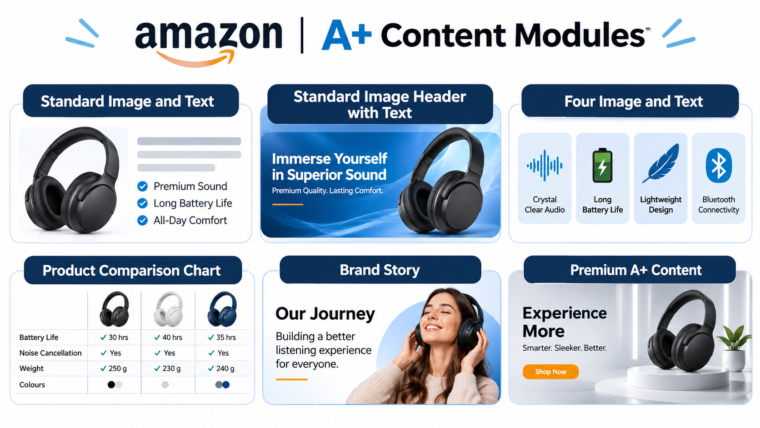
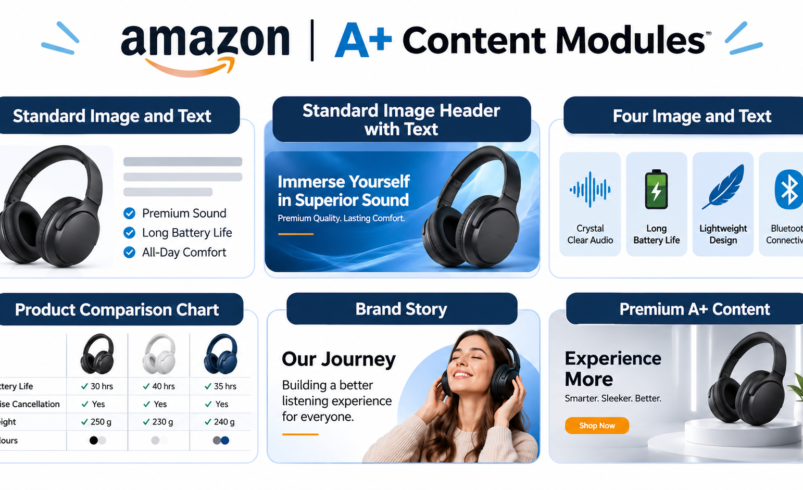
Amazon A+ Content modules are predefined content layouts that allow eligible brand owners to add visual and written information to their product listings. These modules combine images, headlines, descriptions, and comparison charts to present product details in an organized format.
Instead of displaying information through plain text alone, sellers can use different layouts to explain product benefits, introduce their brand, and highlight important specifications.
Each module serves a different purpose, so selecting the right combination is important for creating an effective product page.
Different Types of Amazon A+ Content Modules
Amazon provides several standard and premium content options. Here are some commonly used modules and their purposes.
1. Standard Image and Text Module
This module combines a product image with a descriptive text section. It is useful for explaining product features, materials, functionality, and important benefits.
For example, a kitchen appliance brand can use this layout to display a product photograph alongside information about its features and everyday applications.
2. Standard Image Header with Text
This layout uses a large image with a headline and supporting information. Brands can use it to introduce a product, highlight its main purpose, or communicate an important feature.
It is particularly useful when a brand wants to create a visually attractive introduction to its product.
3. Four Image and Text Module
This module allows sellers to present multiple images with individual descriptions. Each section can explain a different feature or product benefit.
For example, a skincare brand can use four sections to explain ingredients, product texture, application instructions, and packaging details.
4. Product Comparison Chart
Comparison charts help customers understand differences between multiple products offered by the same brand.
Sellers can compare product specifications, sizes, materials, and features. This layout is useful for brands offering several variations within one category.
5. Brand Story Module
Brand Story allows businesses to introduce their identity, background, values, and product range. It helps customers learn more about the company behind the products.
A well-designed brand story can create a consistent brand experience across product pages.
6. Premium A+ Content Modules
Premium A+ Content offers eligible brands additional enhanced presentation options. Depending on availability and eligibility, these features can include interactive elements, enhanced image experiences, and more advanced visual layouts.
These options provide additional opportunities to communicate product information in an engaging way.
How to Choose the Right A+ Content Modules
Choosing modules depends on the product category, customer requirements, and the type of information a brand wants to communicate.
Consider the following points:
- Product Features: Select layouts that clearly explain important specifications.
- Image Quality: Use professional photographs that represent the product accurately.
- Customer Requirements: Identify common questions customers may have before purchasing.
- Brand Identity: Maintain consistent colours, fonts, and visual elements.
- Content Organization: Arrange information in a logical order to make product pages easier to understand.
A combination of suitable modules can create a more complete and informative product presentation.
Common Mistakes to Avoid When Using A+ Content Modules
Even attractive designs may become ineffective when important information is missing or poorly organized. Sellers should avoid using low-quality images, overcrowded layouts, lengthy descriptions, and repeated information.
Another important consideration is Amazon’s content policy. Product claims, images, and descriptions should follow the latest platform guidelines. Reviewing the requirements before submission can help reduce content rejection and unnecessary revisions.
Benefits of Using Amazon A+ Content Modules
A+ Content modules help brands present product information in a structured and visually appealing format. They can improve product understanding, communicate brand identity, highlight product differences, and support a better shopping experience.
However, enhanced content alone does not guarantee higher sales. Product quality, pricing, listing optimization, customer experience, and competition also influence marketplace performance.
Conclusion
Amazon A+ Content modules give eligible sellers different ways to present product information through images, descriptions, comparison charts, and brand storytelling. Selecting appropriate modules and creating informative layouts can make product pages more useful and engaging for shoppers. Businesses looking to improve their Amazon marketplace presence can explore Dizimods for e-commerce growth solutions, including Amazon listing optimization and content support. A well-planned content strategy can help brands create professional listings and strengthen their online presence.