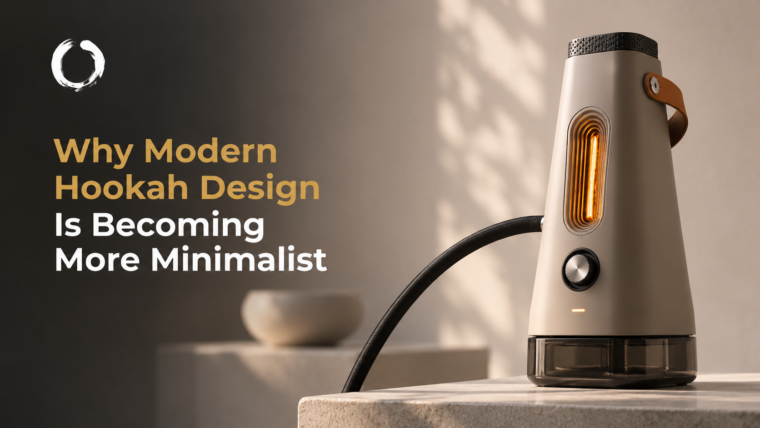
Hookah has long been associated with tradition, craftsmanship, and social gatherings. From decorative glass bases to detailed metal stems, traditional hookah designs often reflect cultural influences and artistic expression. However, as technology and lifestyle preferences evolve, modern hookah design is moving toward a more minimalist approach.
Today’s hookah enthusiasts are increasingly exploring devices that combine clean aesthetics, practical functionality, and convenient operation. Rather than focusing entirely on decorative details, contemporary designs emphasize simplicity, integrated technology, and ease of use.
This shift is particularly visible in the development of electric hookahs, where electronic heating systems, rechargeable batteries, and streamlined components are changing how hookahs look and function.
Brands such as ENSŌ Shisha demonstrate how modern engineering can complement the traditional hookah ritual without requiring an elaborate setup.
Understanding why modern hookah design is becoming more minimalist reveals how product innovation, user experience, and contemporary aesthetics are influencing the future of shisha.
1. The Evolution of Hookah Design
Traditional hookahs have developed through centuries of cultural exchange and craftsmanship. Many feature decorative metalwork, engraved stems, colorful glass bases, and carefully designed accessories.
These elements contribute to the visual identity of traditional hookah culture. However, they can also result in larger setups with multiple components requiring assembly, handling, and maintenance.
Modern hookah design approaches these considerations differently.
Instead of emphasizing ornamentation, contemporary manufacturers increasingly explore simpler shapes, compact structures, and integrated functionality.
From Decorative to Functional Design
Minimalist hookah design focuses on retaining essential components while reducing unnecessary visual complexity.
Common characteristics include:
- Clean lines and balanced proportions.
- Smooth surfaces with limited decorative detailing.
- Compact or integrated structural elements.
- Simple controls and accessible components.
- Materials selected for both appearance and durability.
This does not mean traditional craftsmanship is becoming irrelevant. Instead, minimalist design offers another interpretation of the hookah experience, one that reflects modern product design and everyday convenience.
2. Why Minimalism Is Influencing Modern Hookahs
Minimalism has become an established design approach across furniture, electronics, home accessories, and consumer products.
Its central principle is straightforward: every design element should serve a purpose.
In hookah design, this approach encourages manufacturers to consider whether each component improves functionality, appearance, or usability.
A Cleaner Visual Appearance
Modern interiors often incorporate neutral colors, uncluttered surfaces, and carefully selected decorative objects.
A hookah with a simple silhouette and restrained materials may fit more naturally into these environments than a highly ornamental design.
Rather than standing out through elaborate decoration, minimalist hookahs can complement contemporary living spaces through their proportions, finishes, and materials.
Greater Attention to Usability
Minimalist design also encourages manufacturers to reconsider how users interact with a device.
Controls should be easy to understand, components should be accessible, and unnecessary steps should be reduced wherever practical.
The goal is not simply to make a hookah look smaller or more modern. It is to create a more straightforward experience from preparation to cleaning.
3. Electric Hookah Technology Is Supporting Minimalist Design
One important development influencing modern hookah design is the introduction of electronic heating systems.
Traditional hookahs typically rely on charcoal to heat shisha tobacco or herbal mixtures. This requires additional equipment, including charcoal, a heating source, and tools for handling hot coals.
An ENSŌ Shisha 2026 Edition illustrates a different approach, combining electronic heating with familiar hookah components.
Reducing the Need for Charcoal Accessories
Electric heating removes the need to light and manage charcoal during a session.
This can reduce the number of accessories required for preparation, including charcoal burners and coal-handling tools.
It also eliminates ash produced by the charcoal itself.
However, electric hookahs still require appropriate preparation, cleaning, and maintenance. Removing charcoal does not eliminate the health risks associated with inhaling tobacco or other shisha aerosols.
Integrating Technology Into the Structure
Modern electronic hookahs can incorporate heating elements, temperature controls, and power systems within the device.
This integration allows designers to create a more unified appearance without relying on separate heating accessories.
For example, the ENSŌ 2026 Edition combines electronic heating, a glass water chamber, a hose, and magnetic mouthpiece connections in a single system.
The result demonstrates how technology can support a streamlined design while preserving recognizable elements of a traditional hookah.
4. Compact and Integrated Structures Are Becoming More Important
Traditional hookah setups vary considerably in size, but many require separate components that must be assembled before use.
Modern designs increasingly explore ways to organize these elements into a more compact structure.
Fewer Unnecessary Components
An integrated design can simplify the relationship between the heating system, water chamber, airflow pathway, and external accessories.
This may help reduce setup complexity while making the overall device easier to understand.
However, fewer visible parts do not automatically mean better performance. Internal construction, airflow, component quality, and maintenance accessibility remain important.
Portability and Storage
Compact designs can also make hookahs easier to store and transport.
For users who move their equipment between suitable locations, portability may be an important consideration.
Rechargeable electric hookahs can offer additional flexibility by reducing dependence on a nearby electrical outlet during operation.
Nevertheless, portability depends on the complete device, including its weight, dimensions, battery capacity, and protective accessories.
5. Modern Materials Are Shaping Minimalist Hookah Aesthetics
Materials play a significant role in determining how a hookah looks, feels, and performs.
Traditional designs frequently use combinations of glass, metal, ceramic, and decorative finishes.
Modern minimalist hookahs continue to use many of these materials but often present them in a more restrained way.
Glass for Visual Simplicity
Glass remains a familiar material in hookah construction because it allows users to see the water chamber.
Transparent or tinted glass can create a clean appearance while maintaining this practical function.
Glass components should also be designed for stability, cleaning, and appropriate handling.
Metal for Structure and Durability
Metal components can provide structural support and precise connections.
Smooth metal surfaces and understated finishes are particularly compatible with minimalist aesthetics.
However, material quality, corrosion resistance, and construction standards are more important than appearance alone.
Ceramic for Heating Applications
Ceramic materials are commonly used in hookah bowls and heating-related components because suitable ceramic formulations can tolerate elevated temperatures.
ENSŌ incorporates a porcelain chamber within its electric hookah system, combining a traditional bowl-related material with electronic heating technology.
This illustrates how familiar materials can remain relevant within a contemporary design.
6. Simple Controls Are Improving the User Experience
Minimalist design extends beyond physical appearance.
A device can look simple while still being unnecessarily complicated to operate. Effective minimalist design considers both visual clarity and user interaction.
Straightforward Temperature Adjustment
Traditional charcoal-based hookahs require users to manage heat by adjusting coal placement and other preparation variables.
Electric systems can provide more direct temperature adjustment through electronic controls.
The ENSŌ 2026 Edition, for example, offers an adjustable temperature range of 180°C to 330°C through a dial-based interface.
This gives users a more defined way to adjust the heating system rather than relying entirely on charcoal positioning.
Reducing Repeated Adjustments
Electronic temperature regulation can also reduce the need for repeated manual heat adjustments.
A device that maintains its selected setting allows users to focus less on managing the heating source.
However, performance still depends on the device’s engineering, the material being heated, and correct operation.
Minimalist controls are most useful when they make essential functions accessible without sacrificing control or clarity.
7. Easier Maintenance Is Part of Minimalist Design
A hookah’s appearance is only one aspect of its design.
Cleaning and maintenance can significantly influence the overall ownership experience.
Traditional hookahs require regular cleaning of the bowl, stem, water chamber, hose, and other appropriate components.
Modern electric systems still require maintenance, but designers can improve accessibility through removable parts and simpler connections.
Accessible Components
Detachable water chambers, removable bowls, and accessible mouthpieces can make routine cleaning more manageable.
The ENSŌ 2026 Edition includes removable components and magnetic mouthpiece connections designed to simplify handling and maintenance.
Reduced Charcoal Residue
Because electric heating does not use charcoal, users do not need to dispose of coal ash after a session.
This removes one source of residue from the preparation and cleanup process.
Nevertheless, shisha mixtures can still leave deposits inside the bowl, airflow components, and water chamber.
Regular cleaning remains essential for maintaining the device according to the manufacturer’s instructions.
8. Minimalist Hookahs Reflect Changing Lifestyle Preferences
Modern consumer products are frequently designed around convenience, adaptability, and efficient use of space.
Hookah design is responding to similar considerations.
Some users prefer traditional decorative hookahs because of their craftsmanship and cultural significance. Others may prioritize compact dimensions, electronic controls, and simpler preparation.
Neither approach is universally better.
Designed for Contemporary Spaces
A minimalist hookah can complement modern home interiors without requiring elaborate decorative features.
Simple shapes and neutral finishes allow the device to fit different environments.
For some buyers, this visual flexibility is an important part of choosing a hookah.
Less Attention on Equipment Management
Modern electronic heating systems can reduce the need to prepare and reposition charcoal.
This supports a more straightforward approach to the familiar social ritual.
ENSŌ’s brand philosophy, A Modern Twist on a Classic Ritual, reflects this balance between preserving recognizable traditions and updating the equipment used to support them.
The emphasis is not on removing the ritual itself, but on reconsidering the parts of the process that create unnecessary complexity.
9. How Minimalist Hookahs Compare With Traditional Designs
Although both styles support the familiar hookah format, they often prioritize different design characteristics.
| Feature | Traditional hookah | Modern minimalist electric hookah |
| Appearance | Often decorative and detailed | Clean lines and restrained finishes |
| Heating | Typically charcoal | Electronic heating |
| Temperature adjustment | Manual coal management | Electronic controls |
| Components | Multiple separate accessories | Often more integrated |
| Power requirements | Charcoal and lighting equipment | Rechargeable battery or electrical power |
| Maintenance | Includes charcoal residue | No charcoal ash, but regular cleaning required |
| Portability | Depends on size and construction | Some models designed for portability |
These differences are general design tendencies rather than universal rules.
Traditional hookahs can also be compact and minimalist, while electric hookahs may include sophisticated structures and numerous components.
The best design depends on individual preferences, intended use, construction quality, and maintenance requirements.
10. ENSŌ Shisha: Combining Minimalism With Traditional Ritual
ENSŌ Shisha offers an example of how contemporary hookah design can combine familiar elements with modern technology.
Rather than treating electronic heating as an unrelated addition, the brand integrates it into a complete hookah system.
The ENSŌ 2026 Edition incorporates several features that reflect minimalist design principles.
Integrated Electronic Heating
The device replaces charcoal with an electronically controlled heating system.
This reduces dependence on separate charcoal preparation equipment while retaining the familiar bowl, water chamber, and hose arrangement.
Rechargeable Operation
A removable rechargeable battery supports cordless operation.
This allows the system to function without remaining connected to a wall outlet throughout a session, subject to battery charge and operating conditions.
Magnetic Connections
Magnetic mouthpiece connections provide a straightforward way to attach and remove relevant components.
This design choice combines convenience with a cleaner, more integrated appearance.
Contemporary Materials and Form
The combination of glass, metal, porcelain, and carefully considered proportions creates a modern appearance without abandoning recognizable hookah features.
ENSŌ’s design direction was also recognized with a Red Dot Design Award in Product Design in 2026.
Together, these features demonstrate how minimalist design can involve practical engineering decisions rather than simply reducing decoration.
11. What to Consider When Choosing a Minimalist Hookah
Minimalist appearance should not be the only factor influencing a purchase.
A well-designed hookah should combine visual simplicity with dependable construction and practical functionality.
Before choosing a modern hookah, consider the following:
- Heating system: Determine whether the device uses charcoal or electronic heating.
- Temperature control: Check how heating settings are adjusted and maintained.
- Construction materials: Look for appropriate materials and durable connections.
- Cleaning accessibility: Consider whether components can be removed and maintained.
- Portability: Review the device’s dimensions, weight, and storage requirements.
- Battery performance: For rechargeable models, examine charging requirements and expected operating time.
- Compatibility: Confirm which shisha mixtures and accessories the manufacturer supports.
- Safety and support: Review operating instructions, warranty coverage, and replacement-part availability.
These practical considerations help distinguish meaningful minimalist engineering from products that simply have a modern appearance.
12. The Future of Minimalist Hookah Design
Minimalism is likely to remain an important influence on modern hookah development, particularly as manufacturers explore new electronic heating systems and more integrated structures.
Future improvements may focus on making devices easier to operate, clean, transport, and maintain.
More Thoughtful Integration
Manufacturers may continue combining essential functions into cohesive structures while retaining access to components that require cleaning or replacement.
Improved Electronic Controls
Temperature regulation, charging systems, and interface design offer opportunities for further refinement.
The challenge will be introducing useful technology without creating unnecessary complexity.
Greater Emphasis on Longevity
Durable materials, replaceable components, and accessible maintenance may become increasingly important design considerations.
A truly minimalist product should not sacrifice repairability simply to achieve a seamless appearance.
The most effective designs will balance aesthetics, usability, engineering quality, and long-term practicality.
Conclusion
Modern hookah design is becoming more minimalist because manufacturers are increasingly considering how appearance, functionality, and convenience work together.
Clean lines, integrated components, electronic heating, and accessible controls can create a more streamlined experience while preserving recognizable aspects of traditional hookah culture.
The shift does not mean decorative hookahs are disappearing. Traditional craftsmanship remains an important part of the category, and different users will continue to value different design approaches.
Instead, minimalist design represents another direction for hookah innovation.
Brands such as ENSŌ Shisha demonstrate how modern technology can be incorporated into a familiar ritual through thoughtful engineering and contemporary aesthetics.
As hookah technology continues to evolve, successful minimalist designs will be those that simplify unnecessary complexity without compromising functionality, maintenance, or the character of the experience.
Frequently Asked Questions
What is minimalist hookah design?
Minimalist hookah design emphasizes clean shapes, restrained decoration, practical components, and straightforward operation. Its purpose is to reduce unnecessary complexity while retaining essential hookah functions.
Why are modern hookahs becoming more minimalist?
Modern hookah manufacturers are exploring integrated technology, compact structures, simpler controls, and contemporary aesthetics to accommodate different user preferences and environments.
Are minimalist hookahs always electric?
No. Minimalist hookahs can use traditional charcoal heating or electronic heating. Minimalism describes the design approach rather than a specific heating technology.
How does an electric hookah support minimalist design?
An electric hookah can integrate heating and temperature controls into the device, reducing the need for separate charcoal preparation equipment and simplifying some aspects of operation.
Are minimalist hookahs easier to clean?
Some minimalist hookahs are designed with removable components and accessible connections that make cleaning more convenient. However, ease of maintenance depends on the specific construction rather than appearance alone.
Does ENSŌ Shisha use charcoal?
No. ENSŌ’s electric hookah systems use electronic heating instead of charcoal. This eliminates charcoal ash and coal handling, although the device still requires cleaning and appropriate maintenance.
Does a charcoal-free hookah eliminate health risks?
No. Removing charcoal eliminates emissions from burning coals, but inhaling tobacco smoke or heated shisha aerosols can still expose users and bystanders to harmful substances. Charcoal-free should not be interpreted as risk-free.