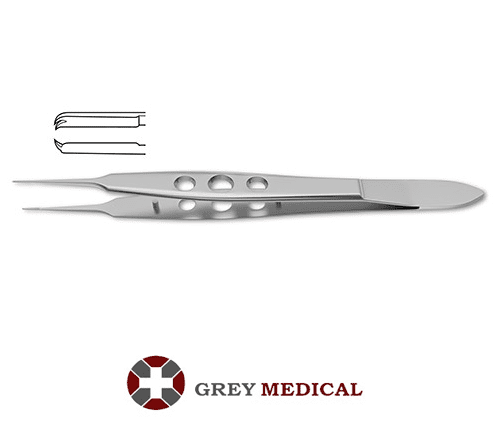

Castroviejo forceps are precision surgical instruments designed to support delicate tissue handling and suturing tasks, particularly in ophthalmic and microsurgical procedures. Their fine tips, lightweight construction, and carefully designed handles allow surgeons to work in areas where accuracy and controlled movements matter. Moreover, these instruments play an important role in procedures that require careful manipulation of delicate structures. Understanding the design, applications, and maintenance of castroviejo forceps helps medical professionals appreciate their value in specialized surgical environments.

Understanding Castroviejo Forceps
Castroviejo forceps are specialized instruments commonly used in ophthalmic surgery and other delicate surgical procedures. Manufacturers design these forceps with fine working tips that help surgeons handle small tissues and sutures with precision. In addition, their compact construction allows medical professionals to maintain better control during intricate tasks.
These forceps may feature straight or curved tips, toothed or smooth jaws, and different handle configurations. Consequently, surgeons can select an instrument that suits their procedural requirements and personal handling preferences. The instrument’s precise design makes it particularly useful in microsurgical environments where even small movements require careful control.
Design and Construction of Castroviejo Forceps
The construction of Castroviejo forceps focuses on precision, stability, and comfortable handling. Manufacturers commonly produce these instruments from high-quality surgical stainless steel, which supports durability, corrosion resistance, and repeated sterilization when properly maintained. Furthermore, their slim profile and delicate tips help medical professionals work within confined surgical areas.
Many models feature fine teeth at the tips, which can help provide a controlled grip on selected tissues or sutures, depending on the instrument’s intended use. Meanwhile, smooth-tip variations may suit different handling requirements. Some designs also incorporate a tying platform that helps surgeons manage sutures during knot-tying tasks.
Additionally, Castroviejo forceps may feature spring-style handles instead of conventional finger rings. This configuration allows the user to open and close the instrument through controlled finger pressure. As a result, the design supports the delicate movements required in microsurgical procedures.
Applications of Castroviejo Forceps in Ophthalmic Surgery
Ophthalmic surgery frequently requires instruments that provide precise handling and access to delicate structures. Castroviejo forceps are commonly associated with eye surgery, particularly procedures involving fine suturing and tissue manipulation. Their narrow tips and controlled gripping characteristics help surgeons handle small surgical materials in specialized settings.
For example, surgeons may use suitable Castroviejo suturing forceps during corneal procedures and other delicate ophthalmic operations. Moreover, their fine working ends can assist with handling sutures while the surgeon works under magnification.
Although ophthalmic surgery is a prominent application, specific instrument designs may also serve other microsurgical or specialized surgical purposes. However, healthcare professionals should always choose an instrument according to its intended application, configuration, and manufacturer recommendations.
Benefits of Castroviejo Forceps
Castroviejo forceps offer several design characteristics that make them valuable in precision-oriented surgical environments. First, their fine tips support controlled handling of small materials. Second, their lightweight construction can help provide comfortable manipulation during intricate procedures. Third, their different tip configurations allow professionals to select instruments that suit particular surgical requirements.
Furthermore, the spring-style handle design of many models supports controlled movements without bulky finger rings. This feature can be especially helpful when surgeons perform delicate tasks under magnification. In addition, specialized variations with tying platforms can assist with suture management.
Because surgical procedures vary, choosing the correct forceps remains essential. Therefore, medical professionals should evaluate tip size, jaw configuration, handle design, material quality, and intended application before selecting an instrument. castroviejo forceps are valued for their precision-oriented design, but their effectiveness also depends on appropriate selection and professional handling.
Cleaning and Maintenance of Castroviejo Forceps
Proper cleaning and maintenance help preserve the functionality and lifespan of surgical instruments. After use, medical professionals should follow established instrument-processing protocols to remove contaminants and prepare instruments for sterilization. Additionally, they should follow the manufacturer’s instructions regarding cleaning solutions, sterilization methods, and handling requirements.
Careful inspection is also important. Healthcare staff should examine the tips for misalignment, damage, or wear. Moreover, they should check the spring mechanism and overall instrument functionality before placing the instrument back into service.
Proper storage can further help protect delicate tips from damage. Therefore, surgical facilities should use suitable instrument trays, avoid unnecessary pressure on fine working ends, and maintain organized storage practices. These precautions can help preserve instrument quality and support responsible surgical instrument management.
Grey Medical® and Precision Surgical Instruments
Grey Medical® is a privately owned medical technology company dedicated to innovation and excellence in the craft of surgical instrument. The company focuses on surgical instrument design and manufacturing to serve the needs of healthcare professionals, medical facilities, and distributors.
Precision, durability, and functionality remain important considerations when evaluating surgical instruments. In addition, proper manufacturing standards and instrument maintenance can contribute to dependable instrument performance over time. Medical professionals should review product specifications and intended uses to ensure that instruments meet their clinical and operational requirements.
When evaluating alm retractor healthcare professionals should consider the instrument’s tip design, material, ergonomics, and intended surgical application. These factors can help support informed purchasing decisions and effective instrument management.
Conclusion
Castroviejo forceps are specialized surgical instruments that support precision handling in ophthalmic and microsurgical procedures. Their fine tips, ergonomic spring handles, and specialized configurations make them useful for delicate suturing and selected tissue-handling tasks. Furthermore, proper cleaning, inspection, sterilization, and storage help maintain their functionality over time. By understanding the features and applications of castroviejo forceps, medical professionals can better appreciate their importance in precision-focused surgical environments.