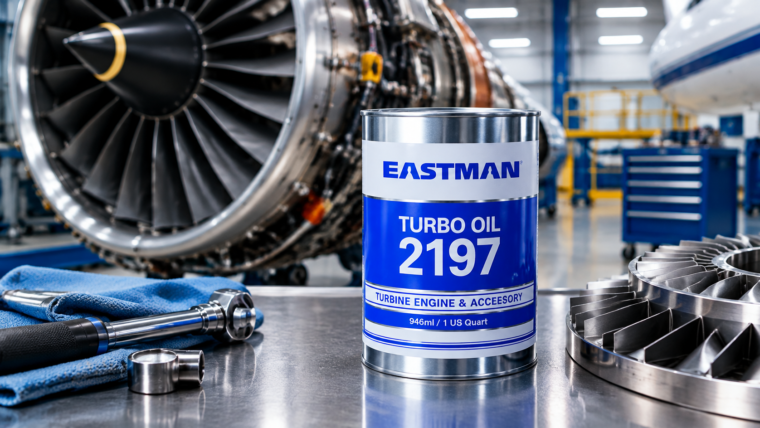

Aircraft turbine engines operate under extreme temperatures, pressure, and mechanical stress. Choosing the right lubricant is essential for maintaining engine performance, reducing component wear, and supporting operational reliability. While conventional turbine oils provide effective lubrication for many aviation applications, advanced synthetic formulations offer additional performance characteristics for demanding engine environments.
Eastman Turbo Oil 2197 is a high-performance synthetic aviation lubricant developed for turbine engines and accessories that require excellent thermal stability and oxidation resistance. But how does it differ from conventional turbine oils, and why is it considered an important choice for demanding aviation applications?
In this article, we explore the key differences, technical properties, and benefits of Eastman Turbo Oil 2197, along with important considerations for sourcing aviation lubricants in the UAE.
1. What Is Eastman Turbo Oil 2197?
Eastman Turbo Oil 2197 is a 5 cSt synthetic aviation turbine oil designed for high-temperature and demanding operating conditions. It meets the SAE AS5780 HPC and MIL-PRF-23699 HTS performance classifications, making it suitable for applications requiring high thermal stability.
According to the manufacturer, the product has more than 400 million hours of in-flight experience. Its formulation focuses on maintaining lubrication performance while resisting thermal degradation, oxidation, and deposit formation.
Some of its important characteristics include
- Excellent thermal and oxidative stability.
- High-temperature cleanliness.
- Outstanding hydrolytic stability.
- Resistance to oil degradation under demanding conditions.
- Low deposit formation under severe thermal stress.
These properties make it a recognized option for aviation operators seeking dependable lubrication solutions.
2. Eastman Turbo Oil 2197 vs. Conventional Turbine Oils: Key Differences
Although conventional turbine oils perform essential lubrication functions, their specifications and performance capabilities vary depending on their formulation and intended applications.
Here are some important differences to understand.
A. Thermal Stability and High-Temperature Performance
Thermal stability is one of the most important characteristics of an aviation turbine lubricant. Aircraft engines generate significant heat during operation, which can accelerate oil degradation and contribute to deposit formation.
Conventional turbine oils may be suitable for standard operating requirements, but not every formulation is designed for the same level of thermal stress.
Eastman Turbo Oil 2197 is specifically developed for high thermal stability applications. Its formulation helps maintain lubricant performance under demanding temperature conditions and supports cleaner engine operation.
B. Oxidation Resistance
Oxidation occurs when lubricant molecules react with oxygen, particularly under elevated temperatures. This process can gradually affect oil quality and contribute to the formation of unwanted deposits.
Eastman Turbo Oil 2197 offers outstanding oxidative stability, helping the lubricant resist degradation during demanding operating cycles.
This characteristic is particularly valuable for aircraft engines that require consistent lubrication performance over extended service periods.
C. Engine Cleanliness and Deposit Control
Oil coking and deposit formation can create maintenance challenges in turbine engines. Deposits may affect filters, oil passages, and critical engine components.
One of the key advantages of Eastman Turbo Oil 2197 is its ability to maintain low deposit levels under severe thermal stress.
Improved deposit control supports engine cleanliness and helps reduce issues associated with oil coking. This can contribute to more reliable engine operation and maintenance efficiency.
D. Hydrolytic Stability
Hydrolytic stability refers to a lubricant’s ability to resist chemical degradation in the presence of water.
Moisture contamination can affect lubricant properties and contribute to corrosion or other operational problems. Eastman Turbo Oil 2197 is formulated with outstanding hydrolytic stability, supporting consistent lubricant performance in demanding aviation environments.
3. Important Technical Properties of Eastman Turbo Oil 2197
Understanding technical specifications helps aviation maintenance professionals and procurement teams evaluate lubricant suitability.
According to the manufacturer’s technical data sheet, Eastman Turbo Oil 2197 has the following typical properties:
- Kinematic viscosity at 40°C: 26.98 mm²/s.
- Kinematic viscosity at 100°C: 5.28 mm²/s.
- Flash point: 262°C.
- Pour point: -57°C.
- Evaporation loss at 204°C: 2.30% over 6.5 hours.
- Total acid number: 0.36 mg KOH/g.
These properties provide useful information about viscosity, temperature behavior, and evaporation characteristics. Actual product specifications should always be checked against the latest manufacturer’s technical documentation.
4. Why Is the Right Turbine Oil Important in the UAE?
The UAE has a well-developed aviation sector, including commercial airlines, aircraft maintenance organizations, aviation support companies, and private aircraft operators.
Operating in a region with high ambient temperatures makes proper lubricant selection, storage, and handling particularly important. Aviation lubricants must maintain the performance required by the engine manufacturer and relevant operating specifications.
Choosing the right product can help businesses:
- Maintain reliable engine lubrication.
- Reduce deposit-related maintenance concerns.
- Support component protection.
- Maintain consistent equipment performance.
- Meet aviation maintenance requirements.
For these reasons, businesses should work with experienced lubricant suppliers in UAE who understand aviation lubricant specifications and can provide genuine products with appropriate technical documentation.
5. How to Choose Between Eastman Turbo Oil 2197 and Conventional Turbine Oils
The right turbine oil depends on engine design, operating conditions, and manufacturer recommendations. Eastman Turbo Oil 2197 may be appropriate when the equipment requires a high thermal stability lubricant meeting the relevant AS5780 HPC or MIL-PRF-23699 HTS classification.
Conventional turbine oils may remain suitable for engines designed around other approved specifications.
Before selecting a lubricant, consider the following factors:
- Check the aircraft engine manufacturer’s approved lubricant requirements.
- Verify the required viscosity grade and performance classification.
- Review the latest technical data sheet.
- Confirm product authenticity and batch traceability.
- Follow the manufacturer’s instructions for storage, handling, and oil changes.
Never assume that different turbine oils are interchangeable. Mixing products or changing lubricant specifications without proper approval can create compatibility and performance risks.
6. Finding Reliable Lubricant Suppliers in UAE
Selecting the right supplier is an important part of aviation lubricant procurement. Businesses need sourcing partners who can provide genuine products, technical information, and dependable supply support.
When evaluating lubricant suppliers in UAE, consider their ability to provide:
- Genuine products from recognized manufacturers.
- Technical data sheets and safety documentation.
- Certificates of Conformity and batch traceability, where required.
- Appropriate packaging and storage conditions.
- Support with product specifications and procurement requirements.
Working with an experienced lubricant supplier helps aviation businesses make informed purchasing decisions and maintain consistent supply for their operational needs.
Conclusion
Eastman Turbo Oil 2197 offers important performance characteristics for demanding aviation applications, including excellent thermal stability, oxidation resistance, hydrolytic stability, and high-temperature cleanliness. These features distinguish it from turbine oils designed for different performance classifications and operating requirements.
For aircraft operators and aviation procurement professionals in the UAE, selecting the correct lubricant is essential for supporting engine reliability and maintenance performance.
Frequently Asked Questions (FAQs)
1. What is Eastman Turbo Oil 2197 used for?
Eastman Turbo Oil 2197 is a 5 cSt synthetic aviation turbine oil used in aircraft engines and associated accessories that require high thermal stability lubrication. It meets AS5780 HPC and MIL-PRF-23699 HTS performance classifications.
2. What makes Eastman Turbo Oil 2197 different from conventional turbine oils?
Its key distinguishing characteristics include excellent oxidative stability, thermal stability, hydrolytic stability, and high-temperature cleanliness. These properties make it suitable for demanding applications requiring high thermal stability performance.
3. Why is thermal stability important in aviation turbine oils?
Thermal stability helps a lubricant resist degradation when exposed to elevated temperatures. It also helps minimize deposit formation and supports engine cleanliness, consistent lubrication, and maintenance reliability.
4. How can I find reliable lubricant suppliers in UAE?
Look for suppliers offering genuine aviation lubricants, manufacturer technical documentation, product traceability, and appropriate procurement support. Always verify the lubricant’s specifications and compatibility with the intended aircraft engine before purchasing.