

As workplace mental health strategy continues to mature across Indian organisations, understanding where Employee wellness programs and Mental Health First Aid are heading together offers a useful lens for anticipating what genuinely effective Workplace Mental Health support will look like in the coming years.
Where Employee Wellness Programs Have Come From
Corporate wellness began largely with physical health-focused offerings health insurance, fitness subsidies, annual check-ups before gradually expanding to include mental health components as awareness and evidence around workplace mental health grew substantially over the past decade.
Where Mental Health First Aid Fits Into This Evolution
Mental Health First Aid represents one of the more significant, evidence-based developments within this broader evolution shifting workplace mental health investment from purely passive benefits (available but rarely utilised) toward active capability-building that directly addresses the recognition and disclosure barriers that limited earlier wellness investments.
Emerging Trends Shaping the Future
Integration Rather Than Fragmentation
Rather than treating physical wellness, mental health support, and structural workload management as separate initiatives, the clearest emerging trend involves genuine integration — recognising these as interconnected dimensions of overall employee wellbeing requiring coordinated, rather than siloed, strategy.
Measurement-Driven Design
Organisations increasingly move away from generic, benchmark-driven programme design toward genuine, organisation-specific Employee Wellbeing Measurement, ensuring investment targets actual, identified needs rather than assumed industry-standard offerings.
Distributed Capability Over Centralised Services
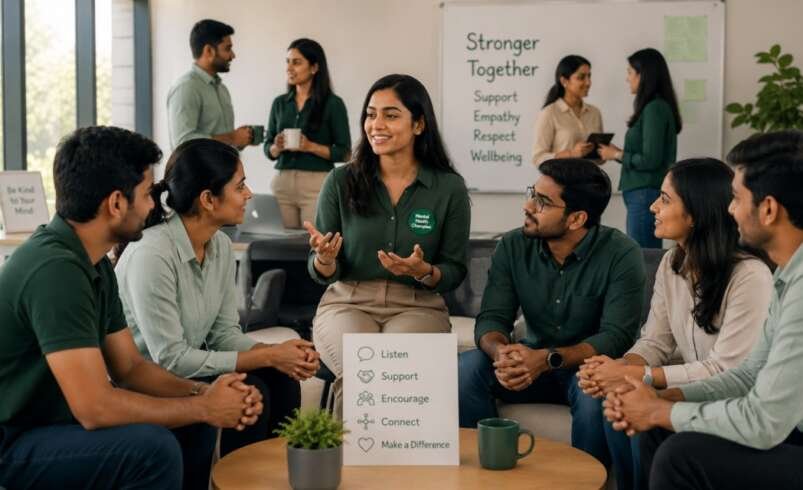
The growth of Mental Health First Aid and Mental Health Champions reflects a broader shift toward distributing recognition and support capability throughout the organisation, rather than concentrating it entirely within a centralised HR or counselling function with inherently limited reach.
Technology as a Complement, Not a Replacement
Online Therapy and AI in Mental Health tools are increasingly integrated as accessible, complementary components within broader wellness strategy, expanding reach particularly for underserved employee populations, while genuine human professional support remains central for anything beyond mild concerns.
Structural Workload Attention Alongside Individual Support
Growing recognition that individual-level coping support alone cannot address chronic understaffing or unsustainable workload is pushing organisations toward including structural workload review as a core, non-negotiable component of genuine wellness strategy, rather than treating it as a separate conversation from mental health investment.
What Genuinely Future-Ready Wellness Strategy Looks Like
Layered, Evidence-Based Training
Building on established Mental Health Training Framework principles, future-ready organisations invest in layered training foundational literacy, manager skills, champion networks, crisis response grounded in evidence-based frameworks rather than generic awareness content alone.
Genuine, Confidential Access to Professional Support
Rather than nominal EAP availability, future-ready strategy ensures genuinely confidential, accessible, and adequately resourced professional support, measured through utilisation rather than mere existence.
Psychological Safety as Foundational Infrastructure
Recognising Psychological Safety as a precondition for other wellness investments actually working, future-ready organisations invest deliberately in manager behaviour and team culture, not just formal programming.
Consistent, Rigorous Measurement
Ongoing, consistent measurement tracking absenteeism, attrition, utilisation, and psychological safety allows organisations to demonstrate genuine impact and continuously refine strategy based on evidence rather than static, unreviewed programming.
Challenges That Will Continue to Require Attention
Persistent Stigma
Despite growing programme sophistication, Mental Health Stigma in India remains a significant, persistent barrier that technology and programme design improvements alone cannot fully resolve without sustained cultural work.
Workforce Shortage Constraints
Continued shortage of Clinical Psychologists in India relative to demand means workplace strategy will likely continue relying significantly on distributed peer capability and technology-enabled access to extend limited professional capacity as far as genuinely possible.
Ensuring Genuine Rather Than Performative Investment
As mental health becomes a more visible element of employer branding, organisations will need to guard against “wellness theatre” — visible but shallow initiatives — in favour of genuine, evidence-based investment that produces measurable outcomes rather than merely favourable appearance.
Practical Guidance for Organisations Building Forward-Looking Strategy
- Ground programme design in genuine, ongoing employee wellbeing measurement rather than generic industry benchmarking alone
- Invest in layered, evidence-based training, prioritising Mental Health First Aid principles as a foundational, high-leverage component
- Treat psychological safety and manager behaviour as foundational infrastructure, not a separate initiative from formal programming
- Integrate technology thoughtfully as a complement to, not replacement for, genuine professional support
- Address structural workload factors directly, rather than relying solely on individual-level coping support
Conclusion
The future of Employee wellness programs points clearly toward greater integration, measurement rigor, and distributed capability-building — with Mental Health First Aid representing a particularly significant, evidence-based component of this evolution. Organisations that embrace this genuinely integrated, evidence-based direction, rather than continuing to rely on fragmented, generic wellness perks, are best positioned to build Workplace Mental Health support that produces genuine, measurable impact for their employees in the years ahead.