
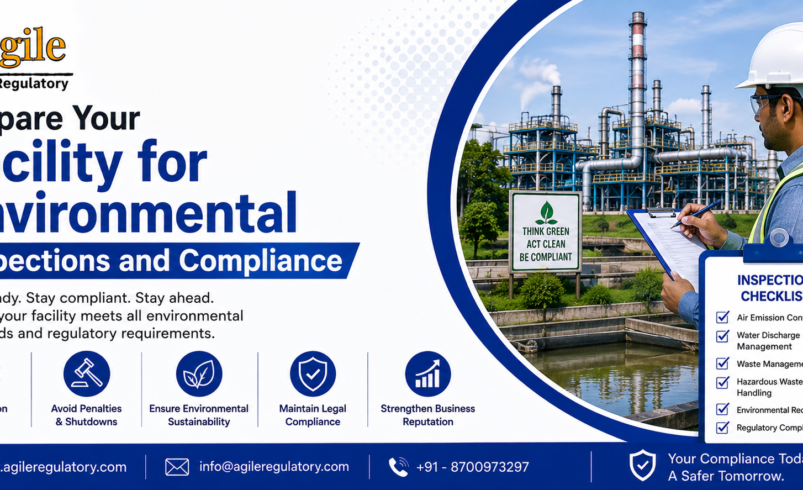

Industrial growth and expanding commercial activities bring economic opportunities, but they can also create emissions, wastewater, solid waste, and other environmental impacts. Businesses operating in Uttar Pradesh therefore need to understand the environmental permissions and compliance obligations that may apply to their activities.
The Pollution Control Board Uttar Pradesh, formally known as the Uttar Pradesh Pollution Control Board (UPPCB), is responsible for implementing important pollution-control requirements in the state. Depending on the nature and scale of an establishment, businesses may need regulatory consent before establishing or operating a unit.
Understanding the requirements for air and water pollution compliance at the planning stage can help businesses avoid delays, regulatory notices, and operational difficulties.
This article explains key UPPCB requirements, consent procedures, documentation, compliance responsibilities, renewal considerations, and how Agile Regulatory can assist businesses with environmental compliance.
What Is the Uttar Pradesh Pollution Control Board?
The Uttar Pradesh Pollution Control Board is the state-level authority responsible for implementing environmental pollution-control regulations in Uttar Pradesh.
Its responsibilities broadly include regulating activities that may cause:
- Air pollution
- Water pollution
- Industrial effluent
- Sewage-related pollution
- Hazardous waste
- Solid waste
- Other environmental impacts
Businesses whose activities fall under applicable environmental regulations may need consent or authorization from the Board.
The exact requirements depend on the type of industry, location, scale of operation, pollution potential, and applicable environmental regulations.
Why UPPCB Compliance Matters for Businesses
Environmental compliance is not limited to large factories.
Depending on the activity, requirements may apply to:
- Manufacturing units
- Processing facilities
- Hotels
- Hospitals
- Restaurants
- Workshops
- Warehouses
- Construction projects
- Commercial establishments
- Service-sector activities
- Other potentially polluting activities
Businesses should assess their environmental obligations before establishing or expanding operations.
Non-compliance can result in regulatory action, financial consequences, operational restrictions, or difficulty obtaining other approvals.
Understanding Air Pollution Compliance
Air pollution compliance focuses on activities that may release pollutants into the atmosphere.
Potential sources include:
- Boilers
- DG sets
- Furnaces
- Manufacturing processes
- Industrial chimneys
- Material handling
- Dust-generating activities
- Fuel combustion
- Chemical processes
A business should identify all potential emission sources and evaluate the control measures required for its activity.
Air Pollution Control Measures
Depending on the industry, businesses may need appropriate pollution-control systems.
Examples can include:
- Bag filters
- Scrubbers
- Dust collectors
- Proper chimney or stack arrangements
- Enclosures
- Adequate ventilation
- Emission monitoring
- Fuel management
- Preventive maintenance
The appropriate system depends on the nature of the emission and the applicable regulatory requirements.
Understanding Water Pollution Compliance
Water pollution compliance focuses on wastewater and effluent generated by business activities.
Potential sources include:
- Manufacturing processes
- Washing operations
- Chemical processing
- Food processing
- Domestic sewage
- Cleaning activities
- Industrial effluent
Businesses should identify where water is consumed, where wastewater is generated, and how it is treated and disposed of.
Industrial Effluent Management
Industries generating wastewater may need an appropriate treatment system.
Depending on the activity, this can include:
- Effluent Treatment Plant (ETP)
- Sewage Treatment Plant (STP)
- Primary treatment
- Secondary treatment
- Filtration
- Recycling or reuse systems
The appropriate treatment process depends on the type and quantity of wastewater generated.
Businesses should not assume that the same treatment system applies to every industry.
Consent Requirements Under UPPCB
Businesses may need to obtain consent from the Board under applicable pollution-control laws.
Two commonly encountered stages are:
Consent to Establish
Consent to Establish (CTE) is generally relevant before establishing or undertaking specified activities that may have pollution implications.
The applicant may need to provide information about:
- Proposed location
- Manufacturing process
- Raw materials
- Water consumption
- Wastewater generation
- Air emission sources
- Pollution-control measures
- Production capacity
- Waste generation
Consent to Operate
Consent to Operate (CTO) is generally relevant before commencing or continuing operations where such consent is applicable.
The Board may evaluate whether the actual facility has implemented the required pollution-control measures.
The exact procedure and applicability should be checked according to the current UPPCB framework.
Pollution Control Board Registration
Businesses often use the phrase pollution control board registration when referring to obtaining consent, authorization, or other environmental approval from the state pollution control authority.
It is important to understand that environmental compliance is not necessarily one universal registration.
Depending on the business, the regulatory process can involve:
- Consent to Establish
- Consent to Operate
- Waste-related authorization
- Environmental permissions
- Renewals
- Amendments
- Other applicable approvals
The correct application depends on the nature of the business and the environmental activity involved.
Pollution Control Board Online Apply Process
Many UPPCB-related processes are handled through online systems.
Businesses searching for pollution control board online apply procedures should first determine which approval applies to their activity.
A general process can involve:
Step 1: Identify the Industry Category
Determine the relevant pollution category and activity classification.
Step 2: Understand the Applicable Consent
Determine whether Consent to Establish, Consent to Operate, or another authorization is required.
Step 3: Prepare Documents
Collect technical, business, premises, and pollution-control information.
Step 4: Submit the Application
Enter the required details and upload supporting documents through the applicable online system.
Step 5: Pay Applicable Fees
Pay the prescribed regulatory fee according to the application and category.
Step 6: Respond to Queries
The authority may request clarification or additional documentation.
Step 7: Inspection, Where Applicable
Certain applications may involve inspection or verification.
Step 8: Obtain the Approval
Once requirements are satisfied, the relevant consent or authorization can be issued according to the applicable procedure.
Documents Commonly Required
The exact documents vary according to the industry and application type.
Businesses may need documents such as:
- Company or business registration documents
- PAN
- GST details, where applicable
- Authorized person’s identity documents
- Land or lease documents
- Site plan
- Factory layout
- Process flow diagram
- Manufacturing process details
- Raw-material details
- Product details
- Water consumption details
- Wastewater generation details
- Air emission details
- Pollution-control equipment details
- Waste-management information
- Previous consent documents, where applicable
- Other technical documents
Businesses should ensure that information is consistent throughout the application.
UP Pollution Control Board Compliance for Existing Industries
Obtaining consent is only one part of environmental compliance.
Existing industries should continue monitoring:
- Air emissions
- Wastewater
- Waste generation
- Pollution-control equipment
- Monitoring reports
- Environmental records
- Consent conditions
- Renewal dates
Businesses should ensure that actual operations remain within the conditions specified by the relevant approval.
Importance of Consent Conditions
A common mistake is treating consent as a simple certificate that allows unrestricted operation.
Environmental approvals can contain specific conditions concerning:
- Production capacity
- Water consumption
- Wastewater discharge
- Emission limits
- Fuel
- Pollution-control equipment
- Waste handling
- Monitoring
- Reporting
Businesses should review these conditions carefully and maintain compliance records.
Pollution Control Equipment Maintenance
Installing an ETP, STP, scrubber, filter, or other pollution-control equipment is not enough.
The equipment should also be:
- Properly operated
- Regularly maintained
- Inspected
- Calibrated where applicable
- Serviced
- Supported by appropriate records
A non-operational pollution-control system can create significant compliance risks.
Air and Water Monitoring
Depending on the industry and consent conditions, businesses may need to conduct monitoring or testing.
Monitoring can help establish whether:
- Emissions remain within prescribed limits
- Wastewater meets applicable standards
- Treatment systems are functioning
- Pollution-control equipment is effective
Records of testing and monitoring should be maintained systematically.
Renewal of UPPCB Consent
Environmental consent may be subject to validity periods and renewal requirements.
Businesses should maintain a compliance calendar covering:
- Consent expiry
- Renewal application
- Testing
- Monitoring
- Documentation
- Regulatory fees
- Inspection requirements
Starting renewal preparations early can help prevent unnecessary operational disruption.
What Happens If Business Details Change?
Environmental approvals should be reviewed when significant changes occur.
Examples include:
- Factory expansion
- Increased production capacity
- New machinery
- Additional boiler
- New fuel
- Change in raw materials
- Additional wastewater
- New emission source
- Change in premises
- New manufacturing process
Such changes may require amendment, revised consent, or another regulatory assessment.
Businesses should therefore consult the applicable authority or environmental compliance professional before implementing significant modifications.
Common UPPCB Compliance Mistakes
Starting Operations Without Required Consent
Businesses should establish whether consent is required before beginning regulated activities.
Providing Incorrect Technical Information
Production capacity, water use, emissions, and wastewater information should be accurate.
Ignoring Consent Conditions
The business must follow the conditions attached to its approval.
Poor Recordkeeping
Monitoring, testing, maintenance, and waste-management records should be maintained.
Failing to Renew on Time
Expired consent can create compliance difficulties.
Expanding Without Regulatory Review
Increased production or new machinery may change environmental requirements.
Neglecting Pollution-Control Equipment
ETPs, STPs, filters, and other systems should be properly maintained.
UP Pollution Control Board Website and Online Services
Businesses looking for application procedures and regulatory information should refer to the official pollution control board website and relevant UPPCB online systems rather than relying exclusively on third-party information.
The official UP Pollution Control Board resources can provide information about:
- Consent procedures
- Application requirements
- Regulatory notifications
- Forms
- Industry categories
- Environmental compliance
- Online services
- Applicable fees
- Contact information
Since regulatory procedures can change, applicants should verify the current requirements before filing.
How Agile Regulatory Helps With UPPCB Compliance
Agile Regulatory is a regulatory compliance consultancy that assists businesses with licences, registrations, environmental approvals, documentation, and government-related regulatory procedures in India.
UPPCB compliance can involve technical information that is difficult for business owners to organize without professional assistance. The requirements can also vary depending on the industry, pollution category, location, and scale of operations.
Agile Regulatory can assist businesses with:
- UPPCB applicability assessment
- Consent to Establish guidance
- Consent to Operate guidance
- Documentation preparation
- Online application support
- Pollution-control documentation
- Renewal assistance
- Amendment guidance
- Regulatory query support
- Inspection preparation
- Compliance guidance
Businesses searching for pollution control board online application assistance can receive structured support in understanding the application pathway and documentation requirements.
Agile Regulatory also helps businesses review their environmental compliance when expanding production, adding machinery, changing processes, or modifying wastewater and emission arrangements.
Benefits of Professional UPPCB Assistance
Industry-Specific Guidance
Environmental requirements can be assessed according to the business activity.
Document Preparation
Technical and business information can be organized before application.
Online Application Support
Applicants can receive assistance with the relevant online procedure.
Renewal Management
Businesses can track upcoming consent renewals.
Expansion Review
Changes to production or processes can be evaluated for regulatory implications.
Inspection Preparation
Businesses can prepare documents and pollution-control systems before applicable inspections.
Conclusion
Air and water pollution compliance is an important responsibility for eligible businesses operating in Uttar Pradesh. The pollution control board uttar pradesh framework is designed to regulate activities that may affect air quality, water resources, and the wider environment.
Businesses should determine whether they need Consent to Establish, Consent to Operate, waste-related authorization, or another environmental approval before starting or expanding operations. Proper documentation, pollution-control equipment, monitoring, recordkeeping, and timely renewals are equally important after approval is obtained.
Businesses searching for pollution control board online apply procedures should verify the current requirements through the official pollution control board website and avoid relying on outdated information.
Whether you are establishing a new industrial unit, renewing an existing consent, or expanding production, Agile Regulatory can provide structured support with UPPCB compliance, documentation, online applications, renewals, amendments, and regulatory guidance. A proactive approach can help businesses maintain environmental compliance while reducing avoidable regulatory complications.
FAQs About UPPCB Air and Water Pollution Compliance
1. What is UPPCB?
UPPCB stands for Uttar Pradesh Pollution Control Board. It is the state pollution-control authority responsible for implementing applicable environmental regulations in Uttar Pradesh.
2. What is pollution control board registration?
Pollution control board registration is a commonly used term for environmental approvals or authorizations obtained from a pollution control authority. Depending on the business, this may involve Consent to Establish, Consent to Operate, or another authorization.
3. How can I apply online?
Businesses searching for pollution control board online apply procedures should first identify the approval applicable to their activity and then use the relevant official online system.
4. What is Consent to Establish?
Consent to Establish is generally obtained before establishing specified industrial or other potentially polluting activities, where applicable.
5. What is Consent to Operate?
Consent to Operate is generally required for applicable activities before commencing or continuing operations after the establishment stage.
6. Does every business need UPPCB consent?
No. Applicability depends on the nature, scale, location, and pollution potential of the activity. Businesses should assess their specific operations.
7. What documents are required for UPPCB applications?
Documents can include business details, site plans, manufacturing processes, raw materials, water consumption, wastewater generation, emission sources, pollution-control systems, and other technical information.
8. Is UPPCB consent required after factory expansion?
It may be. Expansion involving production capacity, machinery, raw materials, wastewater, emissions, or manufacturing processes should be reviewed to determine whether amendment or revised consent is necessary.
9. Where can I find official UPPCB information?
Businesses should use the official pollution control board website and current UPPCB online resources to verify applicable procedures, notifications, forms, and requirements.
10. Can Agile Regulatory help with UPPCB registration?
Yes. Agile Regulatory can assist with applicability assessment, documentation, online applications, consent-related support, renewals, amendments, inspection preparation, and regulatory guidance.