
Imagine closing your laptop after a busy day and returning the next morning to find your meetings organized, important emails summarized, research completed, and pending assignments already moving forward. It sounds like the work of a dedicated personal assistant, but Anthropic wants to make this experience possible through its latest artificial intelligence innovation, Claude Duet.
Unveiled on October 21, 2026, Claude Duet represents a different approach to workplace automation. Instead of waiting for users to enter prompts, the AI agent is designed to take initiative, monitor connected applications, and continue working in the background. From preparing business reports to organizing daily schedules, Anthropic aims to transform AI from a conversational tool into an active digital assistant.
But how does Claude Duet actually work, and can it genuinely reduce your daily workload? Let’s explore its capabilities, limitations, and potential impact on the future of work.
What Is Claude Duet?
Claude Duet is a proactive AI agent developed by Anthropic to help professionals, entrepreneurs, freelancers, and small businesses manage everyday responsibilities. Powered by Claude Opus 5.5 at launch, the assistant combines artificial intelligence with background task execution, allowing it to work toward assigned goals without requiring continuous instructions.
Unlike conventional AI chatbots that generally respond when users ask questions, Claude Duet is designed to maintain awareness of ongoing assignments. It can gather information from connected applications, identify relevant developments, prepare documents, and notify users when something requires their attention. The platform also brings together existing Claude account memory, skills, and application connections, helping users maintain continuity across different tasks.
How Does Claude Duet Work?
The technology behind Claude Duet allows it to operate through a dedicated virtual computing environment and browser. This setup enables the AI agent to perform multi-step assignments rather than simply generate written responses. For example, a business professional could ask Duet to review approved project documents, identify outstanding responsibilities, and prepare a progress report for an upcoming meeting.
The assistant can also periodically check connected services and continue processing delegated work while the user is occupied with other responsibilities. This background functionality is particularly interesting because it reduces the need to repeatedly open an AI chatbot and explain the same project. However, the quality of the results still depends on clear instructions, reliable information, and appropriate access permissions.
Best Claude Duet Features That Could Transform Productivity
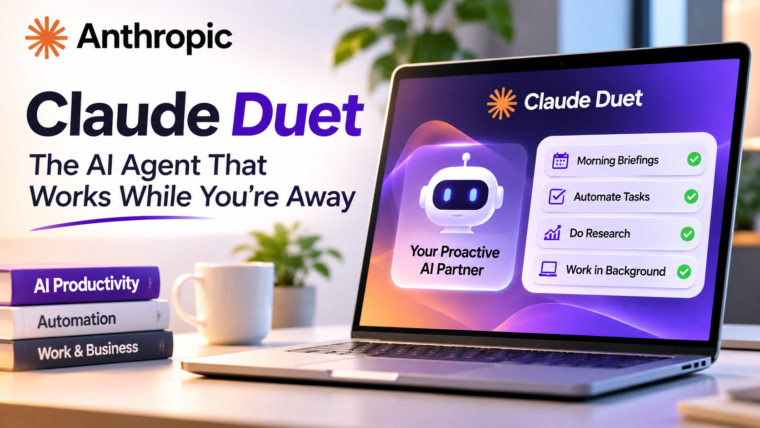
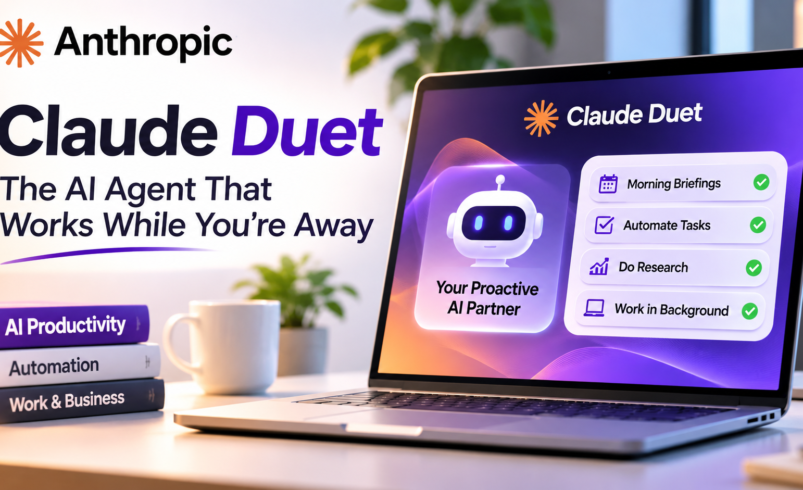
One of the most interesting Claude Duet features is its ability to deliver personalized morning briefings. Instead of beginning the day by switching between emails, calendars, and project management platforms, users could receive an organized overview of important updates and upcoming responsibilities. This approach may help professionals spend less time gathering information and more time making decisions.
Another significant capability is proactive task automation. Claude Duet can assist with research, financial forecasts, business dashboards, presentations, prototypes, and web applications. Its background processing capabilities make it particularly useful for assignments involving multiple stages. Rather than managing every individual step, users can define the desired outcome and review the completed work when it becomes available.
Claude Duet and the Growing Demand for Smarter Digital Tools
Technology companies are increasingly focusing on making digital experiences more convenient and personalized. Whether through artificial intelligence, automation, or subscription-based platforms, the goal is to reduce unnecessary effort while giving users greater flexibility.
Amazon’s introduction of Kindle Plus reflects a similar shift toward convenience by expanding digital reading and audiobook experiences. While Amazon is improving how people consume content, Anthropic is exploring how intelligent assistants can improve the way people manage information and complete their work.
Claude Duet represents an important part of this broader technological transformation, where digital services are becoming more integrated into everyday routines.
How Claude Duet Can Help Businesses and Professionals
For small-business owners, managing operations often involves balancing customer communication, marketing activities, financial planning, and administrative responsibilities. Claude Duet could help reduce this pressure by organizing information, preparing preliminary reports, and monitoring ongoing assignments. Instead of spending hours collecting updates from different platforms, business owners could focus more attention on strategic decisions and customer relationships.
Freelancers and marketing professionals could also benefit from the Claude Duet AI agent. A digital marketer, for example, could delegate competitor research, campaign preparation, or performance reporting while focusing on creative work. Consultants could use the assistant to prepare meeting briefs and organize client information. These applications illustrate its potential, although human review remains essential to ensure accuracy and relevance.
Claude Duet vs Traditional AI Chatbots
The biggest difference between Claude Duet and traditional AI chatbots lies in how they approach tasks. Most conversational AI tools are designed to answer questions, generate content, or provide assistance during an active conversation. Once the interaction ends, the user generally needs to return with another instruction to continue the assignment.
Claude Duet introduces a more proactive approach by allowing delegated tasks to continue between conversations. Its ability to monitor connected applications and prepare updates without constant prompting could make it particularly valuable for recurring professional workflows. However, this does not mean conversational AI tools are becoming obsolete. Both approaches serve different purposes, with AI agents offering additional flexibility for assignments that require ongoing attention.
Claude Duet Pricing and Availability
At its initial launch, Anthropic introduced Claude Duet as a research preview through a waitlist for eligible Claude Pro and Max subscribers in the United States. The platform was announced with support for web browsers, iOS, and Android, allowing users to access their assistant across multiple devices.
Background activities count toward existing subscription usage limits, which means frequent or complex assignments could affect overall usage. Users outside the United States should check Anthropic’s latest availability information before purchasing a subscription specifically for Claude Duet. As the platform develops, its accessibility, features, and pricing arrangements may change.
Is Claude Duet Safe to Use?
Giving an AI assistant access to professional applications naturally raises questions about privacy, security, and user control. Anthropic has stated that Claude Duet requires approval before carrying out sensitive actions such as sending messages, making payments, signing documents, or deleting information. Users can also disconnect applications when they no longer want the assistant to access them.
Despite these safeguards, organizations should carefully consider which information they share with AI agents. Reviewing generated reports, checking important communications, and limiting unnecessary permissions can help reduce potential risks. Claude Duet is designed to assist human decision-making rather than eliminate the need for professional judgment.
What Are the Limitations of Claude Duet?
Although Claude Duet introduces promising capabilities, its initial research preview is not without limitations. The assistant may occasionally misunderstand instructions, overlook important context, or incorrectly prioritize tasks. Personal errands are also less developed than professional workflows, meaning the platform may not be equally effective for every type of assignment.
Users should approach Claude Duet as a developing productivity tool rather than a completely independent employee. Starting with straightforward, recurring tasks allows users to evaluate its accuracy before delegating more complex responsibilities. Its long-term success will depend on reliability, transparency, and the amount of time it genuinely saves after human review.
Final Thoughts
Claude Duet represents an exciting development in the evolution of artificial intelligence. By combining proactive assistance, background automation, and connected applications, Anthropic is exploring a future where AI does more than respond to questions. It could become an active participant in everyday professional workflows, helping users manage responsibilities with fewer interruptions.
Although challenges involving accuracy, privacy, and availability remain, the potential of this technology is significant. If Anthropic can deliver reliable automation without creating additional management responsibilities, Claude Duet could become a valuable digital assistant for businesses and professionals looking to reclaim their time.