

A creative space can do more than hold your supplies. The right craft room can make it easier to begin a project, stay focused, find inspiration, and enjoy the process from start to finish. Whether you have an entire room or a small corner of your home, thoughtful organization can make a noticeable difference.
For many creatives, productivity is not about making something every minute of the day. It is about creating an environment where ideas can develop naturally and where the tools you need are easy to reach. With a few practical craft room ideas, you can create a space that supports both creativity and productivity.
Create a Dedicated Creative Zone
One of the simplest ways to improve productivity is to have a dedicated area for creative work. A separate room is wonderful, but it is not essential. A desk in a bedroom, a small table in a living room, or a corner of a home office can become a useful craft station.
Try to keep your creative supplies within or near this area. When everything is spread throughout the house, starting a project can feel like a chore. Having a dedicated zone reduces the amount of preparation needed.
Your creative zone should also feel inviting. Add things that make you happy, such as artwork, photographs, handmade decorations, plants, fabric samples, or a small inspiration board. The goal is to create a place where you naturally want to spend time.
Use Storage That Makes Sense
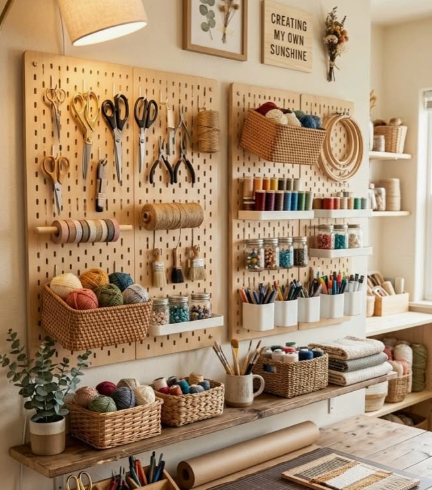
Good storage is one of the most useful craft room ideas because clutter can quickly become distracting. When supplies are difficult to find, you may spend more time searching than creating.
Clear containers are particularly helpful for small supplies such as buttons, beads, ribbons, thread, paper scraps, and embellishments. Labels can make storage even easier. Shelving units can hold larger materials, while drawers are useful for tools and supplies that you want to keep out of sight.
Think about how often you use each item. Frequently used supplies should be stored within easy reach. Materials that you use occasionally can go on higher shelves or in less accessible storage.
You do not need expensive organizers, either. Repurposed jars, boxes, baskets, and containers can work beautifully when they are clean and clearly organized.
Keep Your Work Surface Clear
A large desk is not always necessary, but having a reasonably clear work surface can make a big difference. A crowded table can make it harder to think and may discourage you from starting a new project.
Keep only your most frequently used tools on the desk. Everything else can have a designated home nearby.
At the end of a creative session, spend a few minutes returning tools and materials to their places. This small habit means you can begin your next project without first dealing with yesterday’s mess.
A clean workspace does not have to mean a perfectly tidy room. Creativity can be messy. The goal is simply to keep the clutter manageable.
Organize Supplies by Project or Category
There are many ways to organize a craft room, and the best method depends on the type of creative work you enjoy.
You could group materials by category, such as:
- Fabrics
- Paints and brushes
- Yarn and knitting supplies
- Sewing tools
- Paper and stationery
- Beads and jewelry supplies
- Cutting tools
- Adhesives
- Finished projects
Another option is to organize supplies around specific projects. For example, if you are working on a quilt, keep the fabric, thread, pattern, and tools together in one project box.
Project-based storage can be especially useful for creatives who work on several projects at once. It prevents different materials from becoming mixed together.
Make Inspiration Visible
Creativity often grows when you surround yourself with things that inspire you. Consider creating a small inspiration wall or mood board in your craft room.
You might pin fabric combinations, color palettes, photographs, magazine clippings, sketches, quotes, or pictures of projects you would like to try.
However, avoid turning your inspiration board into another source of pressure. You do not need to complete every project you save. Inspiration should give you ideas, not create a long list of unfinished obligations.
You can also keep a notebook nearby for creative thoughts. A quick sketch or sentence written today may become the starting point for a wonderful project later.
Design Your Space for Productivity
Productivity for creatives looks different from traditional office productivity. Creative work often requires experimentation, breaks, and periods of thinking.
Still, your environment can encourage better habits.
Good lighting is one important factor. Natural light is ideal when available, particularly for sewing, painting, drawing, and other detailed work. Add task lighting when necessary so you can work comfortably during darker hours.
Your chair and table should also be comfortable. If you regularly spend hours crafting, proper support can help you maintain a better working position.
Keep distractions under control. If your phone, television, or social media constantly interrupts you, consider putting your phone away during focused creative sessions.
Create a Simple Creative Routine
Having a routine can make it easier to turn ideas into finished projects. You might choose a specific time of day for creative work, even if you only have 20 or 30 minutes.
Start each session by deciding what you want to accomplish. The goal does not need to be ambitious. You could cut fabric, sketch an idea, finish one section of a project, or organize a few supplies.
Breaking larger projects into smaller tasks can make them feel much more manageable.
For example, instead of saying, “I need to finish this quilt,” you might decide to spend today’s session choosing fabrics. Tomorrow, you could cut the pieces. The next session might be devoted to sewing.
Small steps can eventually create something much larger.
Create a Place for Unfinished Projects
Creative people often have several projects in progress at the same time. There is nothing wrong with that. The problem begins when unfinished projects become piles of confusing materials.
Give each project its own basket, box, or container. Include the supplies you need and, if possible, a note explaining the next step.
This simple system allows you to pause a project without losing your place. When you return to it weeks later, you can quickly understand what needs to happen next.
Schedule Time to Create
One of the biggest challenges for creatives is finding time. Work, family responsibilities, household tasks, and other commitments can easily push creative activities to the bottom of the list.
Instead of waiting for a completely free afternoon, schedule smaller blocks of creative time.
Even fifteen minutes can be valuable. You might use that time to sketch, organize materials, sew a few pieces, write ideas, or experiment with a new technique.
Consistency matters more than having long stretches of free time.
Refresh Your Craft Room Regularly
Your craft room does not have to stay exactly the same forever. As your interests change, your storage needs will change too.
Every few months, look through your supplies. Remove materials you no longer use, reorganize crowded areas, and make room for new interests.
You may also discover that moving a table, changing your lighting, or creating a new storage system makes the room work better.
Think of your craft room as an evolving creative environment rather than a finished project.
Final Thoughts
The best craft room ideas are not necessarily the most expensive or elaborate. A productive creative space is one that makes it easy to find your supplies, begin projects, stay comfortable, and enjoy making things.
Organization can reduce frustration, while personal touches can encourage inspiration. Most importantly, design the space around the way you actually create.
Your craft room does not need to look perfect. It needs to work for you. Whether you have a large studio or a small creative corner, a thoughtful setup can help turn more ideas into finished projects while making the creative process more enjoyable.