

For Australian businesses, workwear is more than clothing. It helps customers identify your team, creates a professional appearance and keeps your brand visible wherever your employees work.
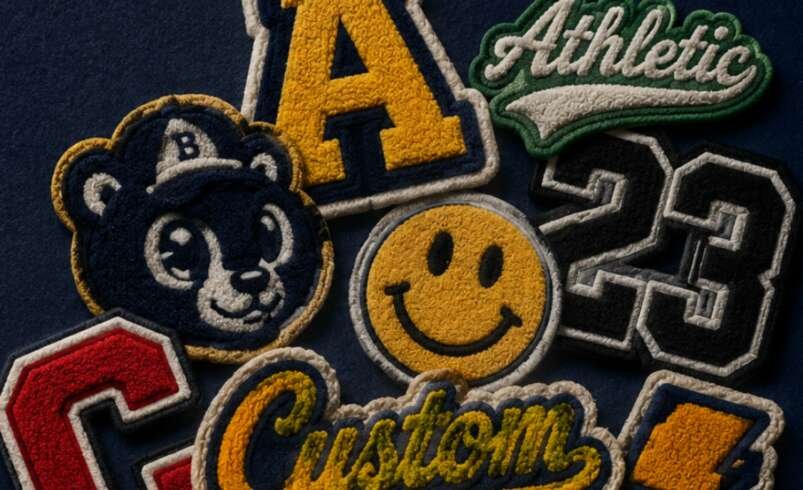
One of the most effective ways to customise workwear is with custom workwear patches.
From embroidered company logos to durable PVC badges and woven name patches, custom patches can be applied to work shirts, jackets, uniforms, caps, bags and other equipment.
For businesses that want consistent branding without ordering completely customised garments, patches offer a flexible solution.
What Are Custom Workwear Patches?
Custom workwear patches are branded or personalised badges manufactured separately from a garment and then attached to uniforms or work clothing.
A patch can include:
- Company logos
- Employee names
- Job titles
- Department names
- Safety identifiers
- Trade symbols
- Team logos
- Business slogans
- Location names
- Qualification or achievement badges
Unlike direct embroidery, a patch can be produced separately and then attached to different garments.
This can be particularly useful when a company uses the same logo across multiple uniform styles.
Why Should Australian Businesses Use Workwear Patches?
Professional workwear can make a significant difference to how a company is perceived.
A clearly branded uniform helps customers immediately recognise who is working for your business.
Custom patches can also provide several practical advantages.
1. Consistent Company Branding
A company can use the same logo patch across shirts, jackets, caps and other workwear.
This creates a consistent visual identity even when employees wear different garments.
For example, a business might use:
Work shirt: Company logo patch
Jacket: Large logo patch
Cap: Small embroidered patch
Bag: PVC logo patch
The result is a coordinated appearance across the entire team.
2. Easy Employee Identification
Name patches can make it easier for customers and colleagues to identify individual team members.
You can create patches featuring:
- First names
- Full names
- Job titles
- Departments
- Roles
Hook-and-loop backing can be particularly useful when employee names or roles may need to change.
3. Professional Appearance
A well-designed logo patch can make workwear look more professional.
This is especially useful for customer-facing businesses such as:
- Plumbers
- Electricians
- Builders
- Landscapers
- Mechanics
- Security companies
- Cleaning companies
- Hospitality businesses
- Transport companies
- Event companies
The patch becomes part of the uniform rather than simply an additional promotional item.
Which Patch Type Is Best for Workwear?
There is no single patch type that works for every business.
The best choice depends on your logo, work environment, garment and desired appearance.
Embroidered Workwear Patches
Embroidered patches are one of the most traditional options.
They use stitched thread to create the logo or design, producing a textured and professional appearance.
They are suitable for:
- Company logos
- Trade uniforms
- Work shirts
- Jackets
- Caps
- Club uniforms
- Event staff
Embroidery is particularly effective for bold logos and simple lettering.
Australian Patch describes embroidered patches as suitable for work shirts, uniforms, jackets, caps, club apparel and promotional clothing.
Woven Workwear Patches
Woven patches use finer threads and provide a flatter surface than traditional embroidery.
They can be a good choice when your logo contains:
- Small lettering
- Fine lines
- Detailed symbols
- Intricate artwork
If your company logo contains a lot of detail, a woven patch may reproduce it more clearly than heavy embroidery.
PVC Workwear Patches
PVC patches have a flexible rubber-like construction and a raised appearance.
They are especially useful for businesses operating outdoors or in environments where the patch may be exposed to moisture and dirt.
PVC patches can work well for:
- Outdoor companies
- Construction businesses
- Adventure brands
- Security companies
- Automotive businesses
- Sports teams
- Workwear brands
They also create a modern appearance that can be very different from traditional embroidery.
Leather Workwear Patches
Leather patches provide a premium and distinctive appearance.
They can be particularly effective on:
- Work jackets
- Denim
- Caps
- Aprons
- Bags
- Lifestyle workwear
A simple embossed company logo on leather can create a sophisticated branded look.
However, leather requires different care from normal textile garments. Direct heat application is generally not recommended because excessive heat can damage or discolour leather.
Iron-On Workwear Patches
Iron-on patches can provide a convenient attachment method for suitable fabrics.
They can work well for certain uniforms and promotional apparel, but the garment material should always be checked before heat application.
Some fabrics and specialised workwear may require sewing instead.
Sew-On Patches for Heavy-Duty Workwear
For workwear that receives frequent washing or heavy use, sew-on patches can provide a secure attachment.
They are particularly suitable for:
- Heavy jackets
- Construction clothing
- Outdoor workwear
- Motorcycle clothing
- Industrial uniforms
- Heavy canvas garments
For demanding working environments, the attachment method should be selected as carefully as the patch itself.
What Information Should Be Included on a Workwear Patch?
Your patch does not need to contain everything about your business.
In most cases, keeping the design simple produces a stronger result.
A company logo patch might include:
Logo + company name
A staff patch might include:
Employee name + job title
A department patch might include:
Company logo + department
For small patches, avoid long sentences or excessive information because small text can become difficult to read.
Where Should a Workwear Patch Be Placed?
Placement depends on the garment and the purpose of the patch.
Left Chest
The left chest is one of the most common locations for a company logo.
It provides a visible but professional branding area.
Right Chest
The opposite side can be used for:
- Employee names
- Job titles
- Departments
- Qualifications
Sleeve
Sleeve patches can be useful for:
- Company symbols
- Australian flags
- Safety identifiers
- Department logos
- Event branding
Back
The back offers a larger area for branding.
A large company logo or business name can be highly visible from a distance.
Cap Front
A smaller logo patch can be placed on the front of a cap.
This can create a consistent look when employees wear caps as part of their uniform.
How Large Should a Workwear Patch Be?
Patch size should always be based on the available garment area and the amount of information in the design.
As a starting point:
| Placement | Typical starting range |
|---|---|
| Shirt chest | 60–90 mm |
| Name patch | 80–120 mm wide |
| Sleeve | 55–85 mm |
| Cap front | 45–75 mm |
| Jacket back | 150–300 mm |
| Work bag | 70–130 mm |
These are starting points rather than strict rules.
A long company name may need more width, while a circular logo may need a different proportion.
One of the best ways to check your chosen size is to print the design at actual size and place it on the garment before production.
How to Design a Professional Workwear Patch
A good workwear patch should be easy to recognise.
Keep the Logo Clear
Avoid unnecessarily complicated artwork.
Your logo should remain identifiable when reduced to its final patch size.
Use Strong Contrast
Your logo needs to stand out against the garment.
For example:
- White embroidery on navy
- Black embroidery on white
- Gold on black
- White on dark green
- Black on orange
Avoid Tiny Text
Small lettering can become difficult to reproduce, especially with embroidered patches.
If your company name is long, consider using a simplified logo or shorter version.
Choose the Right Shape
Popular patch shapes include:
- Circle
- Rectangle
- Square
- Shield
- Oval
- Diamond
- Custom die-cut
The shape should complement the logo rather than simply surrounding it.
Workwear Patches for Different Australian Industries
Almost any industry can use branded workwear patches.
Construction
Construction companies can use large logo patches on shirts, jackets and high-visibility workwear.
Electrical Contractors
Electricians can use embroidered company logos and employee name patches to create a consistent uniform.
Plumbing Businesses
A branded patch can turn standard work shirts into professional company uniforms.
Landscaping Companies
Outdoor businesses can use embroidered or PVC patches to create a rugged branded appearance.
Automotive Businesses
Mechanics and automotive companies can combine embroidered logos with name and qualification patches.
Hospitality
Restaurants, cafés and catering businesses can use smaller logo patches on uniforms and aprons.
Security Companies
Security teams can use role and identification patches, including removable hook-and-loop options where appropriate.
Sports Clubs
Clubs can create team logos, sponsor patches, player identifiers and event badges.
Custom Patches Can Make Uniforms More Flexible
One advantage of patches is that businesses can maintain a standard uniform while changing the branding element.
For example, a company could have a standard jacket and use removable patches for:
- Employee names
- Departments
- Roles
- Events
- Temporary assignments
This can reduce the need to replace the entire garment when an employee’s role changes.
Hook-and-loop patches are particularly useful when the information needs to be changed or transferred between garments.
Custom Patches for New Businesses
Small businesses do not necessarily need a huge custom uniform order.
A startup could begin with:
- 10–20 branded work shirts
- A small batch of logo patches
- Matching caps
- Employee name patches
As the business grows, the same patch design can be reordered and applied to additional garments.
This makes it easier to maintain consistent branding as the team expands.
Custom Patches for Large Teams
Larger businesses can create a complete patch system.
For example:
Main patch: Company logo
Name patch: Employee name
Role patch: Job title
Department patch: Division
Achievement patch: Qualification or milestone
Creating a consistent patch system can make a large organisation easier to identify.
What Backing Should You Choose?
The backing is an important part of your patch specification.
Sew-On
Best suited to permanent attachment and heavy-use garments.
Iron-On
Convenient for compatible fabrics and suitable applications.
Hook-and-Loop
Useful when patches need to be removed, replaced or transferred.
Adhesive
Can be useful for temporary applications, depending on the garment and intended use.
Always consider how frequently the garment will be washed and how much physical stress the patch will receive.
How to Order Custom Workwear Patches in Australia
The ordering process can be straightforward when you have the correct information ready.
Step 1: Prepare Your Logo
Send your company logo in the highest-quality format available.
Vector formats such as AI, EPS or SVG are often useful for production.
Step 2: Choose the Patch Type
Decide between embroidered, woven, PVC, leather or another suitable construction.
Step 3: Choose the Size
Measure the available area on the garment.
Step 4: Select the Backing
Choose sew-on, iron-on, hook-and-loop or another appropriate backing.
Step 5: Confirm Colours
Specify your preferred thread or patch colours.
Step 6: Review the Proof
Check:
- Logo proportions
- Spelling
- Colours
- Dimensions
- Border
- Backing
- Placement
Step 7: Approve Production
Once the design has been checked and approved, production can begin.
What Should You Ask a Patch Manufacturer?
Before ordering, ask about:
- Minimum order quantity
- Production time
- Patch dimensions
- Available materials
- Backing options
- Artwork requirements
- Digital proofs
- Colour matching
- Sample availability
- Bulk pricing
- Shipping
A clear specification helps prevent misunderstandings and makes it easier to compare quotations.
How Can Businesses Make Their Patches Last Longer?
The patch itself is only one part of the equation. Garment care also matters.
Follow the care instructions appropriate for the garment and patch type.
For frequently washed workwear:
- Avoid excessive heat where inappropriate
- Follow the garment’s washing instructions
- Check patch edges periodically
- Repair loose stitching early
- Avoid damaging hook-and-loop surfaces
- Do not apply direct heat to materials that are heat-sensitive
Proper care can help maintain the appearance of branded workwear for longer.
Final Thoughts
Custom workwear patches in Australia provide businesses with a practical way to combine professional uniforms with strong branding.
Whether you need embroidered company logos, woven name patches, PVC badges, leather branding or removable role patches, the right combination of material, size, backing and placement can make a major difference.
The best workwear patch is not necessarily the largest or most detailed. It is one that remains clear, durable, comfortable and recognisable in the environment where it will be used.
Before placing your order, think about your garment, working conditions, logo complexity, patch size and attachment method.
With the right design and production specifications, custom patches can become a long-term part of your company’s workwear and branding strategy.