

The Hero Motors IPO is set to become one of the notable public offerings in India’s automotive and mobility sector in September 2026. Backed by the Munjal family, Hero Motors has evolved from an Indian auto-component manufacturer into an engineering and mobility technology company serving customers across India, Europe, the UK, the US and other international markets.
The company is looking to raise ₹1,000 crore through its Initial Public Offering (IPO), consisting of a fresh issue of ₹600 crore and an Offer for Sale (OFS) of ₹400 crore. The IPO is scheduled to open on September 16, 2026, and close on September 18, 2026. Shares are proposed to be listed on both the BSE and NSE.
With the company operating across traditional automotive components as well as electric mobility and advanced powertrain solutions, investors will be watching the Hero Motors IPO closely.
Hero Motors IPO: Key Highlights
| Particulars | Details |
|---|---|
| Company | Hero Motors Limited |
| IPO Size | ₹1,000 Crore |
| Fresh Issue | ₹600 Crore |
| Offer for Sale | ₹400 Crore |
| Price Band | ₹79 – ₹84 per share |
| Face Value | ₹10 per share |
| Lot Size | 178 Shares |
| Minimum Investment | ₹14,952 |
| IPO Opening Date | September 16, 2026 |
| IPO Closing Date | September 18, 2026 |
| Allotment Date | September 21, 2026 |
| Listing Date | September 23, 2026 |
| Listing Exchanges | BSE & NSE |
| Lead Managers | ICICI Securities, DAM Capital Advisors, JM Financial |
| Registrar | KFin Technologies |
The price band has been fixed at ₹79–₹84 per share, giving Hero Motors an implied valuation of approximately ₹3,815 crore at the upper end of the price band.
What Does Hero Motors Do?
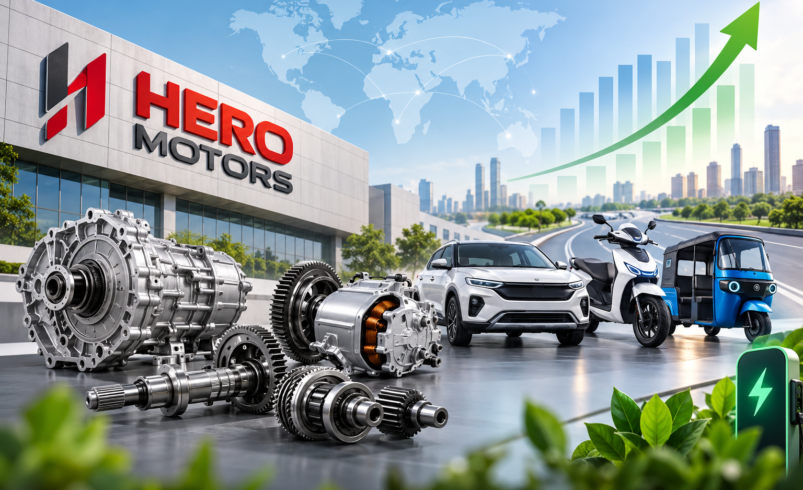
Hero Motors is an automotive technology and engineering company focused on powertrain solutions, transmission components and precision-engineered mobility products.
The company serves original equipment manufacturers (OEMs) across multiple geographies and vehicle categories. Its business is not limited to conventional internal-combustion-engine components. It also has exposure to electric mobility through products such as electric drive units and motors.
Its product portfolio includes:
- Powertrain solutions
- Transmission components
- Gears and shafts
- Drive units
- Electric vehicle components
- E-bike motors
- Chassis and frames
- High-performance transmission systems
The company has manufacturing and engineering operations in India as well as overseas markets, including the UK and Thailand.
Hero Motors’ Journey
Hero Motors was incorporated in 1998 as Hero Briggs & Stratton Auto Private Limited. Following the completion of the joint venture, the company underwent a name change and became Hero Motors Limited in 2004.
Over the years, the company expanded beyond conventional component manufacturing and developed capabilities in advanced engineering, transmission systems and powertrain technologies.
Today, Hero Motors has positioned itself as a supplier to global automotive manufacturers, with exposure to both traditional and emerging mobility segments.
The company’s association with the broader Hero business group and Munjal family also provides it with an established industrial legacy.
Hero Motors IPO Structure
The ₹1,000 crore IPO consists of two components:
Fresh Issue – ₹600 Crore
The fresh issue will bring new capital into the company. Hero Motors plans to use the proceeds primarily for:
- Repayment or prepayment of debt
- Capacity expansion
- Purchase of equipment for its Uttar Pradesh facility
- General corporate purposes
This portion of the IPO can therefore support the company’s balance-sheet management as well as its future expansion.
Offer for Sale – ₹400 Crore
The remaining ₹400 crore will be an Offer for Sale by existing shareholders.
Unlike a fresh issue, money raised through an OFS goes to the selling shareholders rather than directly to the company.
Following the IPO, promoter shareholding is expected to decline substantially from its pre-IPO level, increasing the public float of the company.
Why Is Hero Motors Entering the EV Market?
The global automobile industry is undergoing a significant transformation as electric vehicles, connected mobility and advanced powertrain technologies gain importance.
For component manufacturers, this transition creates both challenges and opportunities.
Traditional engine and transmission components may face structural pressure as EV adoption increases. At the same time, demand is emerging for:
- Electric motors
- Drive units
- EV transmission systems
- Battery-related components
- Lightweight engineering solutions
- High-efficiency powertrain systems
Hero Motors’ exposure to electric mobility could help the company participate in this changing automotive value chain.
Its product portfolio includes drive units and motors for electric two-wheelers and three-wheelers, along with e-bike motor solutions.
Hero Motors’ Global Customer Base
One of the important aspects of the Hero Motors business model is its exposure to international customers.
The company supplies engineered components and powertrain solutions to OEMs in markets including:
- India
- Europe
- United Kingdom
- United States
- ASEAN
The company has also developed capabilities for high-performance applications and counts international automotive and mobility companies among its customers.
A diversified international customer base can provide opportunities for growth, although it also exposes the company to currency movements, international economic conditions and geopolitical risks.
Hero Motors Financial Performance
Hero Motors has reported growth in revenue and profitability in recent years.
| Financial Year | Revenue (₹ Cr) | PAT (₹ Cr) | Net Worth (₹ Cr) | Borrowings (₹ Cr) |
|---|---|---|---|---|
| FY24 | 1,064.39 | 17.04 | 385.44 | 304.00 |
| FY25 | 1,089.59 | 32.80 | 423.95 | 407.62 |
| FY26 | 1,188.35 | 41.17 | 482.45 | 400.79 |
In FY26, revenue stood at approximately ₹1,188 crore, while profit after tax increased to around ₹41 crore.
The company has therefore demonstrated improvement in both revenue and profitability, although its relatively modest net profit margin remains an important factor for investors to consider.
Hero Motors Financial Ratios
Some key FY26 indicators include:
- ROE: 8.56%
- ROCE: 19.77%
- Debt/Equity: 0.83
- RoNW: 8.53%
- PAT Margin: 3.46%
- EBITDA Margin: 12.44%
The numbers indicate that the company generates a healthy operating margin, but its bottom-line profitability is comparatively lower.
The debt-to-equity ratio is another metric investors should monitor because part of the IPO proceeds is intended for debt repayment.
Hero Motors IPO Valuation
At the upper price band of ₹84, the IPO implies a valuation of approximately ₹3,815 crore.
The company’s reported post-issue valuation and earnings need to be considered together when assessing whether the IPO price adequately reflects its growth potential.
The IPO page currently indicates a post-issue P/E of around 92x, based on the stated post-issue EPS. This makes valuation one of the most important factors investors should examine before applying.
A high valuation can work in the company’s favour if earnings grow rapidly in the coming years, but it can also increase downside risk if earnings growth falls short of expectations.
Hero Motors IPO GMP
The Grey Market Premium (GMP) is an unofficial indicator of market sentiment before listing.
As of September 14, 2026, the GMP reported on India IPO’s Hero Motors IPO page was ₹24 against the upper price band of ₹84.
On this basis, the implied estimated listing price would be around ₹108.
However, GMP is not an official market indicator. It can change quickly and should not be considered a guarantee of the actual listing price or future stock performance.
Hero Motors IPO: Competitive Strengths
1. Established Automotive Engineering Experience
Hero Motors has been operating in the automotive component and engineering sector for decades, giving it considerable manufacturing and industry experience.
2. Exposure to Global OEMs
Its international customer base provides access to established automotive and mobility markets.
3. EV Opportunity
The company’s exposure to electric powertrain and drive-system technologies provides a potential growth opportunity as electric mobility expands.
4. Diversified Product Portfolio
Hero Motors operates across multiple product categories rather than depending on a single component.
5. Strong Promoter Background
The company’s association with the Munjal family and the broader Hero business ecosystem provides an established industrial background.
Hero Motors IPO: Risks Investors Should Consider
No IPO is without risk. Investors should carefully consider the following factors.
Customer Concentration
A significant dependence on selected customers can create business risk if contracts are reduced, delayed or discontinued.
Automotive Industry Cyclicality
Demand for automotive components is closely linked to vehicle production and broader economic conditions.
Raw Material Costs
Fluctuations in the prices of metals and other raw materials can affect manufacturing margins.
Foreign Exchange Risk
Because Hero Motors has substantial international exposure, currency fluctuations can influence revenue and profitability.
High Valuation
The valuation implied by the IPO price can be an important concern if future earnings growth does not match market expectations.
Debt
The company has meaningful borrowings, making debt reduction and balance-sheet improvement important areas to monitor.
Hero Motors IPO: What Will the IPO Money Be Used For?
The ₹600 crore fresh issue is expected to be deployed towards strategic business requirements.
The key objectives include:
Debt Reduction:
A portion of the proceeds will be used for repayment or prepayment of borrowings.
Capacity Expansion:
The company plans to invest in equipment and expand capacity at its existing Uttar Pradesh facility.
General Corporate Purposes:
The remaining funds will support the company’s broader corporate requirements.
This combination means the IPO is aimed not only at raising growth capital but also at strengthening the company’s financial position.
Hero Motors IPO Review
Hero Motors presents an interesting combination of traditional automotive engineering, global OEM exposure and emerging EV opportunities.
The company has demonstrated revenue and profit growth, while its international presence provides an additional avenue for expansion. Its exposure to electric mobility could also become increasingly relevant as the automotive industry shifts towards electrification.
However, investors should not overlook the company’s relatively low PAT margin, debt levels, customer concentration and the valuation implied by the IPO price.
The most important question is therefore not simply whether Hero Motors is a good company, but whether the IPO valuation adequately compensates investors for the company’s growth opportunities and associated risks.
Should You Apply for the Hero Motors IPO?
The answer depends on your investment objective and risk appetite.
Investors looking for exposure to the automotive components, mobility technology and EV ecosystem may find Hero Motors interesting because of its global customer base, engineering capabilities and potential growth opportunities.
At the same time, investors should carefully evaluate:
- IPO valuation
- Profit margins
- Debt levels
- Customer concentration
- EV growth prospects
- International exposure
- Future earnings growth
GMP may provide an indication of short-term market sentiment, but long-term investors should give greater importance to the company’s fundamentals and valuation.
Hero Motors IPO Important Dates
The IPO is scheduled to open for subscription on September 16, 2026, and close on September 18, 2026.
The expected allotment date is September 21, followed by share credit and refunds on September 22. The shares are scheduled to list on September 23, 2026, subject to the applicable processes and approvals.
Final Takeaway
The Hero Motors IPO represents the public-market debut of an established automotive engineering company with ambitions extending beyond conventional auto components.
Its combination of global OEM relationships, engineering capabilities, manufacturing infrastructure and exposure to EV powertrain solutions gives the company several potential long-term growth drivers.
However, the IPO also comes with risks related to valuation, margins, debt, customer concentration and the cyclical nature of the automotive industry.
For investors, the Hero Motors IPO should therefore be evaluated from both sides: the growth opportunity offered by India’s evolving mobility ecosystem and the price being paid for that opportunity.
Investors should read the company’s RHP and other official offer documents carefully before making an investment decision.