

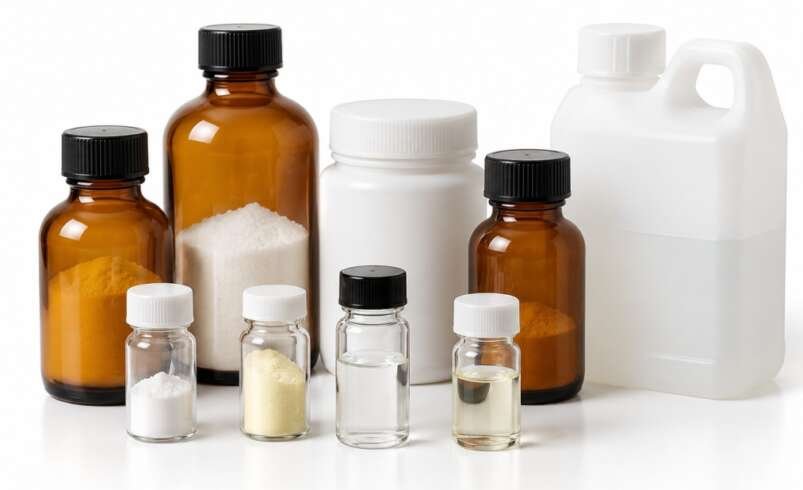

Understanding Their Role in Organic Chemistry, Pharmaceutical Development and Advanced Laboratory Synthesis
Chemical research depends on precise reactions, reliable materials and carefully controlled processes to create new compounds and improve scientific understanding. Synthesis Reagents are essential components in modern laboratories, supporting organic synthesis, pharmaceutical research, material development and chemical analysis through controlled molecular transformations.
What Are Synthesis Reagents?
Synthesis reagents are specialised chemical substances used to enable, control or modify chemical reactions during the preparation of new compounds. They help researchers transform starting materials into desired products by influencing reaction pathways and improving selectivity.
Depending on the application, synthesis reagents may function as:
- Reactants that participate directly in chemical reactions
- Catalysts that improve reaction efficiency
- Activating agents that promote molecular changes
- Protecting agents that control reactive groups
- Intermediates used in multi-step synthesis
Selecting the appropriate reagent is important because chemical compatibility, purity and reaction conditions can significantly affect the final outcome.
Why Are Synthesis Reagents Important in Modern Chemistry?
The development of new chemicals, medicines and advanced materials requires accurate and repeatable synthesis processes. Synthesis reagents provide researchers with the tools needed to create complex molecules and investigate chemical behaviour.
They are widely used in:
- Organic chemistry research
- Pharmaceutical discovery
- Biotechnology development
- Material science
- Academic laboratories
- Industrial chemical production
Reliable reagents help scientists achieve better reaction control, improve efficiency and reduce unwanted by-products.
How Do Synthesis Reagents Support Organic Chemistry?
Organic chemistry focuses on designing and producing carbon-based compounds with specific properties. Synthesis reagents allow chemists to introduce structural changes, create new bonds and modify existing molecules.
Common organic synthesis applications include:
- Functional group transformation
- Compound modification
- Chemical pathway development
- Molecular structure optimisation
- Preparation of research compounds
The choice of reagent depends on the desired transformation and the characteristics of the starting materials.
Role of Synthesis Reagents in Pharmaceutical Research
Pharmaceutical development requires the creation and evaluation of complex chemical structures. Synthesis reagents support researchers during the preparation of active compounds, intermediates and molecular candidates.
They help scientists:
- Develop new chemical entities
- Modify molecular structures
- Study biological activity
- Improve compound properties
- Prepare pharmaceutical intermediates
Research involving chemical synthesis often connects with biochemical studies, where compounds such as Amino Acids And Amino Acid Derivatives are investigated for their role in proteins, peptides and biological systems.
How Do Researchers Choose the Right Synthesis Reagent?
Choosing the correct reagent requires understanding the reaction objective and the expected chemical behaviour.
Important selection factors include:
- Reaction type and mechanism
- Chemical compatibility
- Required purity level
- Stability during storage
- Reaction conditions
- Final product requirements
A suitable synthesis reagent improves reaction reliability and helps researchers achieve consistent results.
Importance of Purity in Chemical Synthesis
Purity is one of the most important characteristics of synthesis reagents. Even small amounts of impurities can influence reaction performance, product quality and analytical results.
High-quality reagents help laboratories:
- Reduce unwanted reactions
- Improve reproducibility
- Maintain accurate results
- Increase reaction efficiency
- Support reliable analysis
Researchers should always consider product specifications and application requirements when selecting chemical materials.
Connection Between Synthesis Reagents and Analytical Chemistry
After chemical synthesis, researchers often need to analyse and confirm the properties of produced compounds. Analytical techniques help identify molecular structures, purity levels and chemical characteristics.
Laboratories may use Solvents For LC-MS during advanced analytical procedures where high-quality solvents are required for accurate separation and detection.
Combining suitable synthesis reagents with reliable analytical materials allows scientists to evaluate chemical processes more effectively.
Supporting Chemical Workflows With Laboratory Equipment
Successful synthesis requires not only chemical reagents but also accurate handling, preparation and measurement tools.
During reaction preparation and sample handling, laboratories may use Laboratory Glassware to provide suitable containers and equipment for controlled chemical procedures.
Proper laboratory equipment helps maintain safe, organised and efficient workflows.
Applications Beyond Traditional Chemical Research
Synthesis reagents are not limited to academic chemistry laboratories. They also support research and development across multiple industries.
Important application areas include:
- Pharmaceutical manufacturing
- Biotechnology
- Environmental research
- Food science
- Material engineering
- Chemical production
As scientific research continues to advance, the demand for precise and specialised synthesis reagents continues to grow.
How Do Synthesis Reagents Improve Research Accuracy?
Controlled chemical synthesis depends on careful planning and consistent execution. Using suitable reagents allows researchers to better control reaction pathways and improve experimental outcomes.
Accurate synthesis helps scientists:
- Produce targeted compounds
- Reduce experimental variation
- Improve reaction understanding
- Develop innovative solutions
- Validate scientific findings
Reliable chemical materials are a foundation for successful research and development.
Safe Handling and Storage of Synthesis Reagents
Proper storage and handling are essential for maintaining reagent quality and laboratory safety.
Researchers should consider:
- Appropriate storage temperatures
- Chemical compatibility
- Exposure prevention
- Proper labelling practices
- Recommended handling procedures
Following safety guidelines helps preserve reagent performance and supports responsible laboratory operations.
Frequently Asked Questions
What are synthesis reagents used for?
Synthesis reagents are used to create, modify and control chemical reactions during laboratory and industrial synthesis processes.
Why is reagent purity important?
High-purity reagents improve reaction consistency, reduce contamination risks and support accurate scientific results.
Are synthesis reagents used in pharmaceutical research?
Yes, synthesis reagents are widely used in pharmaceutical development for preparing compounds, intermediates and research materials.
How do synthesis reagents affect chemical reactions?
They can influence reaction speed, selectivity, molecular transformation and the formation of desired products.
What factors should be considered when selecting a synthesis reagent?
Researchers should consider reaction requirements, chemical compatibility, purity, stability and intended application.
Advancing Chemical Discovery Through Reliable Synthesis
Synthesis reagents continue to play a vital role in scientific progress by enabling researchers to create, study and improve chemical compounds. From organic chemistry and pharmaceutical development to advanced analytical research, these materials support innovation across many fields.
By selecting high-quality reagents and combining them with suitable laboratory practices, scientists can achieve more reliable reactions, improve research efficiency and continue developing solutions that shape the future of chemistry.