
The problem most health insurance agencies run into is not a shortage of names. It is a shortage of people who actually want to buy. Purchased lists, cold outreach, and recycled data all produce the same result: agents spending most of their day on contacts who were never in the market to begin with. Attracting high-intent health insurance leads means reaching people at the moment they are actively searching for coverage, not chasing someone who filled out a form six months ago for a different reason entirely.
This article walks through how agencies can build a pipeline around genuine consumer buying intent, what separates a lead worth calling from one that wastes a sales hour, and where the real leverage points are in health insurance lead generation today.
Why Intent Is the Only Metric That Matters at the Top of the Funnel
A lead is a data point. Intent is what turns that data point into a conversation. The distinction matters more in health insurance than in almost any other consumer product, because the purchase decision is personal, often urgent, and tied to life circumstances like job loss, aging off a parent’s plan, or a gap in employer coverage.
Under-65 consumers shopping for individual or family coverage are not browsing casually. They have a deadline, a gap, or a specific concern driving them to search. That is the window agencies need to reach them in. Once that moment passes, whether they bought elsewhere, enrolled in a government program, or simply deferred the decision, the opportunity is effectively closed.
This is why the quality of high-intent health insurance leads is measured not just by whether someone expressed interest, but by how recently, how specifically, and through what channel. A consumer who typed a query into a search engine, clicked an ad, and completed a quote request form in the last few minutes is a fundamentally different prospect than someone whose contact information was scraped from a third-party database.
The Channels That Actually Produce Buying Intent
Not all digital advertising generates the same quality of prospect. The channel shapes the intent level before a single form is submitted.
Search advertising, particularly on platforms like Google, captures people mid-decision. Someone searching for health coverage options has already acknowledged a need. They are not being interrupted by an ad while doing something else. They sought the information out. That self-selection is what makes search-driven online quote requests significantly more likely to convert than display or social impressions served to a broad audience.
Social advertising on platforms like Meta can reach health insurance prospects effectively, but the mechanism is different. These campaigns work best when they target life-event signals, such as recent employment changes or age-based milestones, that correlate with coverage gaps. The intent is real but often earlier in the decision cycle, which means follow-up strategy matters more.
Owned and operated platforms, where the publisher controls the content and the lead capture environment, tend to produce more consistent quality than broad publisher networks. When a consumer arrives on a site specifically built around health coverage comparison or enrollment guidance, the context reinforces the intent. That is a meaningful difference in what the lead looks like when it reaches an agent.
What Separates a Workable Lead from a Wasted One
Agencies that have spent time on poor-quality health insurance lead generation share a familiar frustration: high volume, low contact rates, and almost no conversions. The leads existed on paper, but the people behind them either did not remember submitting a request, submitted it for a different product, or were contacted so long after the fact that the moment had passed.
Several factors separate a lead that produces a real conversation from one that does not.
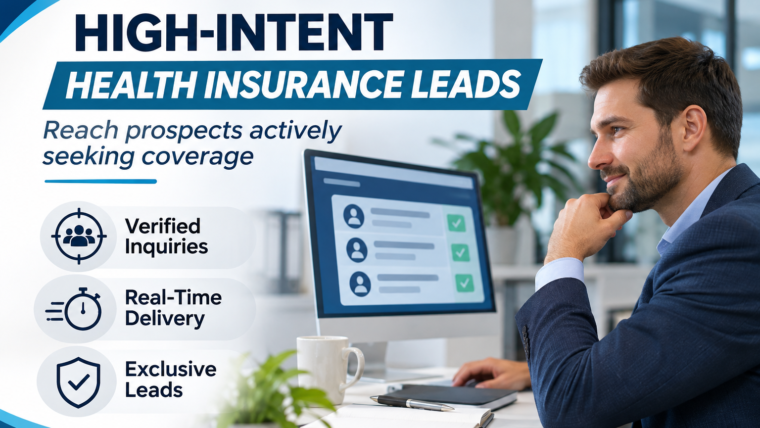
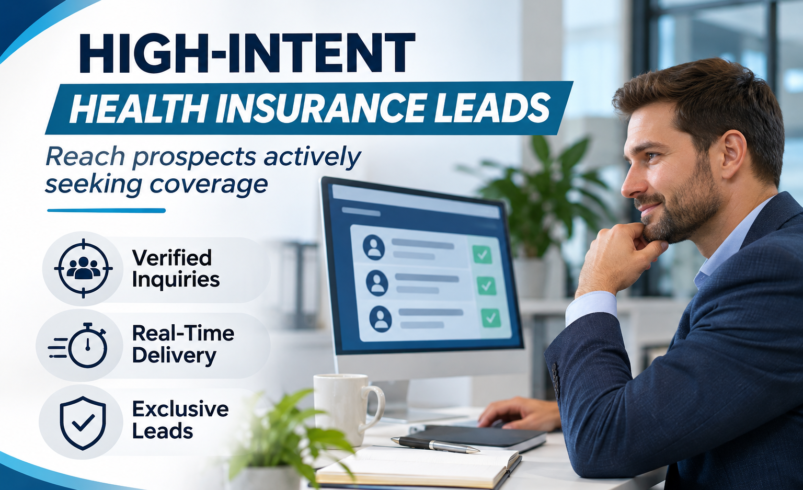
- Recency: Consumer interest in health coverage degrades quickly. A prospect who submitted a request this morning is far more likely to engage than one from last week. Real-time lead delivery closes that gap before intent fades.
- Exclusivity: Shared leads go to multiple agencies simultaneously. The first agent to call has an advantage, but if five agents are calling the same person within the hour, the experience for the consumer becomes noise. Exclusive leads remove that competition entirely.
- Verification: Lead authenticity matters. Third-party verification tools like TrustedForm and Jornaya LeadiD document the lead’s origin, timestamp, and consent at the point of creation. That documentation protects the agency and confirms the lead was consumer-initiated.
- Specificity of request: A consumer who filled out a form requesting a health insurance quote for a specific coverage type is further along than one who clicked a general “learn more” button. The form data itself signals where the prospect is in the decision process.
The Follow-Up Window Is Shorter Than Most Agencies Treat It
Even a well-sourced, verified, exclusive lead can go cold quickly. Research on sales response consistently points in the same direction: the probability of reaching a prospect drops sharply with each passing hour after they submit a request. The practical implication for insurance agent follow-up is that speed is not a courtesy, it is a conversion variable.
Agencies that build their workflows around real-time lead delivery and immediate outreach consistently outperform those that batch their follow-up. This is not about pressure tactics. It is about timing. When an agent calls while the consumer is still at their computer, still thinking about coverage, the conversation starts from a shared context. Call the same person two days later and the context has shifted entirely.
The follow-up sequence matters too. A single call attempt is rarely enough. A structured approach, combining a call, a text, and an email within the first hour, then follow-up attempts over the next day or two, gives the lead a real chance to convert without becoming harassment. The goal is to be present when the prospect is ready, not to wear them down.
Building a Sustainable Pipeline Around High-Intent Prospects
One-off lead purchases produce one-off results. Agencies that build consistent pipelines treat health insurance lead generation as an ongoing process with defined inputs and measurable outputs, not a tactic to try when the sales floor goes quiet.
That means setting clear parameters before buying leads: the geographic area, the age band (under-65 consumers are a distinct segment from Medicare-eligible prospects), the coverage type, and the volume the agency can actually work in a given week. Buying more leads than agents can contact promptly is the same as buying aged inventory. The leads exist, but the timing is already wrong.
It also means tracking what happens after the lead arrives. Which sources produce the highest contact rates? Which produce the highest close rates? Those two numbers are often different, and understanding the gap tells an agency a great deal about where to invest. A source that generates high contact rates but low closes may be producing early-stage curiosity rather than genuine purchase intent. A source with lower contact rates but high close rates when contact is made may be worth prioritizing despite the volume difference.
Exclusive Leads Versus Shared Leads: A Practical Comparison
The exclusive-versus-shared decision comes up in almost every conversation about health insurance lead generation, and the right answer depends on the agency’s capacity and follow-up speed.
| Factor | Exclusive Leads | Shared Leads |
| Competition on the lead | None; only one agency receives it | Multiple agencies receive the same lead simultaneously |
| Cost per lead | Higher per unit | Lower per unit |
| Contact rate | Higher; no race to call first | Lower; consumer may already be talking to a competitor |
| Best fit for | Agencies with strong follow-up systems and capacity to work each lead thoroughly | High-volume operations that can absorb lower conversion rates across larger batches |
| Consumer experience | One point of contact; less friction | Multiple calls in a short window; potential for consumer frustration |
For most mid-sized agencies, exclusive leads produce a better return on the time agents actually spend working the pipeline. The higher per-unit cost is offset by not competing for the same prospect against several other agencies at the same moment.
Insurance Agency Marketing That Attracts Rather Than Interrupts
The most durable pipeline strategy is one where the consumer initiates contact. That is the core principle behind effective insurance agency marketing in a crowded digital environment. When someone submits a quote request, calls an inbound number, or completes an enrollment inquiry, they have already done the hardest part of the sales process: they have decided they need help.
Agencies that rely heavily on outbound cold calling are working against this dynamic. They are interrupting people who have not expressed any interest, which produces low contact rates, low conversion, and a significant amount of agent frustration. The shift toward consumer-initiated lead models, whether through webform submissions or inbound calls, changes the starting point of every conversation.
That does not mean inbound marketing alone is enough. Most agencies need a combination of their own content and digital presence alongside a reliable external source of high-intent health insurance leads to maintain consistent volume. Building organic traffic takes time. Paid campaigns require expertise to run efficiently. Working with a lead provider that sources prospects across multiple channels, including search advertising, social platforms, and owned publisher networks, gives agencies access to volume they could not generate independently at the same cost.
What to Ask Before Choosing a Lead Provider
Not every lead provider operates the same way, and the differences matter significantly for an agency’s results. Before committing to a source, agencies should get clear answers to a specific set of questions.
- Are leads exclusive or shared, and is that consistent or variable by campaign?
- How is the lead’s authenticity verified, and is that documentation available per lead?
- What is the delivery method, and how quickly does a lead reach the agency after submission?
- What traffic sources generate the leads, and does the provider use owned platforms or rely entirely on third-party networks?
- What filters are available to target specific geographies, age bands, or coverage types?
- What happens if a lead is clearly invalid, a duplicate, or does not meet the agreed criteria?
A provider that cannot answer these questions specifically is likely reselling leads from sources they do not control, which is where quality problems originate. Transparency about sourcing, verification, and delivery is not a bonus feature. It is the baseline for a working partnership.
For agencies ready to move beyond inconsistent pipelines and start working with verified, consumer-initiated prospects, Exclusive Health Insurance Leads sourced through real-time delivery and multi-channel digital advertising offer a more reliable foundation than most agencies currently have in place. The difference shows up quickly in contact rates and in how agents spend their time.