

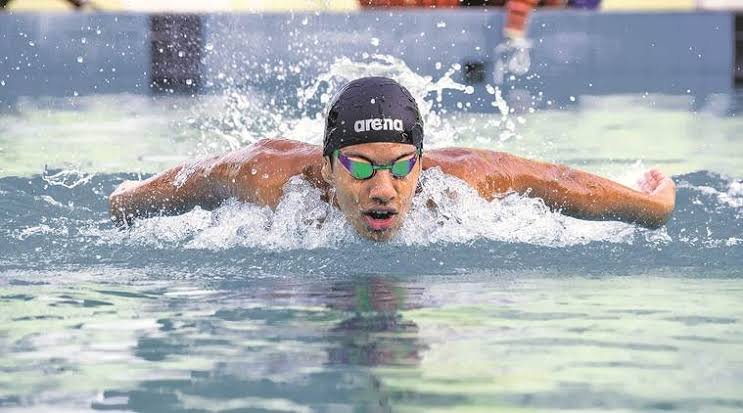

For years, Indian swimming has lived in an unusual space. The country has had talented swimmers, strong national competitions and occasional international breakthroughs, yet swimming has rarely received the same attention as cricket, badminton, wrestling or athletics.
That picture is slowly changing.
A younger generation is beginning to show that Indian swimming can produce athletes capable of competing on major international stages. Names such as Srihari Nataraj and Dhinidhi Desinghu have helped bring attention to that shift, while several emerging swimmers are pushing national standards higher.
The change is not happening overnight. Competitive swimming demands years of technical refinement, enormous training volumes, access to quality pools and careful management of recovery. A swimmer cannot simply decide to become world-class and expect results within a season.
India’s challenge is therefore bigger than finding talented teenagers. It is about creating a system capable of turning promising young swimmers into durable international competitors.
The encouraging part is that signs of progress are already visible.
The New Generation Is Raising India’s Swimming Ambitions
One of the clearest examples is Dhinidhi Desinghu.
At just 14, Desinghu represented India at the Paris 2024 Olympics and was the youngest swimmer at those Games. World Aquatics reported that she had already competed at the Asian Games, the World Aquatics Championships and the Indian National Games before reaching Paris.
Her development is particularly interesting because she has continued producing strong results as she has moved through the age groups.
At the 2025 Senior National Aquatics Championships, she set a national record of 56.78 seconds in the women’s 100m freestyle. Her World Aquatics profile also records national-record performances in the 100m and 200m freestyle.
That progression illustrates something important about India’s new swimming generation: young athletes are not merely participating internationally. They are increasingly entering senior competition and challenging established national benchmarks.
Another important name is Srihari Nataraj.
Nataraj has been one of India’s leading swimmers in the backstroke and freestyle events and has competed at major international meets. His World Aquatics profile records national-record performances and multiple medals at the 2025 Asian Aquatics Championships, including silver in the men’s 200m freestyle and bronze medals in several other events.
His career also shows why swimming development cannot be judged by a single Olympic cycle.
A swimmer may reach the Olympics relatively young, but becoming a consistent international finalist can take considerably longer. Technique, strength, race management and physical maturity continue developing throughout an athlete’s career.
India therefore needs to think beyond “finding the next star.”
The bigger objective is creating a group of swimmers capable of pushing one another.
That is where depth becomes important.
At the 2023 Asian Games, Indian swimmers such as Nataraj, Sajan Prakash, Dhinidhi Desinghu and several relay squads reached finals or posted competitive performances. India’s men’s 4x100m freestyle relay finished sixth, while the men’s 4x100m medley relay finished fifth.
These results may not have produced a medal, but they provide useful evidence of competitiveness.
Swimming is a sport where relay depth can reveal the strength of an entire programme. One exceptional swimmer can make headlines, but a strong relay requires several athletes performing at a high level simultaneously.
That makes the development of the second, third and fourth-best swimmers in each event just as important as finding the number-one athlete.
The next generation is also emerging through junior competitions and national championships.
At the 2026 Senior National Aquatics Championships, for example, the entry lists included several teenage swimmers competing alongside established senior athletes. Dhinidhi Desinghu, born in 2010, was among the finalists in the women’s 100m freestyle, while young swimmers such as Rujula Shashidhara and others were also competing at senior level.
This transition is valuable because junior dominance does not automatically translate into senior success.
The physical demands change.
The races become deeper.
Small technical weaknesses become more expensive.
And international competition leaves very little room for inefficient movement.
For young Indian swimmers, therefore, the road to global success begins with mastering fundamentals.
The first is technique.
Swimming is often misunderstood as simply being about fitness. In reality, efficiency is everything.
Two swimmers can have similar physical strength, yet one can be faster because they waste less energy in the water.
Body position, streamline, breathing pattern, stroke mechanics, underwater movement and turns can all make measurable differences.
For a 100m swimmer, a fraction of a second lost during a turn can decide a race. Over several laps, small technical inefficiencies become major disadvantages.
The second requirement is strength and conditioning.
Modern swimming programmes increasingly use dry-land training to develop strength, mobility, stability and explosive power. However, young swimmers need age-appropriate programmes rather than simply copying the workouts of adult professionals.
That distinction matters.
A 13-year-old should not be expected to train like a 23-year-old Olympic finalist.
Long-term development is more important than producing impressive results at a young age.
Recovery is equally important.
Swimming can involve large training volumes, and young athletes are particularly vulnerable to fatigue if workloads are increased too quickly.
Sleep, nutrition, hydration, mobility work and rest days are not optional extras. They are part of performance.
A practical development programme should therefore monitor:
- Training volume
- Race performance
- Stroke efficiency
- Recovery
- Sleep quality
- Strength development
- Injury symptoms
- Competition schedule
- Psychological wellbeing
The mental side of swimming deserves more attention too.
Unlike many team sports, swimmers spend much of their training time alone in the water.
There may be dozens of repetitive laps with no crowd, no teammates beside them and no immediate excitement.
That requires unusual discipline.
A young swimmer must learn to enjoy the process rather than relying entirely on medals for motivation.
This becomes even more important when international competition arrives.
A swimmer may spend months preparing for one race that lasts less than two minutes.
There is little opportunity to recover from a mistake.
A poor start, an inefficient turn or a badly judged pace can change the result.
Learning to handle that pressure is part of becoming an elite swimmer.
India also has a geographical challenge.
Swimming facilities are not equally available across the country. Major cities and established sporting centres have better access to Olympic-size pools, specialist coaches and competition opportunities, while talented swimmers in smaller cities may struggle to find consistent training environments.
That limits the talent pool.
India has a huge population, but population alone does not produce elite swimmers. Athletes need opportunities to enter the sport and remain in it.
Schools can play a major role here.
A child who learns basic swimming skills at school may discover a genuine interest in competitive swimming. From there, local coaches can identify promising athletes and connect them with district and state-level programmes.
The pathway should look something like this:
- Learn basic water safety and swimming skills.
- Introduce structured technique training.
- Participate in local competitions.
- Track times rather than relying only on finishing positions.
- Move into district and state competitions.
- Enter national age-group events.
- Gain international junior experience.
- Transition gradually into senior competition.
- Add sports science and specialist support as performance levels rise.
This approach is more sustainable than searching for instant champions.
It also makes the sport more inclusive.
For families, cost can be a significant barrier. Pool fees, coaching, travel, competition expenses, equipment and accommodation can add up quickly.
This is where scholarships and institutional support matter.
A talented swimmer should not have to stop competing simply because their family cannot afford repeated travel to national competitions.
India’s swimming ecosystem would benefit from more structured partnerships between schools, state associations, private academies, universities and corporate sponsors.
Sponsorship can be particularly useful when it supports the development stage rather than appearing only after an athlete becomes famous.
A young swimmer needs financial help before they win a major medal, not only afterward.
There is also an opportunity to improve access to sports science.
Elite swimmers benefit from video analysis, race splits, strength testing, physiological monitoring and detailed technique evaluation.
Even small improvements can be meaningful.
If an athlete reduces the time spent underwater after each turn, improves stroke efficiency or learns to distribute energy better across a race, their overall performance can change significantly.
Technology should, however, support coaching rather than replace it.
A performance graph can show that a swimmer slowed dramatically over the final 25 metres. An experienced coach is still needed to determine why.
Was the opening pace too aggressive?
Was the swimmer technically inefficient?
Was fatigue caused by excessive training?
Was there anxiety before the race?
Numbers identify the problem. Good coaching helps explain it.
For Indian swimming, this combination of data and human expertise could become increasingly important as athletes move closer to international standards.
The digital sports audience is also changing how young athletes learn.
Swimmers can now watch Olympic races, study elite turns, analyse underwater footage and follow international competitors without travelling abroad.
That creates an educational resource that did not exist at the same scale for previous generations.
Young swimmers should use it intelligently.
Instead of copying a champion’s entire programme, they can study specific details: how the swimmer starts, where they breathe, how they approach the wall and how they control the final stretch.
For sports audiences searching online, gold365 online may appear alongside broader sports content, but athlete development decisions should be based on recognised swimming federations, qualified coaches and official competition information.
The next major issue is international exposure.
Indian swimmers need regular opportunities to compete against athletes from stronger swimming nations.
International racing teaches things that domestic competition cannot fully replicate.
The pace may be faster.
The fields may be deeper.
The margins may be smaller.
The pressure may feel different.
That experience is essential.
A swimmer who repeatedly competes internationally becomes more familiar with travel, different pools, different competition schedules and the psychological demands of major meets.
India should therefore look at international exposure as development rather than merely a reward for athletes who are already successful.
There is another encouraging development: the emergence of stronger relay potential.
Relay events require depth, and India’s recent results show that the country has multiple swimmers capable of contributing at a competitive level. At the 2025 Asian Aquatics Championships, Nataraj and Desinghu were part of Indian relay teams that produced national-record performances.
That is significant because a future international breakthrough may not come from one individual.
It could come from a relay team where four swimmers collectively reach a level none of them could reach alone.
Key takeaways:
- India’s young swimming talent is increasingly competing at senior and international levels.
- Dhinidhi Desinghu has emerged as one of the country’s most promising young swimmers.
- Srihari Nataraj continues to provide experience and high-level performances.
- Strong relay performances suggest India’s swimming depth is improving.
- Technique, strength, recovery and race strategy are equally important in elite swimming.
- Schools and grassroots programmes can widen the talent pool.
- International competition should be part of long-term athlete development.
- Sports science and video analysis can help Indian swimmers close performance gaps.
- Financial support is essential for talented athletes from families with limited resources.
What India’s Young Swimmers Need to Reach the Next Level
The biggest question is not whether India has swimming talent.
It clearly does.
The harder question is whether the country can create enough opportunities for that talent to develop over a decade rather than disappearing after a promising junior career.
That requires patience.
A swimmer who looks exceptional at 14 may need several more years before reaching physical maturity. Coaches must resist the temptation to chase short-term medals at the expense of long-term development.
Parents also have a role.
They can help by creating a stable environment around the athlete rather than turning every competition into a test of worth.
A swimmer who finishes fourth is not necessarily failing.
If their time has improved by half a second, their turn has become more efficient and they handled pressure better, the competition may have been highly successful.
The best development systems measure progress in multiple ways.
Young swimmers should also learn to set process goals.
Instead of saying, “I want to win nationals,” a swimmer might set targets such as:
- Improve reaction time off the blocks.
- Reduce breathing disruption during a race.
- Improve the final 25 metres.
- Maintain stroke length under fatigue.
- Reduce turn time.
- Follow the race plan more consistently.
Those goals are controllable.
Medals are not.
The commercial side of sport will also matter as India’s swimming profile grows. Brands, sponsors and institutions can help provide better training environments, travel support and access to specialist services.
However, sustainable development should remain the priority.
The appearance of terms such as gold365 login in online sports searches has little connection to the actual swimming development pathway. Young athletes and families should focus on official federation information, legitimate competitions and qualified professionals.
Frequently Asked Questions
Who are some of India’s promising young swimmers?
Dhinidhi Desinghu is one of the most prominent young names. She represented India at the Paris 2024 Olympics at age 14 and has since continued to set national-level marks. Other emerging swimmers are also making progress through national and international age-group competitions.
Why is Dhinidhi Desinghu important to Indian swimming?
Desinghu represents a new generation entering senior-level competition unusually early. She has competed at major international events and has continued improving her national-level times, including a national record in the women’s 100m freestyle in 2025.
Is Srihari Nataraj still important to India’s swimming programme?
Yes. Nataraj remains one of India’s leading swimmers and has continued producing strong performances in international competition. His 2025 Asian Aquatics Championships results included multiple medals and relay contributions.
What does an Indian swimmer need to reach the international level?
The basic requirements are high-quality coaching, consistent pool access, technical development, physical conditioning, recovery, competition experience and international exposure. Financial and institutional support also become increasingly important as competition levels rise.
At what age should a child start competitive swimming?
There is no universal age. Children can begin learning swimming and basic technique relatively young, but serious competitive training should be age-appropriate and carefully managed. Early success should never come at the expense of health or long-term development.
Why are relay teams important for India?
Relays provide a useful measure of depth. A country with several swimmers capable of producing strong times has a stronger competitive base than one dependent on a single athlete. India’s recent relay performances show encouraging signs in this area.
Can smaller Indian cities produce elite swimmers?
Absolutely, provided athletes have access to suitable pools, coaching and competition. Expanding regional facilities and school-based programmes could help identify talented swimmers who might otherwise never enter the high-performance system.
What is the role of gold365 vip in swimming development?
It is not part of India’s official swimming development structure. Athletes and parents should use recognised swimming organisations and official competition sources for information about training, selection and events.
India’s swimming story is no longer only about asking when the country will produce a global medal contender. The more useful question is whether the country can build an environment where talented swimmers have enough time, coaching, competition and support to reach their full potential.
The emerging generation has already provided reasons for optimism. Young athletes are competing earlier, national records are being challenged and relay depth is developing.
The next step is turning those individual signs of progress into a dependable high-performance system.
If India can make quality coaching more accessible, strengthen grassroots programmes, improve sports-science support and provide regular international racing opportunities, the pool of potential champions will become much deeper.
And somewhere in that expanding pool, the swimmer who eventually makes India’s biggest global breakthrough may already be training for the race of their life.