

The Manali-Leh Highway is one of the most spectacular road trips in the world, and also one of the most weather-dependent. It’s fully open for barely five months a year, and even within that window, some stretches are far riskier than others. Here’s a clear, current picture of when the highway opens, when it’s genuinely unsafe, and where the real monsoon landslide risk sits – so you can plan around it instead of finding out the hard way.
When Does the Highway Open?
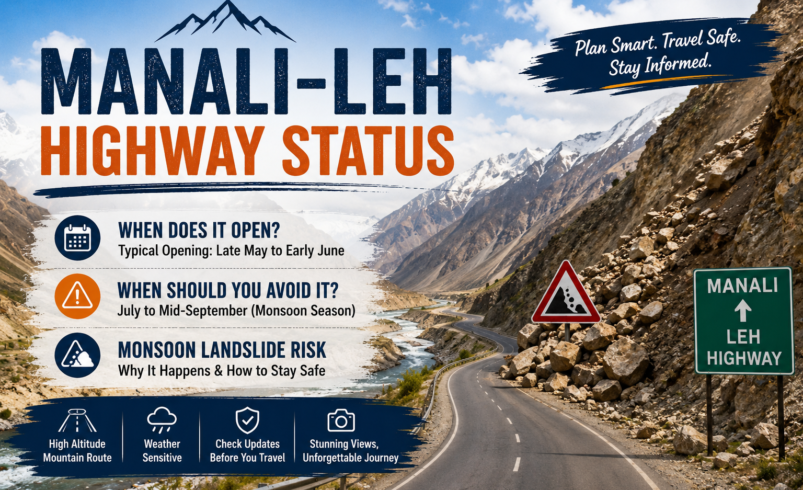
The highway shuts every winter around late November once snowfall makes the high passes impassable, and reopens the following year once the Border Roads Organisation (BRO) clears the snow. In 2026, BRO restored the full 431 km route on May 12, after a 42-day clearance operation through extreme conditions, with tourist and civilian traffic permitted through by late May. By June 8, HRTC’s Delhi-Leh bus service was running via Keylong, a strong signal that the route was genuinely open for the season, not just technically passable.
Two teams work simultaneously from opposite ends every year: Project Deepak clears from the Manali side toward Sarchu, while Project Himank clears from Leh toward Sarchu, meeting somewhere around Baralacha La. Since the Atal Tunnel opened in 2020, BRO no longer needs to clear Rohtang Pass at all, which has shaved a few weeks off the opening timeline in recent years – though a fresh spring snowfall can still undo weeks of clearance work overnight, so official dates should always be treated as provisional until confirmed closer to your travel date.
The Safe Travel Window – and Why Timing Within It Still Matters
The full window when the highway is realistically open runs from late May to mid-October, but not every month inside that window offers the same experience:
- Late May to June: The highway has just opened, and you’ll see dramatic snow walls at Baralacha La, but expect slushy roads and water crossings at their worst as the seasonal snowmelt peaks – not ideal if you’re driving a sedan.
- July to August: Road conditions on the high-altitude, rain-shadow side (Darcha to Leh) generally stay dry and improve steadily. The real risk in this window sits on the Manali side, where monsoon rain is active – more on this below.
- September to early October: Widely regarded as the best window for road conditions – dried-out mud, completed BRO maintenance work, and generally clear skies. Late September onward carries some risk of early snowfall closures at the higher passes.
Where the Real Monsoon Landslide Risk Actually Sits
Here’s the part most travelers get backwards: they worry about rain once they’re deep in Ladakh, when the real risk is actually on the approach.
Ladakh and Spiti sit in a rain shadow behind the main Himalayan range, so once you’re past Darcha, the route stays largely dry through the monsoon – Leh, Pangong, and Nubra rarely see serious monsoon disruption. The genuine danger zone is the Manali-side approach, where the Beas River running alongside NH-3 causes flash-rise and bank erosion that can wash out the highway itself, most notoriously during the July 2023 disaster that took out large stretches of road and parts of Old Manali. Peak risk on this stretch runs through July and August.
Beyond the Manali approach itself, a few specific stretches on the highway carry disproportionate risk throughout the season, monsoon or not:
- Rohtang and Gulaba (Manali side): Even with the Atal Tunnel bypassing old Rohtang Pass, monsoon activity here can still trigger brief landslide halts on connecting roads.
- Zingzingbar to Pang: This stretch has numerous unbridged stream crossings fed by glacial melt, and even light rainfall on already-weak, under-maintained sections here can trigger landslides.
- Sarchu to Pang via Gata Loops: Widely considered the toughest section of the entire highway, with loose gravel and rough patches regardless of season.
A useful rule of thumb: once you’re past Darcha and into Ladakh proper, weather-related risk drops sharply. It’s the first 100-150 km out of Manali where monsoon caution matters most.
When You Should Genuinely Avoid Travel
- Avoid driving through the Manali approach during or immediately after heavy rainfall – even if the highway is technically open, water crossings and slide-prone patches near the Beas can close with very little warning.
- Avoid the very early season (late May-early June) if you’re in a sedan or low-clearance vehicle – water crossings from snowmelt are at their worst and the road hasn’t fully firmed up yet.
- Avoid tight, backdated itineraries with zero buffer days – a single closure at Rohtang or Gulaba can delay you by a full day or more, and rebooking a rigid schedule around that is far harder than simply having slack built in.
- Avoid late September/October departures if you’re depending on the return leg staying open – early snowfall can close high passes with little notice as the season winds down.
Practical Advice Before You Go
- Check current BRO and highway status 48-72 hours before departure rather than relying on the “typical” opening dates – conditions shift fast.
- Build at least one buffer day into any Manali-Leh itinerary, ideally positioned right after the Manali-side approach.
- If self-driving, prioritize a vehicle with good ground clearance, especially for the Zingzingbar-Pang stretch.
- Keep your Inner Line Permits (for Nubra, Pangong, Tso Moriri) and Rohtang/Beyond Rohtang permits sorted in advance so paperwork doesn’t add delay on an already weather-sensitive route.
The Bottom Line
The Manali-Leh Highway rewards travelers who respect its timing more than almost any other route in India. The good news is that once you’re past the Manali approach, Ladakh’s rain-shadow geography works in your favor – the real risk window is narrow, specific, and predictable if you know where to look. Time your trip for July-September, stay alert on the first stretch out of Manali, and build in a buffer day, and the rest of this legendary highway is far more forgiving than it looks from the headlines.
At Royal Rover Holiday, we track BRO updates and monsoon conditions on the Manali-Leh route through the entire season and adjust our clients’ departure dates and routing accordingly. If you’re planning a Ladakh trip via this highway, talk to us first – we’ll help you time it right instead of guessing.