

A creative idea used to be limited by the tools available to the person having it. If you wanted to create a polished image, animated character, video, or piece of digital art, you often needed specialized software, technical skills, and plenty of time.
That equation is changing.
Today, AI Generators allow people to turn simple descriptions into images, text, videos, characters, and other forms of digital content. A creator can start with a rough idea and produce an early version within minutes. They can then edit it, change the direction, and create several alternatives without starting from scratch.
This is changing the way people think about digital creativity.
AI is not simply making content production faster. It is giving more people the ability to experiment with creative ideas that may previously have required professional skills. At the same time, it is creating new questions around originality, ownership, quality, and the role of human creators.
As these systems continue to improve, their influence is likely to reach far beyond social media posts and simple image generation. They could shape entertainment, advertising, gaming, education, virtual characters, and interactive digital experiences.
Why AI Generators Are Changing the Creative Process
The biggest appeal of modern AI tools is the speed at which an idea can become a working concept.
Consider a small business preparing a social media campaign. A traditional workflow might involve writing a brief, finding a designer, creating several drafts, reviewing them, and making revisions.
With an AI-powered system, the business owner can describe the basic concept and receive several starting points almost immediately.
The same thing applies to individual creators.
A blogger can generate visual concepts for an article. A video creator can create an initial storyboard. A game designer can test character ideas before commissioning final artwork.
Similarly, marketers can use AI to produce multiple versions of a campaign and then decide which direction deserves further work.
The important point is that generation does not have to mean automation from beginning to end. In many cases, AI works best as an assistant within a larger creative process.
From Text Prompts to Complete Creative Workflows
The early appeal of generative AI came largely from simple text prompts.
Users could describe an image or piece of writing and receive an output based on that description. While this remains useful, the technology is now becoming part of much broader workflows.
A creator might begin with an idea, use AI to produce several concepts, manually edit the preferred version, and then use another system to prepare it for publication.
For instance, an independent designer could use AI to generate rough concepts for a fictional character. After choosing a direction, they could refine the appearance manually, create different poses, produce promotional artwork, and eventually develop animated versions.
This workflow saves time while keeping important decisions in human hands.
At the same time, it shows why creativity is not simply about producing an image or paragraph. The person behind the process still needs to decide what the final result should communicate.
Image Creation Is Becoming More Accessible
AI image generation has probably made the shift toward automated creativity most visible.
Someone without years of experience in graphic design can now describe a scene, character, product concept, or environment and receive a visual result.
That has obvious applications for marketing and entertainment, but it also matters for everyday creators.
A writer working on a fantasy story might need an illustration of a fictional city. A startup could need early ideas for a product campaign. A game developer could require temporary artwork while developing a concept.
In each case, AI can provide a starting point.
However, generated images are not automatically perfect. Text can appear incorrectly, visual details may be inconsistent, and small elements can look unnatural.
This is why human editing remains important.
The most useful approach is often to treat generated content as a draft rather than a finished product.
AI Is Creating New Types of Digital Characters
One of the more interesting developments is the growth of AI-generated characters.
Characters can now be designed with particular appearances, personalities, communication styles, and fictional backgrounds. They can exist in stories, games, entertainment platforms, social media projects, or conversational applications.
This creates opportunities for creators who want to build digital personalities rather than simply publish individual pieces of content.
A fictional character could have a recognizable visual identity and communicate with users through AI-generated conversations. Another could appear in videos, artwork, and interactive stories.
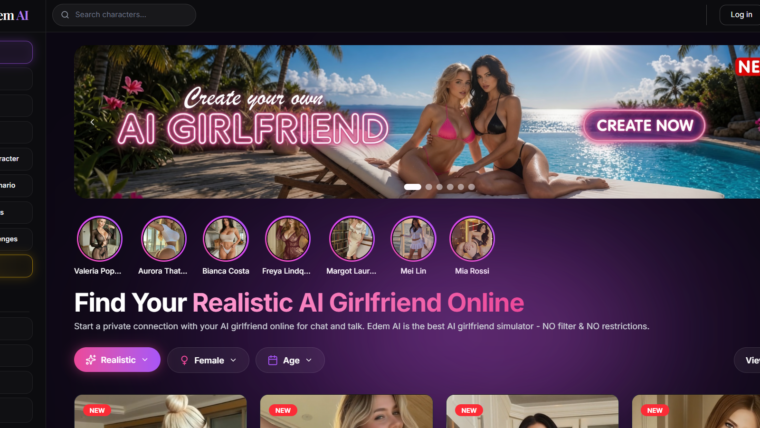
Adult-oriented character platforms are also becoming part of this wider market. Some users search for services using terms such as ai slut generator when looking for fictional adult character creation experiences.
The important trend is the ability to customize fictional characters around particular preferences rather than relying on one fixed personality.
That concept can also be applied to non-adult characters, including virtual influencers, gaming personalities, fictional companions, and interactive storytelling characters.
Personalization Could Become a Major Advantage
Traditional digital content is generally created for a broad audience.
AI could make highly personalized content much easier to produce.
Imagine an online learning platform that creates different visual examples for different students. Or consider a game where supporting characters adjust their dialogue based on how a player interacts with them.
Marketing could also become more individualized.
Instead of showing every customer exactly the same promotional material, businesses could eventually create different versions based on interests, browsing behavior, or previous interactions.
Likewise, virtual characters could adapt their personalities and responses according to the preferences of individual users.
This does not mean every digital experience will become completely personalized. However, the cost of creating variations is likely to continue falling as AI systems improve.
The Growing Interest in AI Character Customization
Character customization is becoming an important part of the AI creativity market.
Users increasingly want more than a generated face. They want characters with recognizable traits, personalities, backgrounds, and interaction styles.
This is particularly visible in virtual companion platforms.
For example, someone might create a character with a particular fashion style, personality, communication pattern, and fictional history. The character can then become part of an ongoing interactive experience.
Some adult-focused platforms use search terms such as ai slutty generator to describe tools centered on customized adult fictional characters.
Although this represents a specific niche, the underlying technology is part of a much broader movement toward personalized digital identities.
The same generation systems can support fictional heroes, virtual influencers, game characters, fantasy personalities, and storytelling companions.
What AI Means for Artists and Designers
Whenever a new creative technology becomes popular, one question appears almost immediately: will it replace human professionals?
The reality is likely to be more complicated.
Some repetitive tasks will certainly become easier to automate. Producing simple variations, generating early concepts, resizing creative assets, or creating basic visual drafts can already be handled by AI-assisted systems.
However, professional creative work involves much more than generating an output.
A designer needs to understand the purpose behind a project. A creative director needs to maintain a consistent visual identity. A writer needs to consider tone, audience, context, and messaging.
AI can provide options, but people still need to make decisions.
In fact, the growing amount of generated content may make human creative judgment even more valuable.
More Content Does Not Automatically Mean Better Content
There is a strange side effect of making content easier to produce.
When everyone can generate hundreds of images, articles, or videos, the amount of average content increases dramatically.
That makes originality harder to achieve.
A creator cannot simply produce more material and expect audiences to pay attention. There needs to be a clear idea behind the content.
This is where human creativity remains important.
A distinctive visual style, an unusual concept, a strong story, or a memorable personality can make content stand apart from thousands of generic AI-generated alternatives.
The technology may make production easier, but it does not automatically provide a reason for people to care.
AI Creativity Is Moving Into Video
Image generation is only one part of the story.
AI video technology is developing quickly and could have an even larger effect on digital production.
Creating traditional video can require cameras, actors, locations, lighting, sound equipment, editing software, and a production team.
AI-generated video can reduce some of these requirements by allowing creators to generate scenes from descriptions or transform existing creative material.
For independent creators, this could make ambitious ideas more accessible.
A filmmaker could use generated scenes while developing a concept. A marketer could create early versions of an advertisement. A game studio could produce temporary cinematic material during development.
At the same time, AI video still has technical limitations. Character consistency, realistic movement, scene continuity, and precise control remain important challenges.
As those areas improve, AI video could become another standard part of the creative toolkit.
Virtual Influencers Are Likely to Grow
The rise of AI-generated characters is also connected to virtual influencers.
A virtual influencer does not necessarily need to be a real person. They can be fictional characters designed for social platforms, advertising campaigns, entertainment projects, or online communities.
AI can help manage parts of their creative presence, including images, captions, conversations, and video concepts.
This creates a new model for digital branding.
Instead of hiring a person to represent a campaign, a company could develop a fictional character with a consistent identity. That character could appear across multiple channels and interact with audiences.
However, authenticity will still matter.
Audiences are becoming increasingly aware of AI-generated content. A virtual personality that feels repetitive or artificial may struggle to build a loyal following.
Creators will therefore need to give these characters genuine personality and consistent storytelling.
Adult AI Content Is Becoming a Specialized Niche
The wider AI character market also includes adult-oriented applications.
Users may search for terms such as ai slut when looking for AI-based fictional adult characters or conversational experiences. While the terminology varies between platforms, the technology generally focuses on generating customized fictional personalities.
This is an example of how AI tools are being adapted to very specific user interests.
The same pattern can be seen across the broader industry. People are no longer looking for one generic AI experience. They want tools designed around particular creative goals and preferences.
That specialization is likely to continue.
Platforms may increasingly offer more specific character types, personalities, visual styles, interaction formats, and creative controls.
Search Behavior Is Shaping the AI Industry
Search trends also provide an interesting view of how people interact with emerging technologies.
Users often create their own terminology for new categories before the industry settles on official names.
For example, searches involving slutty ai may refer to a range of adult-oriented AI character platforms rather than one specific type of technology.
This highlights an important point for AI companies and creators: users often describe products based on what they want to achieve rather than how the technology technically works.
As the market becomes more mature, platforms will need to balance clear product descriptions with the language their audiences actually use.
For content creators and marketers, this also means keyword research should reflect genuine user intent rather than simply repeating popular phrases.
Human Oversight Will Remain Important
AI systems can produce impressive results, but they can also make mistakes.
A generated article might contain inaccurate information. An image may include strange details. A character could behave inconsistently. A video may have visual problems that are obvious when viewed closely.
This means human review cannot simply disappear.
Creators need to check outputs before publishing them, particularly when content involves real people, factual claims, commercial information, or sensitive topics.
Likewise, companies need clear rules around how AI-generated material is created and used.
Technology works best when people remain responsible for the final decision.
Copyright and Ownership Are Still Important Questions
The rapid growth of AI creativity has created complicated questions around intellectual property.
Who owns an AI-generated image? What happens when a system produces something that resembles an existing artistic style? Can generated content be used commercially?
There is no single answer that applies to every platform or jurisdiction.
Creators should therefore check the terms of the AI service they use and pay attention to applicable copyright rules.
Businesses should also maintain records of their creative process when AI-generated material is used for important commercial projects.
This may become increasingly relevant as AI-generated content becomes a normal part of advertising, publishing, entertainment, and product development.
The Best Results Will Come From Human and AI Collaboration
The strongest future for generative technology is unlikely to be humans completely stepping away from the creative process.
Instead, we are likely to see more collaboration.
A person provides the concept, direction, taste, and judgment. AI handles parts of the production process, generates alternatives, and helps turn ideas into working material.
For example, a writer might create the central story while AI helps produce visual references. A designer could create the brand direction while AI generates early concepts. A filmmaker might develop the narrative while AI assists with visual planning.
This division of responsibilities makes sense because machines are good at producing variations, while humans are still responsible for meaning and purpose.
What Creators Should Focus on Next
As AI tools become easier to use, learning one particular platform may not be enough.
The tools will change.
Instead, creators should focus on skills that remain useful across different systems:
- Developing original concepts
- Writing clear creative instructions
- Reviewing and editing generated content
- Maintaining a consistent visual or written style
- Combining different AI tools into a workflow
- Checking information and factual accuracy
- Understanding audience preferences
These skills allow creators to adapt when new platforms appear.
The goal should not be to become dependent on one AI service. It should be to learn how AI can fit into a wider creative process.
The Future Could Be More Interactive Than We Expect
The next stage of AI creativity may move beyond individual images, articles, and videos.
We could see interactive digital environments where characters, stories, visuals, and dialogue are generated in real time.
A user might enter a fictional world and have conversations with characters that respond dynamically. A game could generate side stories based on player decisions. A virtual personality could produce different content depending on its audience.
This would make digital creativity less about producing a fixed piece of media and more about building an experience.
That shift could affect gaming, entertainment, education, advertising, and social platforms.
AI Will Not Remove Creativity—It Will Change How We Use It
The rise of AI Generators is changing the creative process from the ground up.
People who once needed specialist software can now create early concepts with a simple description. Professional creators can produce more variations in less time. Businesses can test ideas before investing heavily in production.
But the technology does not eliminate the need for human creativity.
If anything, the abundance of AI-generated material makes originality, judgment, storytelling, and personal perspective more important.
We are moving toward a world where creating digital content becomes easier, faster, and more accessible. The real challenge will be deciding what is worth creating.
That is where people still have the advantage.
AI can help turn an idea into an image, a character, a video, or an interactive experience. But the idea itself, the reason behind it, and the emotional connection it creates still come from the human side of the process.
And that is likely to remain the most interesting part of digital creativity as AI continues to evolve.