
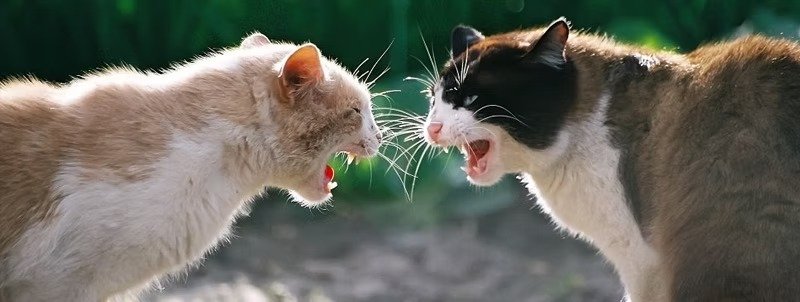

If your cat acts aggressively toward you and exhibits behaviours such as hissing, swatting, biting, hiding, and defending itself from you, it’s possible that the cat isn’t being “bad.” Cat aggression behaviour needs to be understood by taking into account much more than the immediate situation and examining medical issues, fears, and stress related to territory, history and change in the home environment. Kindheart Veterinary Behaviour Services aims to discover the cause of difficult cat behaviour and find the best solutions for each situation.
What could make a cat behave aggressively?
There are various triggers of aggression for cats. Territorial aggression might be caused when another cat, another pet, a person, or an object enters into the territory of a cat. Frightening sounds or strangers, children, and other animals may trigger fear and aggression.
Another type of aggression is redirected aggression, which means that a cat becomes irritated when it sees another cat outside of a window and then takes out its irritation on a human being or another pet. Another reason for aggression could be some medical problems, such as pain or irritation in the skin or in the stomach area.
Signs of Trouble
Cats generally give warning signs by displaying certain body language signals before exhibiting any other forms of bad behaviour. These include hissing, growling, flat ears, dilated eyes, and a wiggly tail, all of which may show that the cat is getting agitated. Lunge, swatting, biting, constant vocalization, or frequent hiding are some other signs of escalation. It is not advisable to punish the cat for such behaviour but rather to try to establish what is causing the problem and then provide him or her with enough space.
What are the methods of minimizing stress in owners?
The provision of a predictable and enriched environment helps to improve cat behaviour. Cats are better off being provided with quiet and secure places which they use as a retreat in times of excessive stress. There are many, including cat trees, shelves, scratching posts, play and hunting objects and others. The owner should do things gradually and take some steps to help the cat deal with all the stress associated with bringing in the new pet. These steps include giving the cat an isolated space for rest and offering food, water, a litter box and toys.
Recognizing Pet Stress and Behavioural Alterations
Cat’s symptoms of stress do not necessarily have to be dramatic. Some cats could just simply start avoiding people, sleeping a lot and exhibiting behaviours such as lip-licking, yawning, and swishing the tail due to being anxious. The reasons behind that could be the changing environment, moving from one house to another, having a stranger at home, and lack of socialization.
The treatment of pet animal behaviour and anxiety consists of knowing what the pet means and making changes to the environment based on that. Kindheart Veterinary Behaviour Services uses a veterinary behaviourist approach and considers health early experience, stimuli, and environment while planning for animal behaviour treatment.
Professional Help for Permanent Behaviour Modification
Continuous aggressive behaviour, especially that which could possibly be hazardous for both humans and animals, is something that needs professional help. Behavioural consultation is beneficial in identifying the causes of such behaviour and coming up with strategies for dealing with it, including systematic desensitization and operant conditioning. Sometimes, veterinary consultation or even medication might also become part of the process.
Kindheart Veterinary Behaviour Services tries to assist pet owners in getting to know their pet animal behaviour & anxiety problems in Victoria rather than just suppressing the undesired behaviour. With some patience and personal attention, owners achieve a calmer household and closer relationship with their cats.