

Most businesses think about packaging at the point of dispatch. Businesses often reconsider packaging only when a customer reports that an item arrived damaged. They often overlook the specific physical journey a parcel takes through the UK courier network and the impact on a poorly packed box.
I want to walk through that journey in this article. This article will explain in a specific, concrete way how your choices regarding cardboard postal boxes, the way you seal them, and the packaging materials you use inside them can change your perspective. Because once you understand what your parcel is actually going through between the moment it leaves your hands and the moment it lands on a doorstep, the packaging decisions you make look considerably less routine.
The Journey Most Businesses Have Never Thought About
What Happens in the First Hour After Collection
The first handling event after collection is usually the courier’s local depot sort. Your parcel goes onto a conveyor system alongside hundreds or thousands of others. It gets sorted by destination, which typically involves automated scanning, redirection, and in some cases being physically pushed or dropped into a chute or bin. This is the moment when a box that has been sealed with insufficient tape, or that has too much void space inside, takes its first hit.
A parcel that is underfilled is particularly vulnerable here. The impact energy from being dropped into a sorting bin transfers directly to the contents instead of being absorbed by the packaging. The packaging fails to absorb the impact energy from being dropped into a sorting bin, causing it to transfer directly to the contents. Although the box may look fine from the outside, the item inside has already shifted, and depending on what it is, the damage may already have begun.
A parcel in a correctly chosen postage box absorbs that first impact almost entirely in the box structure and the void fill rather than in the product.
The Transit: What Really Happens in the Back of a Van
After the depot sort, your parcel goes onto a vehicle for the trunk route to the regional hub. This is where parcels are stacked often by hand, by someone working quickly under time pressure, not by an algorithm that knows what is fragile and what is not. Your box will be stacked under other boxes or maybe on the sides, and it may travel for several hours like a typical parcel.
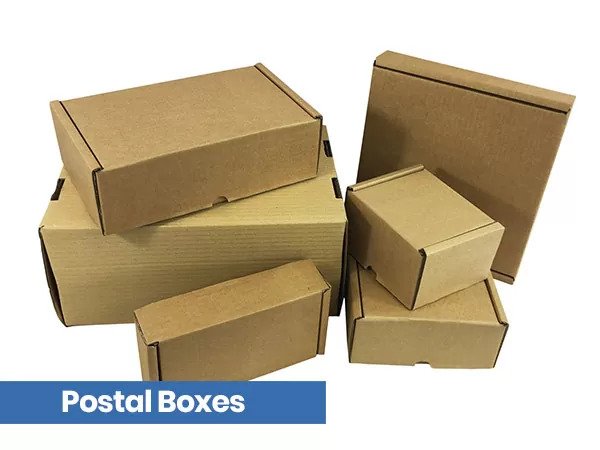
The structural integrity of the cardboard postal box you choose determines how it performs under this sustained compressive load. Single wall cardboard offers limited resistance to prolonged compression from a heavy stack. Double wall cardboard, on the other hand, which has two layers of fluted medium between the liners, provides substantially more compression resistance and is the specification worth choosing for anything heavier than a kilogram or anything that would be genuinely problematic if the box’s corners were crushed.
The corner crush strength of a cardboard box is the specific measurement that tells you how much compressive load the box can handle before the structure begins to fail. A box that fails under compression does not collapse suddenly. It deforms gradually, which means the contents inside shift progressively as the box loses its shape, and by the time the parcel arrives, its internal arrangement may be very different from how it left you.
The Regional Hub: Where Most Damage Actually Happens
The regional hub is where the journey gets most physically demanding. This is a large automated sortation facility where parcels move through conveyor systems at speed, are diverted by mechanical pushers, drop onto chutes, and are consolidated for final-mile delivery. The handling here is faster, more automated, and less gentle than anywhere else in the journey.
Envelope packaging boxes are particularly vulnerable at this stage if they have been chosen incorrectly for their contents. An envelope box works exceptionally well for photographs, artwork, certificates, flat-pack items, and anything rigid enough that it benefits from a rigid outer shell. It works less well for items that have any significant depth, because the mechanical pushers in sortation facilities apply lateral force that a box with depth resists poorly. Knowing which format to choose for which product here becomes a major consideration.
The Product Categories That Need the Most Specific Packaging Decisions
Flat and Rigid Items
Photographs, artwork, certificates, printed materials, flat electronics, and anything that is primarily flat and rigid benefit from an envelope box rather than a standard postage box for a specific reason that most buyers do not fully understand until they have had a piece of art arrive with a corner crushed by a standard box that was slightly too large.
An envelope box wraps the item closely on all six sides with a rigid cardboard structure that resists the bending forces that the hub sortation system and transit stacking apply most aggressively to flat items. A standard postage box around a flat item that is significantly smaller than the box creates the void problem discussed above, wherein the item moves, the corners hit the walls of the box, and the damage that results looks like transit damage but is actually packaging failure.
The range of envelope box sizes available means that most flat items can be matched to an envelope box that fits them closely enough to prevent movement without requiring void fill, which reduces both packaging cost and packing time.
Fragile Items
Fragile items need a mix of packaging materials instead of just one type, and the best combination is a double wall cardboard postal box that fits the product perfectly with enough space around it, large bubble wrap around the item before it goes in the box, and extra padding on all sides and above the item once it’s in place.
Summing Up
To sum up, as soon as your parcel leaves your facility, it has to go through a number of transportation and manhandling processes. Therefore, it is the supplier’s responsibility to ensure that the items are packed securely so that they can move from one destination to another in the safest and most secure way possible.