

Every streetlight glowing along a Riyadh highway, every transmission line crossing the desert near Tabuk, and every telecom tower rising above Jeddah depends on something most people never notice: the foundation beneath it. When that base is strong, the structure stands for decades. When it is weak, even the best pole in the world becomes a risk.
That is why more contractors, utility companies, and developers are asking a smart question before they break ground: why choose a Concrete Pole Foundations Supplier in Saudi Arabia instead of casting everything on site? The answer comes down to quality, speed, cost, and peace of mind. Let’s walk through the reasons in plain language so you can make a confident decision for your next project.
Why Pole Foundations Matter More Than You Think
A pole is only as reliable as the base that holds it. Wind pushes against it, vibration shakes it, and the weight of cables, lamps, or equipment pulls it downward every single day. The foundation has to absorb all of that force and pass it safely into the ground.
The Hidden Job of a Foundation
Think of a foundation as the roots of a tree. You never see them, yet they decide whether the tree survives a storm. A well-designed pole foundation keeps the structure upright, prevents tilting, and spreads loads evenly across the soil. It also protects the pole itself from moisture and ground movement.
What Happens When Foundations Fail
Weak foundations rarely fail all at once. First comes a slight lean, then cracks at the base, then corrosion where water reaches the steel. Eventually the pole needs to be straightened, repaired, or replaced completely. In public infrastructure, that means traffic disruption, power outages, safety hazards, and repair bills far larger than the cost of doing it right the first time.
Saudi Arabia’s Conditions Are Tougher Than Most Places
Building in the Kingdom is not the same as building in a mild, temperate climate. The environment tests materials in ways that many regions never experience. Understanding these challenges explains why specialist knowledge matters so much.
Extreme Heat and Rapid Curing Problems
When temperatures climb past 45 degrees Celsius, fresh concrete poured on site can lose water too quickly. This causes surface cracking, weak bonding, and uneven strength. Crews often rush to finish pours before the mix stiffens, and rushing is where mistakes creep in. A controlled production environment avoids this problem entirely, because curing happens under managed conditions rather than under the open sun.
Salty Soil and Groundwater
Many coastal and inland areas of Saudi Arabia have soil and groundwater rich in chlorides and sulfates. These salts attack concrete and the steel reinforcement inside it, causing slow but serious deterioration. Foundations in these areas need dense, well-designed mixes, proper cover over the reinforcement, and sometimes special cement types. This is a technical job, not a guessing game.
Shifting Sand and Strong Winds
Desert soil can be loose, and strong winds place heavy sideways loads on tall poles. Foundations must be sized correctly for the specific ground conditions and pole height. A one-size-fits-all approach rarely works here, and an experienced supplier knows how to adjust the design for each location.
The Real Benefits of Working with a Specialist Supplier
Now to the heart of the matter. Choosing a dedicated Concrete Pole Foundations Supplier in Saudi Arabia gives you advantages that are hard to match with improvised, on-site work. Here are the benefits that matter most to project owners.
Consistent Quality You Can Trust
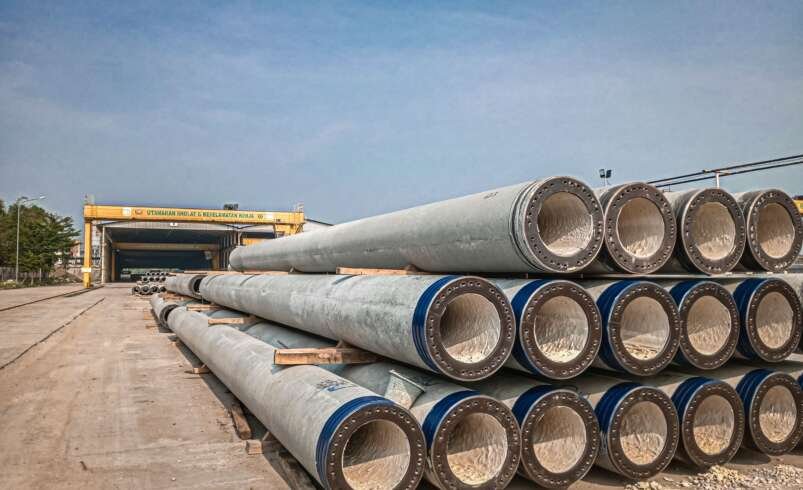
In a factory setting, every foundation is made with measured materials, controlled mixing, and standard molds. Each unit is tested before it leaves the yard. That consistency means the fortieth foundation performs exactly like the first. On a large project with hundreds of poles, this reliability removes a huge amount of uncertainty.
Faster Installation and Shorter Timelines
Precast foundations are made while your site is being prepared. When the units arrive, crews lift them into position and move on to the next one. There is no waiting for concrete to cure on site, no weather delays, and no need to return for inspections after every pour. For road lighting, solar farms, and utility corridors, saving even a few days per section adds up to weeks across the whole project.
Better Cost Control
At first glance, on-site casting can look cheaper. But hidden costs appear quickly: formwork, extra labor, wasted material, rework, and delays. A specialist supplier gives you a clear price per unit, so budgeting becomes simple. Fewer surprises mean fewer overruns, and that is something every project manager appreciates.
Engineering Support from the Start
A good supplier does more than deliver units. Their team can review soil reports, pole loads, and local requirements, then recommend the right foundation size and reinforcement. This advice often prevents over-engineering, which wastes money, and under-engineering, which creates risk.
Precast or Cast-in-Place: Which Makes More Sense?
Both methods have their place, and honest advice means acknowledging that. Cast-in-place foundations can work for one-off structures in remote locations where transport is difficult. However, for repeated installations across roads, industrial zones, and utility networks, precast usually comes out ahead.
Precast offers predictable strength, quicker handover, cleaner job sites, and easier quality checks. Cast-in-place depends heavily on weather, workmanship, and supervision on the day of the pour. In a country where summer heat can ruin a poorly managed pour, controlled factory production is a major advantage.
There is also the matter of safety. Fewer workers on site, less handling of wet concrete, and shorter exposure to traffic or live utilities all reduce the chance of accidents. For government and large private projects, that is not a small benefit.
How to Choose the Right Supplier
Not every supplier offers the same value, so it pays to ask the right questions before you sign a contract. Use these points as a simple checklist.
Look at Their Track Record
Ask about previous projects, especially ones similar to yours. A supplier that has delivered foundations for highways, solar plants, or telecom networks will understand your challenges. Request references and, if possible, visit completed sites to see how the work has held up over time.
Check Material Standards and Testing
Quality begins with materials. Find out which cement types they use, how they control the water-to-cement ratio, and whether they test compressive strength. Reliable suppliers share their test results openly and follow recognized standards. If a company hesitates to show documentation, treat that as a warning sign.
Confirm Customization Options
Every project has different requirements. Pole heights vary, soil conditions change, and loads differ from one site to another. The right partner can adjust dimensions, reinforcement, and anchor bolt layouts to suit your design instead of forcing you into a fixed catalog.
Review Delivery Capacity and Logistics
Saudi Arabia is a vast country, and transport planning matters. Ask whether the supplier can handle large volumes, deliver to remote locations, and keep to the schedule. A great product means little if it arrives weeks late.
Ask About After-Sales Support
Questions come up during installation, and sometimes adjustments are needed on site. A supplier that stays reachable and responsive after delivery saves you time and stress. Good support often separates an average vendor from a true partner.
Common Mistakes to Avoid
Even experienced buyers sometimes fall into these traps, so keep them in mind.
The first mistake is choosing purely on price. The lowest quote often hides weaker materials or missing services. The second is skipping soil investigation, which leads to foundations that do not match real ground conditions. The third is ignoring local climate, assuming a design that works elsewhere will work here. Finally, many buyers forget to plan logistics, and delays follow.
Avoiding these errors is easier when you work with a supplier who asks questions, shares knowledge, and treats your project like their own.
The Long-Term Value of Getting It Right
Foundations are one of the few parts of a project you cannot easily fix later. Once poles are installed, cables are strung, and roads are open, digging back down is expensive and disruptive. That is why the smartest owners invest in quality at the start.
A strong foundation reduces maintenance, extends the life of the entire structure, and protects your reputation. Clients remember projects that run smoothly and stay trouble-free for years. They also remember the ones that needed repairs soon after completion. The choice you make today shapes that story.
Conclusion
Strong infrastructure begins below the surface. Between harsh heat, salty soils, shifting sand, and demanding schedules, Saudi projects need foundations built with care, tested with discipline, and delivered on time. Working with a dedicated Concrete Pole Foundations Supplier in Saudi Arabia gives you consistent quality, faster installation, clearer costs, and expert guidance from day one.
If you are planning a lighting, power, telecom, or solar project, do not leave the base to chance. Reach out to Khatwat Islah Precast, share your project details, and visit our website today to request a quote tailored to your needs.