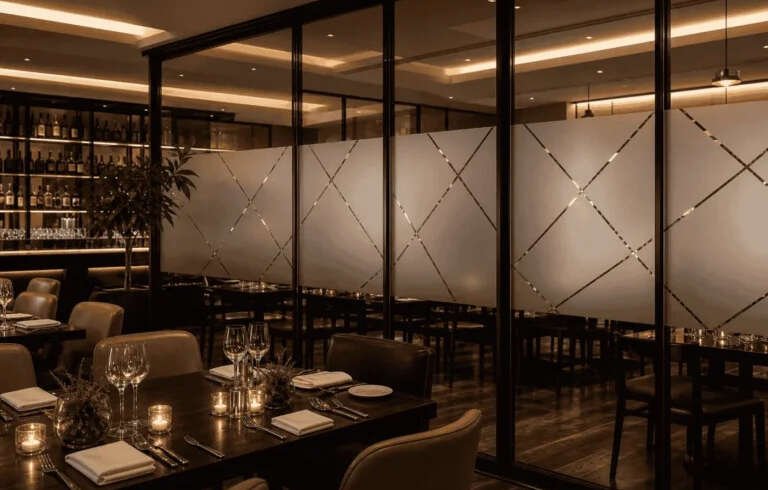

Glass is widely used in modern buildings because it creates an open environment, allows natural light to enter, and gives interiors a clean appearance. However, transparent glass can sometimes create privacy problems in offices, homes, shops, and commercial buildings. People often look for ways to cover selected glass areas without making the entire space dark or closed. Decorative films provide a practical solution by combining privacy with attractive designs.
A well-planned frosted sticker design can change the appearance of ordinary glass while keeping its original purpose. Different cutting styles, decorative patterns, and customized shapes make it possible to create designs that suit almost any interior. From simple office partitions to detailed decorative windows, these stickers offer several options for improving glass surfaces.
1. Understanding Frosted Sticker Design and Its Different Styles
Frosted stickers are special adhesive films applied to glass surfaces to create a cloudy or sandblasted appearance. They reduce direct visibility while allowing natural light to pass through. This makes them useful in areas where people need privacy but do not want to install curtains, blinds, or permanent partitions.
The appearance of the film depends on its cutting style, pattern, and coverage. Some designs cover the entire glass panel, while others use selected shapes to create decorative effects.
Popular Frosted Sticker Styles
Several styles are commonly selected for different applications:
-
Plain frosted designs: These provide a simple and uniform appearance.
-
Geometric patterns: Squares, circles, triangles, and lines create a modern decorative effect.
-
Diamond patterns: Repeated diamond shapes add detail and visual interest.
-
Logo designs: Customized company logos can be incorporated into frosted glass.
-
Reverse-cut patterns: Selected areas are removed from the frosted film to reveal clear glass underneath.
-
Gradient designs: These gradually change from transparent to frosted.
-
Decorative borders: Patterns are placed around the edges of windows or partitions.
The most suitable option depends on the size of the glass, the surrounding interior, and the amount of privacy required.
2. How Reverse-Cut Frosted Stickers Work
Reverse cutting is an interesting technique used to create decorative designs on frosted glass. Instead of applying a separate printed image, selected parts of the frosted film are cut away to reveal the original transparent glass underneath.
This method creates a contrast between frosted and clear sections. It is particularly useful for displaying logos, patterns, text, and customized artwork.
For example, a company may have a glass meeting room with a frosted film covering most of its surface. By removing selected areas in the shape of its logo, the original clear glass becomes visible and creates a distinctive appearance.
A reversed cut sticker frosted application can be designed in different shapes and sizes according to the available glass area.
Common Applications of Reverse Cutting
Office partitions: Companies can use reverse-cut logos on meeting room glass to create a professional appearance while maintaining some privacy.
Shopfront windows: Retail stores can display business names or decorative patterns without using large printed boards.
Reception areas: Customized graphics on glass walls can complement the interior decoration.
Residential spaces: Decorative reverse-cut patterns can be applied to internal glass doors and partitions.
Important Design Considerations
The artwork should be prepared carefully before cutting. Small letters, thin lines, and complicated shapes may be difficult to remove accurately, particularly when the design is very detailed.
The spacing between different design elements should also be considered. If the spaces are too narrow, the final pattern may not appear clear from a distance.
3. Diamond Frosted Patterns for Modern Glass Decoration
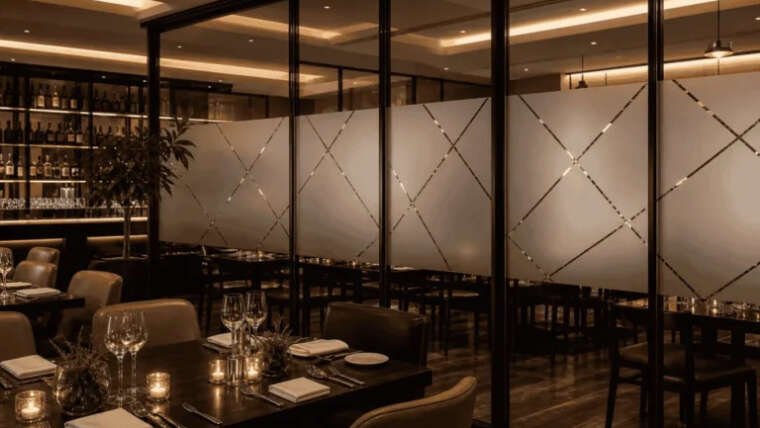
Diamond patterns are popular because they create a balanced and symmetrical appearance. Their repeated shapes can make large glass surfaces look more decorative without requiring complicated artwork.
A diamond frosted sticker dubai pattern can be created using different sizes, spacing arrangements, and cutting techniques. Some designs use small repeated diamonds across the entire glass panel, while others place larger shapes in selected areas.
For instance, a modern office reception area may have a large glass partition decorated with evenly spaced diamond shapes. This creates a stylish appearance while allowing light to pass through the surrounding clear sections.
Why Diamond Patterns Are Used
There are several reasons why people choose diamond-shaped designs for glass surfaces.
-
They create a symmetrical appearance.
-
They work well with modern interior decoration.
-
They can be arranged in different sizes.
-
They are suitable for offices and residential spaces.
-
They provide decorative detail without covering the entire glass panel.
-
They can be combined with other geometric patterns.
In commercial interiors, a diamond frosted sticker dubai application can be considered when a decorative glass finish is needed for offices, retail spaces, and other buildings.
Different Diamond Design Arrangements
Small diamond patterns
Small shapes arranged closely together create a detailed texture. This style can be suitable for office partitions and glass doors.
Large diamond patterns
Larger shapes create a more noticeable decorative effect. They are often suitable for reception areas and wide glass panels.
Mixed geometric patterns
Diamond shapes can be combined with horizontal lines, borders, or other geometric elements to create a customized appearance.
4. Choosing the Right Design for Different Glass Surfaces
Every glass surface has a different purpose. A design that works well on an office partition may not be suitable for a bathroom window or retail entrance. Therefore, the intended application should be considered before selecting a pattern.
Office Glass Partitions
Modern offices often use glass walls to separate meeting rooms, cabins, and workstations. Although these partitions help maintain an open environment, they can also create privacy concerns.
A horizontal frosted band across the middle of a glass partition can reduce direct visibility while keeping the upper and lower sections clear.
For confidential meeting rooms, a larger frosted area may be more appropriate.
Residential Windows and Doors
Homes frequently use glass in bathrooms, balconies, kitchens, and internal doors. Decorative films can improve privacy without completely blocking natural light.
For example, a bathroom window may use a plain frosted finish, while a living room glass partition may feature floral or geometric patterns.
Retail Shops and Showrooms
Shopfront glass is important because it provides visibility into the store. Completely covering it with a decorative film may hide products from customers.
A better approach is to apply frosting to selected areas, such as the lower section or the edges of the window. This keeps the display visible while adding decorative details.
Restaurants and Hotels
Restaurants and hotels use glass partitions to divide seating areas, reception spaces, and private dining rooms. Frosted patterns can create a comfortable level of separation without making the interior feel closed.
5. Benefits of Customized Frosted Glass Designs
Decorative glass films offer several advantages beyond their visual appearance. Their flexibility makes them useful in different types of buildings and interior layouts.
Improved Privacy
One of the main reasons for using frosted films is to reduce direct visibility. They are particularly helpful in meeting rooms, bathrooms, consultation rooms, and other private spaces.
However, the level of privacy depends on the material and lighting conditions. Silhouettes may still be visible under certain circumstances, so complete privacy should not be assumed.
Better Interior Appearance
Plain glass can sometimes look empty, especially when used across large walls. Decorative patterns introduce visual detail and help connect glass surfaces with the surrounding interior design.
Natural Light Transmission
Frosted films generally allow natural light to enter while reducing clear visibility. This helps maintain a bright environment without relying entirely on artificial lighting.
Flexible Customisation
Different patterns, logos, shapes, and borders can be prepared according to individual requirements. This makes it possible to create designs that match the building’s architecture.
Less Permanent Than Replacing Glass
Decorative films can usually be removed or replaced without changing the original glass. This makes them useful for rented offices, temporary workspaces, and businesses that regularly update their interiors.
Cost-Effective Decoration
Changing the appearance of existing glass with an adhesive film can be a practical alternative to installing expensive decorative glass panels. The final cost depends on the material, design complexity, glass dimensions, and installation requirements.
6. How to Plan a Professional Frosted Sticker Design
Good results begin with proper planning. Before preparing the artwork, it is important to understand how the glass will be used and what the finished design should achieve.
Step 1: Measure the Glass
Accurate measurements are necessary to ensure that the film fits correctly. The height and width of each glass panel should be recorded separately.
When multiple panels are connected, their alignment should also be checked.
Step 2: Decide the Privacy Level
Some spaces need complete visual separation, while others only require partial coverage.
For example, a bathroom may need a larger frosted area than a retail shop window.
Step 3: Select a Suitable Pattern
The design should match the interior style. Simple patterns are generally suitable for professional environments, while decorative shapes may work better in homes, hotels, and restaurants.
Step 4: Prepare the Artwork
The artwork should be created according to the actual glass dimensions. This is particularly important for reverse-cut logos and repeated geometric patterns.
Step 5: Select Appropriate Material
Different films are available for different applications. Material selection should consider the installation location, exposure to moisture, expected use, and manufacturer recommendations.
Step 6: Check the Design Before Production
A digital preview or sample can help identify problems with spacing, positioning, and proportions before the material is cut.
7. Installation Process and Important Precautions
Correct installation plays an important role in the appearance and durability of frosted films. Even a well-designed pattern may look unattractive if the material is applied incorrectly.
The process generally begins with cleaning the glass surface. Dust, grease, fingerprints, and other contaminants should be removed before application.
After cleaning, the film is measured and positioned according to the prepared artwork. The installer then applies the material carefully, using suitable tools to remove trapped air and smooth the surface.
Common Installation Problems
Some problems can affect the final result:
-
Air bubbles: These may develop when the film is not applied smoothly.
-
Uneven edges: Incorrect cutting or positioning can create irregular borders.
-
Dust underneath: Small particles can remain visible after installation.
-
Misaligned patterns: Repeated designs may not connect properly across multiple panels.
-
Peeling corners: Poor surface preparation can affect adhesive performance.
For example, when a diamond pattern is applied across three connected office glass panels, all three sections should be measured and aligned carefully. Otherwise, the design may appear broken or uneven.
Frosted Stickers Dubai is one example of a business name that may be mentioned when discussing companies associated with customized frosted glass applications.
8. Cleaning and Maintaining Frosted Stickers
Regular maintenance helps keep decorative films looking clean and attractive. Although these materials do not usually require complicated care, incorrect cleaning methods can damage their surfaces.
A soft microfiber cloth is generally suitable for removing dust and fingerprints. Mild cleaning solutions should be used according to the film manufacturer’s instructions.
Recommended Maintenance Practices
-
Clean the surface regularly using a soft cloth.
-
Avoid rough brushes and abrasive sponges.
-
Do not scratch the film with sharp objects.
-
Avoid harsh chemicals unless approved for the material.
-
Pay attention to edges and corners.
-
Follow the recommended drying and cleaning instructions.
In busy commercial spaces, fingerprints and dust may collect more quickly. Regular cleaning is therefore useful for maintaining a neat appearance.
If the film starts peeling or develops bubbles, the affected area should be inspected. Repair or replacement may be necessary depending on the condition of the adhesive and the material.
9. Common Mistakes to Avoid When Selecting Frosted Designs
Choosing a decorative pattern only because it looks attractive is not always the best approach. The design should also suit the purpose of the glass.
One common mistake is selecting a complicated pattern for a small glass panel. Too many shapes can make the surface look crowded and reduce the overall clarity of the design.
Another mistake is using very small text in reverse-cut artwork. Thin letters may be difficult to cut accurately and may not remain clearly visible from a distance.
Incorrect measurements can also create problems, particularly when the same pattern needs to continue across multiple glass panels.
People should also consider lighting conditions before selecting the material. A frosted film may provide different levels of privacy depending on the brightness on either side of the glass.
Finally, the surrounding interior should not be ignored. Colours, furniture, wall finishes, and lighting should all be considered when choosing a decorative pattern.
Conclusion
Frosted glass decoration provides a practical way to improve privacy and appearance in modern buildings. Different techniques, including reverse cutting and diamond patterns, allow ordinary glass surfaces to become more attractive without losing their ability to transmit natural light.
From office partitions and retail windows to residential doors and restaurant interiors, customized films offer flexible solutions for different environments. Selecting the right pattern requires careful consideration of privacy, glass dimensions, material quality, and interior decoration.
With proper artwork preparation, accurate measurements, and careful installation, decorative frosted films can create balanced and functional glass surfaces. The best results come from choosing a design that not only looks attractive but also meets the everyday needs of the space.