
If you have just been told that you or your child has epilepsy, one question usually hits before any other: “Will this ever go away?”
It’s the most honest question in neurology, and it deserves an honest answer. So here it is, without false promises and without unnecessary fear. If you are exploring epilepsy treatment in Delhi, this is what you should know first.
“Cure” vs “Control”: The Word That Confuses Everyone
Epilepsy is not one disease. It’s a group of conditions in which the brain repeatedly produces abnormal electrical activity, leading to seizures. Because causes differ, outcomes differ too.
Doctors often prefer the phrase seizure-free over “cured.” Being seizure-free means you have no seizures with proper treatment, and that is a realistic goal for many people. With the right medicine, taken regularly, roughly seven out of ten people with epilepsy can become seizure-free. For some, the condition fades away completely over time. For others, it stays under control as long as treatment continues.
Who Has the Best Chance of Becoming Seizure-Free?
Several things help:
- Early diagnosis. The sooner the seizure type is identified, the sooner the right medicine can begin.
- A clear cause. Epilepsy that follows a treatable cause, such as an infection, may respond differently from epilepsy with no clear cause.
- Seizure type. Some childhood epilepsies are outgrown with age.
- Regular treatment. Missed doses are one of the most common reasons seizures come back.
None of this is a guarantee, but it explains why two people with the same label can have very different journeys.
Why Seizures Sometimes Continue Despite Tablets
This is where many families lose hope, so let’s be clear: it doesn’t always mean the epilepsy is untreatable. Common reasons include:
- The first medicine may not suit the seizure type, and a change can make a big difference.
- The dose may need adjusting.
- Triggers such as lack of sleep, alcohol, missed meals or stress may be at play.
- The diagnosis itself may need to be re-examined, since some episodes that look like seizures are caused by other conditions.
If two well-chosen medicines at proper doses have not worked, the condition is called drug-resistant epilepsy. That is the point to ask for a deeper work-up, because options like surgery or other advanced treatments may exist for selected patients.
The Tests That Make Treatment Accurate
Good treatment depends on good diagnosis. Your doctor may suggest an EEG test in Delhi to record the brain’s electrical activity. It’s painless and quick. If episodes are unclear or don’t respond to treatment, a video EEG test in Delhi captures brain waves and video of the episode together, which helps confirm what is truly a seizure and where it starts. An MRI may also be advised to look for a structural cause.
Can You Ever Stop the Medicines?
Many people ask this, and the answer is: sometimes, but never on your own. If you have been seizure-free for a long period, often a couple of years or more, your neurologist may discuss slowly reducing the medicine. The decision depends on your seizure type, test results and risk of relapse.
Stopping suddenly is dangerous. It can trigger more severe seizures, including prolonged ones. If you feel it’s time to stop, talk to your doctor first.
Everyday Habits That Support Treatment
Medicines do the main work, but daily habits help them work better:
- Sleep at regular hours, since sleep deprivation is a common trigger.
- Take medicines at the same time daily. A phone alarm helps.
- Limit alcohol, which can lower the seizure threshold.
- Don’t skip meals, and stay hydrated.
- Avoid swimming or climbing alone until your doctor says it’s safe.
- Keep a simple seizure diary with date, time, and what happened before.
Seeing a Specialist in Central Delhi
If you live in West or Central Delhi, a clinic that is easy to reach makes regular follow-ups much easier, and epilepsy care is a long-term partnership. A neurologist in Dwarka is conveniently located for people travelling by Metro, and many patients also come from nearby areas.
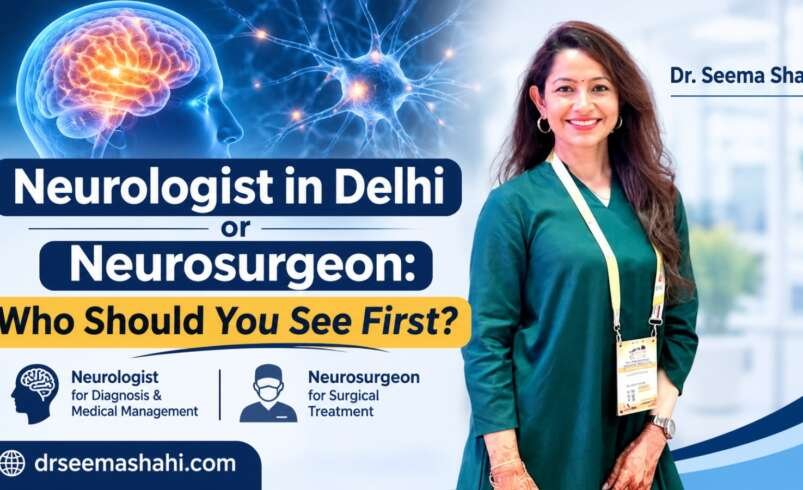
Dr. Seema Shahi is a USA-trained neurologist and epileptologist with over 15 years of experience, with an MD (Internal Medicine), DNB (Neurology) and a fellowship in EEG and epilepsy from the USA. She consults at Pacific OneHealth in Karol Bagh, Dwarka and Gurugram.
First Aid: What to Do During a Seizure
Families should know this too. Stay calm and note the time. Move hard objects away and place something soft under the head. Gently turn the person onto their side once the shaking stops. Never put anything in the mouth, and never hold the person down. Call for emergency help if the seizure lasts more than five minutes or the person doesn’t recover.
The Bottom Line
Epilepsy is a long-term condition, but it isn’t a life sentence. With the right diagnosis, the right medicine and a doctor you trust, most people can lead full, active lives. If you are looking for epilepsy treatment in Delhi, don’t wait for the next seizure to take the first step. Speak to a specialist who will explain your type of epilepsy, your options and your realistic goals.
Ready to talk to a specialist? Call +91 99530 19290 to book your appointment.
Disclaimer: This article is for general awareness only and does not replace medical advice. Never stop or change your medicines without consulting your doctor.