
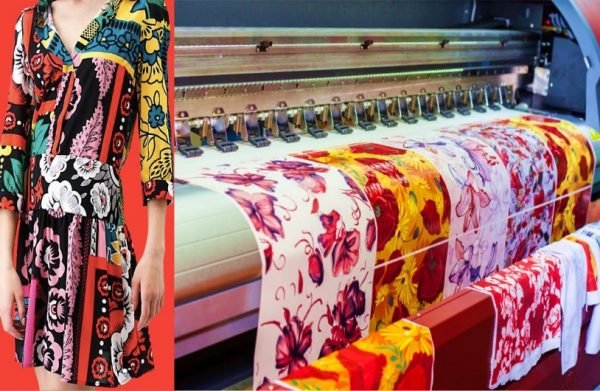

Digital printing on fabric is a modern textile printing method that uses computer-controlled inkjet technology to apply designs directly onto fabric. Instead of preparing separate screens for different colors, a digital printer reads an electronic artwork file and places tiny ink droplets exactly where they are needed. This makes it possible to reproduce detailed patterns, photographs, illustrations, gradients, logos, and customized artwork on textiles.
The growing demand for personalized clothing, short production runs, rapid sampling, and complex textile designs has increased the use of digital printing on fabric. Fashion companies, interior designers, textile manufacturers, promotional businesses, and independent designers use it for garments, curtains, cushions, scarves, banners, bedding, and decorative materials. However, good results depend on more than the printing machine. Fabric type, ink chemistry, pretreatment, color management, fixation, and finishing all affect the finished print.
What Is Digital Printing on Fabric?
fabric printing is an inkjet process adapted specifically for textile materials. A computer sends a digital image to a specialized printer, and precision print heads release small droplets of textile ink onto the fabric.
The process differs from traditional screen printing. Screen printing generally requires a physical screen for each color separation. Digital printing does not need the same type of screen preparation, so changing from one design to another is much easier.
Digital printing can be used with many fabrics, including cotton, polyester, silk, wool, viscose, linen, nylon, and blends. However, there is no single ink suitable for every textile. The fiber composition determines which printing technology should be selected.
How Does Digital Printing on Fabric Work?
1. Preparing the Digital Design
Production begins with a digital artwork file. The design may be a photograph, illustration, logo, geometric pattern, floral motif, or repeating textile design.
Image quality is important. A low-resolution image can appear pixelated when enlarged. Designers should check the artwork dimensions, resolution, color settings, and pattern scale before sending it for production.
Repeating patterns require particular attention. The edges of each repeat must align correctly so the design continues across the fabric without visible breaks.
2. Preparing the Fabric
The fabric may need cleaning, drying, smoothing, tension control, or chemical pretreatment before printing. The exact requirements depend on the fabric and ink system.
Pretreatment helps control ink absorption and spreading. Proper preparation can improve color strength, edge definition, and print consistency. Dust, oil, wrinkles, and uneven fabric tension can create defects, so material handling is an important part of quality control.
3. Applying the Ink
The prepared fabric moves through a digital textile printer. Print heads deposit controlled amounts of ink according to the digital artwork.
The machine builds the image through precise placement of different ink colors. Since the artwork is digital, a new design can usually be introduced by loading another file and adjusting the printer settings for the relevant fabric and ink.
4. Fixing the Print
Printing alone does not always make the design durable. Depending on the ink technology, the printed fabric may need steaming, heat curing, or another fixation process.
Reactive dyes used on cotton commonly require steaming and washing. Pigment inks generally require heat curing so the binder can hold the pigment to the fabric. Disperse dyes used for polyester are normally fixed through controlled heat.
The correct fixation conditions are essential. Poorly controlled fixation can lead to weak color and reduced resistance to washing or rubbing.
5. Washing and Finishing
Some printed fabrics require washing after fixation to remove unfixed dyes and processing residues. The fabric can then be dried and finished according to its intended use.
Finishing may include softening, pressing, coating, or other treatments. These processes can influence the final hand feel, appearance, dimensional stability, and performance of the textile.
Types of Digital Textile Printing
Reactive Printing
Reactive digital printing is mainly used for cotton and other cellulose-based fibers. The dyes chemically bond with suitable fibers during fixation.
When properly processed, reactive printing can provide bright colors, good wash durability, and a relatively soft feel. It is commonly used for shirts, dresses, bedding, scarves, and other cotton products.
Pigment Printing
Pigment printing uses colored particles held to the textile by a binder. It can be suitable for a broad range of fabrics.
Some pigment processes require less wet processing than dye-based methods. The final softness and durability depend on the pigment formulation, binder, curing conditions, and fabric construction.
Disperse Printing
Disperse dyes are primarily used for polyester and other suitable synthetic fibers. Heat helps the dye enter the polyester structure.
This method is widely used for sportswear, polyester garments, flags, banners, furnishings, and other synthetic textile products.
Acid Printing
Acid dyes are commonly used for silk, wool, and certain polyamide fibers. They can produce vivid colors and detailed designs.
Acid digital printing is often used for scarves, luxury fabrics, fashion accessories, and specialty textiles.
Benefits of Digital Printing on Fabric
Detailed Designs
Digital printing can reproduce fine lines, photographic images, gradients, and complicated patterns. It is particularly useful for artwork containing many colors or subtle tonal changes.
Customization
Digital files can be modified easily. Businesses can therefore create personalized garments and textile products featuring names, numbers, photographs, logos, or unique graphics.
Short Production Runs
Digital printing is well suited to small quantities because it reduces much of the physical setup associated with conventional printing. This makes it practical for samples, limited collections, and customized orders.
Faster Sampling
A designer can produce a physical sample before committing to large-scale production. This allows the actual fabric, color, pattern size, and print quality to be evaluated.
Easy Design Changes
A digital artwork file can be edited without preparing a new set of physical screens. This is useful when customers request color changes or pattern variations.
Practical Benefits and Key Insights
One of the main advantages of digital printing on fabric is production flexibility. A business can test several designs without manufacturing large quantities of each one.
For example, a clothing company developing a new collection can print three or four patterns on the intended fabric. After comparing the samples, it can select the strongest designs for larger production. This approach can reduce the risk of producing unwanted inventory.
Digital printing is also valuable for interior projects. A designer may need a specific pattern for curtains, cushion covers, upholstery, wall fabrics, or decorative panels. Digital production makes such customized requirements more practical.
Color management is another important consideration. A color displayed on a computer screen may not look identical when printed because screens emit light while textiles reflect light. Fabric color, texture, ink absorption, pretreatment, and finishing can further influence the result.
For accurate commercial work, physical samples are useful. Printer calibration and suitable color profiles can also improve color consistency.
Production volume should be considered when comparing printing methods. Digital printing can be economical for short runs and detailed artwork, while conventional methods may be more cost-effective for some high-volume orders.
Common Challenges and Considerations
Fabric Compatibility
The ink must be compatible with the fabric. Using an unsuitable system can cause bleeding, weak colors, poor adhesion, or low wash resistance.
Color Consistency
Color may vary between fabric batches or production runs. Printer calibration, fabric characteristics, ink condition, and finishing can all influence the final shade.
Post-Printing Processing
Steaming, curing, washing, and drying may be required depending on the printing system. These stages add time and operating costs.
Printer Maintenance
Digital textile printers require regular maintenance. Blocked print heads can produce streaks, missing areas, or uneven color. Proper cleaning and ink handling help maintain consistent performance.
Overall Cost
The cost of digital printing includes more than ink. Fabric preparation, pretreatment, machine operation, labor, energy, maintenance, fixation, washing, drying, and finishing should all be included when calculating production costs.
Applications of Digital Printing on Fabric
Fashion and Apparel
Digital printing is used for dresses, shirts, skirts, scarves, sportswear, children’s clothing, and limited-edition garments.
Home Textiles
Curtains, cushions, bedding, table linens, and decorative fabrics can be produced with customized artwork.
Promotional Products
Businesses use digitally printed fabrics for flags, banners, event backdrops, branded displays, and promotional merchandise.
Interior Design
Custom textile designs can be produced to match particular colors, themes, spaces, or branding requirements.
Sampling and Product Development
Manufacturers can print prototypes before beginning large-scale production. This helps identify design, color, and fabric compatibility issues at an early stage.
Frequently Asked Questions
1. What fabrics can be digitally printed?
Cotton, polyester, silk, wool, linen, viscose, nylon, and blended fabrics can be digitally printed. The appropriate ink technology depends on the fiber composition.
2. Is digital printing on fabric washable?
Yes. Properly processed digital prints can have good wash durability. Performance depends on the fabric, ink, fixation process, finishing, and washing conditions.
3. Can photographs be printed on fabric?
Yes. Digital textile printers can reproduce photographs, illustrations, gradients, and detailed artwork. A high-resolution source image generally provides better results.
4. Is digital printing better than screen printing?
It depends on the application. Digital printing is particularly useful for detailed artwork, customization, sampling, and short runs. Screen printing can be more economical for certain high-volume orders.
5. Can digital printing be used on dark fabrics?
Some digital textile printers can print on dark fabrics using appropriate technologies, including systems that use white ink. The printer, ink, and fabric must be compatible with the intended application.
Conclusion
Digital printing on fabric provides a flexible way to produce detailed, customized, and visually complex textiles. Its digital workflow makes it easier to change designs, create samples, produce short runs, and personalize products without the same physical preparation required by many traditional printing methods.
Successful textile printing depends on the complete production process. Fabric selection, ink type, artwork quality, pretreatment, printer settings, color management, fixation, washing, and finishing all influence the final result.
For manufacturers and designers, the best printing method should be selected according to the fabric, design complexity, production quantity, durability requirements, budget, and final application. When these factors are properly matched, digital textile printing can deliver sharp designs, efficient sampling, reliable color performance, and valuable flexibility across fashion, home textiles, promotional products, and interior design.