

The Difference Between a Busy Kitchen and an Efficient Kitchen
After more than two decades around commercial kitchens, one thing becomes clear very quickly: the biggest problems are rarely caused by a lack of talent. Most restaurant owners hire skilled cooks, invest in quality ingredients, and create menus they believe in. Yet many kitchens still struggle during busy hours.
The reason is usually not the food. It is the system behind the food.
A successful commercial kitchen is not just a place where meals are cooked. It is a carefully designed operation where timing, preparation, equipment, movement, and consistency all work together. The best kitchens in the world understand this. Whether it is a small family restaurant or a Michelin-starred operation, the same principles apply: preparation matters, workflow matters, and every unnecessary step costs time.
One of the most famous concepts in professional kitchens is mise en place, a French term meaning “everything in its place.” It is not simply about arranging ingredients before cooking. It represents an entire philosophy of organization, discipline, and preparation.
The Michelin Guide describes mise en place as one of the foundations of professional cooking because it allows chefs to focus on execution rather than constantly searching, preparing, or correcting mistakes during service.
As chef and author Anthony Bourdain explained in his book Kitchen Confidential, professional kitchens depend heavily on preparation and systems because when the pressure increases, chefs rely on habits rather than improvisation.
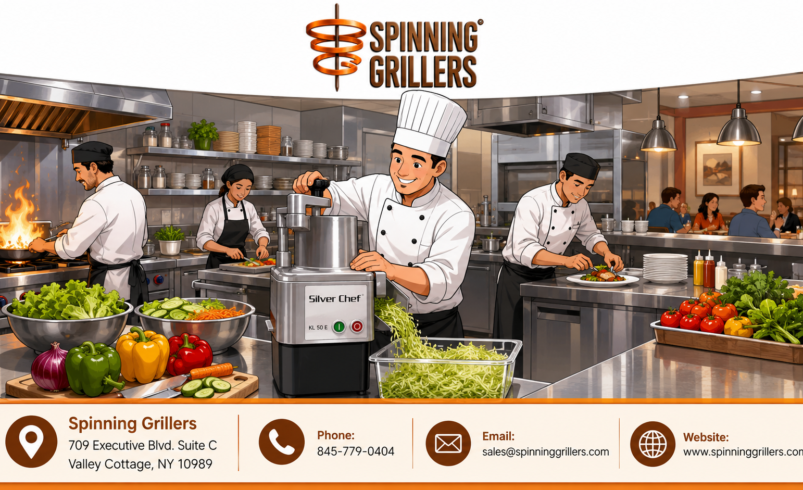
A commercial electric salad chopper, for example, is not valuable simply because it cuts vegetables faster. Its real value is consistency. Every portion can have a similar size, preparation becomes easier to manage, and staff members spend less time on repetitive chopping.
The lesson is simple:
A kitchen does not become efficient during the rush. It becomes efficient before the rush begins.
The Biggest Mistake Restaurant Owners Make: They Focus on Cooking, Not Preparation
When people open their first restaurant, they often spend most of their attention on the visible parts of the business.
They think about:
- The menu design
- The dining area
- The quality of ingredients
- The cooking techniques
- The presentation of dishes
All of these things matter, but experienced kitchen operators know that preparation often decides whether a restaurant succeeds during peak hours.
A chef can prepare an excellent dish once. The challenge is preparing that same dish 100 times on a Friday night while maintaining the same quality.
That is where systems become important.
For example, imagine a restaurant preparing hundreds of salads, sandwiches, wraps, or Middle Eastern dishes every day. Cutting vegetables may seem like a small task, but repeated small tasks become major time-consuming activities.
A few extra minutes of manual preparation repeated dozens of times every day can become hours of lost labor every week.
This is why many professional kitchens invest in equipment designed around repetitive tasks. Machines are not replacing kitchen skills; they are reducing unnecessary manual work so employees can focus on tasks that require experience.
Michelin-Star Kitchens Do Not Depend on Chaos
There is a common misconception that high-level kitchens operate through constant pressure and last-minute decisions. In reality, many of the world’s best kitchens are successful because they eliminate unnecessary decisions.
The famous kitchen brigade system developed by Georges Auguste Escoffier was created around organization and clear responsibilities. Instead of everyone doing everything, each person had a specific role.
This structure influenced modern professional kitchens worldwide.
Today, chefs running high-end restaurants still follow similar principles:
- Every ingredient has a place.
- Every employee understands their responsibility.
- Every process is designed to reduce mistakes.
The French Laundry, operated by chef Thomas Keller, is often referenced as an example of extreme attention to preparation and consistency. Keller has repeatedly emphasized the importance of discipline, standards, and doing simple things correctly.
The lesson from these kitchens is not that every restaurant needs expensive equipment or a large team.
The lesson is that every kitchen needs a system.
The Equipment Mistake: Buying Machines Without Understanding Workflow
One mistake I have seen many restaurant owners make is buying equipment based only on features.
They see a machine with a powerful motor, a large capacity, or advanced technology and assume it will automatically improve their kitchen.
But equipment only creates value when it solves a real workflow problem.
Before purchasing any commercial kitchen equipment, experienced operators usually ask:
- How often will we use this every day?
- Which problem does this solve?
- Will it save preparation time?
- Will it improve consistency?
- Will staff actually use it?
A machine sitting unused in the corner is not an investment. It is an expensive storage item.
The best equipment purchases are usually the ones that remove repetitive bottlenecks.
For example:
- A dough mixer reduces the physical effort required for large batches.
- A shawarma machine improves consistency in vertical cooking.
- A pita oven creates reliable production during busy periods.
- An electric salad chopper speeds up vegetable preparation.
The equipment itself is not the solution. The improved workflow is.
Why Repetitive Preparation Tasks Matter More Than Most People Think
Many restaurant owners underestimate how much time disappears into small preparation jobs.
Cutting vegetables.
Preparing sauces.
Portioning ingredients.
Mixing dough.
Cleaning between tasks.
Organizing stations.
None of these tasks look dramatic, but together they determine how smoothly a kitchen operates.
A study published by the National Restaurant Association has repeatedly highlighted labor efficiency as one of the biggest challenges facing restaurant operators. Improving productivity does not always mean asking employees to work faster. Often, it means designing better processes.
A skilled cook should spend their time cooking, seasoning, managing quality, and making decisions—not spending hours performing repetitive tasks that can be standardized.
This is where commercial kitchen equipment becomes important.
The goal is not replacing people.
The goal is allowing people to do higher-value work.
What Experienced Chefs Notice About Kitchen Layout, Equipment Choices, and the Hidden Cost of Poor Preparation
A Great Kitchen Is Designed Around Movement, Not Just Equipment
One of the biggest differences between an average commercial kitchen and a highly efficient one is how people move inside the space.
Many new restaurant owners think kitchen design is mainly about fitting in equipment. They focus on getting enough ovens, refrigerators, preparation tables, and cooking stations. However, experienced chefs look at something else first: movement.
How many steps does a cook take to complete one task?
How often does someone cross the kitchen during service?
Are ingredients stored where they are actually used?
Can a team member complete their work without interrupting someone else?
These questions may seem minor, but during a busy service, small inefficiencies become major problems.
A chef preparing hundreds of meals per shift does not lose time because of one big mistake. They lose time through dozens of small interruptions.
A refrigerator placed too far from a preparation station. A cutting board located away from ingredients. A machine stored somewhere inconvenient. These small design problems add up.
This is why professional kitchen designers often follow the principle of creating work zones.
Common commercial kitchen zones include:
- Food receiving and storage
- Preparation areas
- Cooking stations
- Assembly and plating areas
- Cleaning areas
The goal is to create a natural flow where food moves forward instead of employees constantly moving backward and forward.
The Hidden Cost of Manual Preparation
Many restaurant owners calculate the cost of equipment by looking at the purchase price.
Experienced operators calculate the cost of not having the equipment.
This difference changes the way they make decisions.
For example, imagine a restaurant where employees spend several hours every day manually preparing vegetables. At first, it may seem cheaper because there is no equipment investment.
But when you consider:
- Employee hours spent on repetitive preparation
- Slower service during busy periods
- Inconsistent portion sizes
- Increased fatigue
- More chances of mistakes
The real cost becomes much higher.
This is why successful restaurants analyze labor as part of their equipment decisions.
A machine that saves 30 minutes a day may not sound impressive. But over a year, that small improvement can represent hundreds of saved hours.
In professional kitchens, efficiency is rarely created by one major change. It comes from improving dozens of small processes.
Why Consistency Is More Important Than Speed
When restaurant owners talk about equipment, they often focus on speed.
“How quickly can this machine prepare food?”
That is an important question, but experienced chefs usually think about another factor first:
“Can this help us produce the same result every time?”
Consistency is what separates professional kitchens from ordinary ones.
A customer visiting a restaurant expects their favorite dish to taste the same whether they order it on Monday afternoon or Saturday night during peak hours.
Maintaining that standard becomes difficult when every step depends completely on manual work.
This does not mean handmade preparation has no value. Many chefs build their reputation around craftsmanship. However, even the most respected restaurants use systems and tools to maintain standards.
Chef Thomas Keller has often discussed the importance of repetition and precision in cooking. In high-level kitchens, doing something the same way repeatedly is considered a skill, not a limitation.
The best equipment supports that philosophy.
The Problem With Choosing Equipment Based Only on Price
One of the most common mistakes I see restaurant owners make is choosing equipment based only on the lowest initial price.
The cheapest option is not always the most affordable option.
Commercial kitchens are demanding environments. Equipment runs for long hours, handles heavy workloads, and must perform consistently.
Before purchasing equipment, experienced operators usually consider:
Build quality
Commercial equipment needs to handle daily use. Materials, construction quality, and reliability matter because downtime during service can be extremely expensive.
Capacity
A machine that works well for a small operation may struggle in a busy restaurant.
Owners should consider their current needs but also future growth.
Maintenance
A machine that is difficult to clean or maintain can create problems later.
Staff usability
The best equipment is simple enough that employees can use it correctly without unnecessary complications.
The Importance of Preparing for Peak Hours
Every restaurant has a moment when everything is tested.
The dinner rush.
The weekend crowd.
A large catering order.
A holiday event.
During these periods, preparation decides everything.
A kitchen that prepares properly before service starts feels controlled.
A kitchen that does not prepare properly feels chaotic.
This is why experienced chefs spend significant time before opening hours organizing stations, preparing ingredients, checking equipment, and reviewing the service plan.
The customer only sees the final plate.
They do not see the hours of preparation behind it.
Where Modern Equipment Fits Into Traditional Cooking
There is sometimes a misconception that using machines means losing the traditional approach to cooking.
Professional kitchens have never worked that way.
Throughout history, chefs have adopted tools that improve their work. Knives, mixers, ovens, refrigeration, and specialized equipment all changed how kitchens operate.
The question is not whether a kitchen uses equipment.
The question is whether the equipment improves the process.
For restaurants handling large amounts of fresh ingredients, equipment such as a commercial electric salad chopper can become an important part of the preparation system. Over the years, I have seen how the right equipment can completely change the rhythm of a kitchen. Brands like Spinning Grillers focus on solving these everyday challenges by helping restaurants reduce repetitive preparation work while maintaining consistency. When employees spend less time on tasks like continuous chopping, they have more time to focus on cooking, seasoning, presentation, and the overall customer experience.
The same principle applies across commercial kitchens:
Good equipment does not replace skill.
It allows skilled people to use their time better.
The Lesson I Learned After Two Decades Around Kitchens
After years of watching restaurants succeed and struggle, one pattern appears repeatedly:
The strongest kitchens are not always the biggest.
They are the ones where every part of the operation has a purpose.
The layout makes sense.
The equipment matches the workload.
The staff understands the process.
Preparation is taken seriously.
Many restaurants try to improve by changing recipes or adding more menu items. But sometimes the biggest improvements come from looking at the systems behind the food.
A kitchen becomes professional not because it has expensive equipment.
It becomes professional because every tool, person, and process works together.