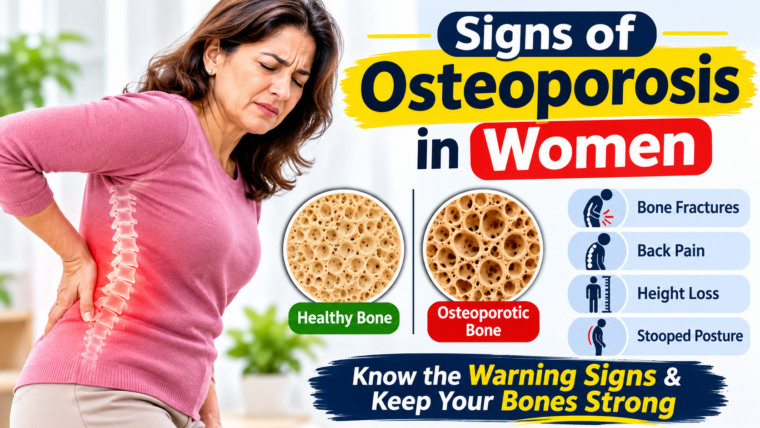


Signs of Osteoporosis in Women: 8 Warning Signs You Should Know
Osteoporosis is a bone condition that causes bones to become weak, fragile, and more likely to break. It can affect anyone, but women are at a higher risk, particularly after menopause. One of the biggest challenges is that osteoporosis often develops silently, without noticeable symptoms in its early stages.
Understanding the signs of osteoporosis in women can help you recognize possible warning signs, seek medical advice, and protect your long-term bone health. Although a bone fracture may be the first noticeable sign, certain physical changes can indicate that your bones need attention.
What Is Osteoporosis?
Osteoporosis is a condition in which bone density and bone strength decrease, making bones more vulnerable to fractures. Healthy bones constantly break down old tissue and replace it with new tissue. When bone loss happens faster than bone formation, bones gradually become weaker.
Women are particularly vulnerable after menopause because estrogen levels decrease. Estrogen helps maintain bone strength, so lower levels can accelerate bone loss.
Osteoporosis commonly affects the hips, spine, and wrists. However, fractures can occur in other bones as well. Source: FDA
8 Common Signs of Osteoporosis in Women
Osteoporosis usually has no obvious symptoms during its early stages. However, the following signs may appear as bone strength decreases or fractures develop.
1. Frequent Bone Fractures
One of the most important warning signs is breaking a bone after a minor fall or everyday movement. Healthy bones can usually withstand normal activities, but weakened bones may fracture more easily.
Common fracture locations include the wrist, hip, and spine. A fracture following a small fall, minor bump, or even routine movement should be discussed with a healthcare professional.
2. Persistent Back Pain
Ongoing back pain can sometimes be associated with osteoporosis, particularly when a small fracture develops in one of the spinal bones.
These fractures are called vertebral compression fractures. They may cause sudden or persistent pain, especially when standing, walking, or moving.
Not all back pain is related to osteoporosis. However, unexplained or severe back pain deserves medical evaluation.
3. Loss of Height
Have you noticed that you are shorter than you used to be? Gradual height loss can be a possible sign of osteoporosis.
When the bones in the spine become weak, they may compress or develop small fractures. Over time, these changes can reduce a person’s height.
Noticeable height loss, especially when accompanied by back pain, should not be ignored.
4. Stooped or Hunched Posture
Osteoporosis-related spinal fractures can gradually change the shape of the spine. This may cause the upper back to curve forward, creating a rounded or hunched appearance.
This condition is known as kyphosis. It can affect posture, balance, and comfort during everyday activities.
A developing curve in the upper back should be assessed by a healthcare professional.
5. Fractures During Everyday Activities
Some women with osteoporosis experience fractures while performing ordinary activities, such as bending, lifting light objects, or coughing.
These movements usually do not damage healthy bones. However, bones affected by osteoporosis may be fragile enough to break under normal stress.
An unexplained fracture should prompt an assessment of bone health.
6. Reduced Mobility and Difficulty With Daily Activities
Osteoporosis itself does not usually cause muscle weakness or joint pain. However, fractures, particularly in the hip and spine, can make movement difficult.
Women may experience discomfort while walking, standing, bending, or completing household activities. Recovery from a fracture may also affect balance and independence.
If movement becomes difficult after an injury or unexplained pain, seek medical advice.
7. Sudden Hip or Wrist Pain After a Minor Fall
Hip and wrist fractures are common complications of osteoporosis. A minor fall that causes significant pain, swelling, or difficulty moving may indicate a fracture.
Hip fractures can make standing or walking extremely difficult. Wrist fractures may cause pain, bruising, swelling, and reduced hand movement.
Seek prompt medical attention if you suspect a fracture, particularly after a fall.
8. Repeated Fractures Over Time
Experiencing more than one fracture, especially after minor injuries, may indicate reduced bone strength.
Repeated fractures should not be treated as unrelated accidents without further assessment. A healthcare professional may recommend a bone density test to check for osteoporosis.
What Causes Osteoporosis in Women?
Several factors can contribute to bone loss and increase the risk of osteoporosis.
- Menopause: Lower estrogen levels after menopause can accelerate bone loss.
- Age: Bone density naturally decreases as people get older.
- Family history: Having a parent with osteoporosis or a history of hip fractures can increase risk.
- Low calcium and vitamin D intake: These nutrients are important for maintaining healthy bones.
- Low body weight: Women with a naturally small or thin body frame may have a higher risk.
- Physical inactivity: Not getting enough weight-bearing exercise can contribute to weaker bones.
- Smoking and heavy alcohol use: These habits can negatively affect bone health.
- Certain medications: Long-term use of corticosteroids and some other medicines may increase bone loss.
- Medical conditions: Certain hormonal, digestive, and inflammatory conditions can affect bone strength.
Having one or more risk factors does not mean you definitely have osteoporosis. A medical assessment can help determine your individual risk. Source: MedlinePlus
How Is Osteoporosis Diagnosed?
Osteoporosis cannot be confirmed through symptoms alone. Many women have no noticeable warning signs until a fracture occurs.
Doctors may review your medical history, family history, previous fractures, medications, and lifestyle habits. They may also recommend a bone mineral density test.
The most commonly used test is a DEXA or DXA scan. It is a quick, painless test that uses low-dose X-rays to measure bone density, usually in the hip and spine.
A healthcare professional can interpret the results and determine whether you have normal bone density, low bone density (osteopenia), or osteoporosis.
How Can Women Protect Their Bone Health?
Healthy daily habits can help maintain bone strength and reduce the risk of fractures.
- Eat calcium-rich foods: Include milk, yogurt, cheese, leafy green vegetables, and other calcium-containing foods.
- Get enough vitamin D: Vitamin D helps the body absorb calcium. Ask a healthcare professional whether you need a supplement.
- Stay physically active: Walking, strength training, and appropriate weight-bearing exercises can support bone health.
- Avoid smoking: Smoking can negatively affect bone strength.
- Limit alcohol: Avoid heavy alcohol consumption.
- Prevent falls: Keep floors clear, wear suitable footwear, and maintain good lighting at home.
- Get regular medical advice: Discuss bone density screening if you have risk factors or are approaching or past menopause.
When Should You See a Doctor?
Speak with a healthcare professional if you experience unexplained height loss, persistent back pain, a stooped posture, or a fracture following a minor fall.
Women aged 65 and older are generally recommended to undergo osteoporosis screening. Younger postmenopausal women with increased risk factors may also need testing. Your healthcare professional can advise when screening is appropriate.
Seek urgent medical care if you suspect a hip or spinal fracture, experience severe pain after a fall, or cannot stand or walk normally.
Conclusion
Recognizing the signs of osteoporosis in women is important for protecting long-term bone health. Although osteoporosis often develops without noticeable symptoms, unexplained fractures, persistent back pain, height loss, and changes in posture can be important warning signs.
Women can support stronger bones through balanced nutrition, regular physical activity, fall prevention, and appropriate medical screening. If you have risk factors or notice unusual changes, consult a healthcare professional rather than waiting for a fracture to occur.
Frequently Asked Questions
What is the first sign of osteoporosis in women?
Osteoporosis often has no early symptoms. A fracture after a minor fall may be the first noticeable sign.
At what age does osteoporosis usually start in women?
The risk increases with age and rises significantly after menopause. However, osteoporosis can also affect younger women.
Can osteoporosis cause back pain?
Yes. Osteoporosis-related spinal fractures can cause sudden or persistent back pain.
Can osteoporosis be detected early?
Yes. A bone density test, commonly called a DEXA scan, can detect low bone density before a fracture occurs.
How can women naturally support stronger bones?
Eating calcium-rich foods, getting enough vitamin D, exercising regularly, avoiding smoking, and limiting alcohol can help support bone health.