
A leaking water heater, burst pipe, or storm-related intrusion can turn a small problem into major property damage within hours. In Everett, WA, wet weather and drainage concerns can add another layer of risk. Water damage restoration focuses on stopping the source, removing moisture, drying affected materials, and repairing the areas that cannot be saved. North Cascades Concrete approaches these situations with a practical focus on identifying the real extent of the damage before repairs begin.
What Water Damage Restoration Actually Involves
Water damage restoration is the process of bringing a property back to a safe, dry, usable condition after unwanted water enters the building. It can involve water extraction, structural drying, moisture monitoring, damaged-material removal, cleaning, odor control, and repairs.
The first priority is finding and stopping the source. A leaking supply line, failed appliance, roof intrusion, clogged drain, sewage backup, or stormwater problem can continue causing damage even after visible water has been removed.
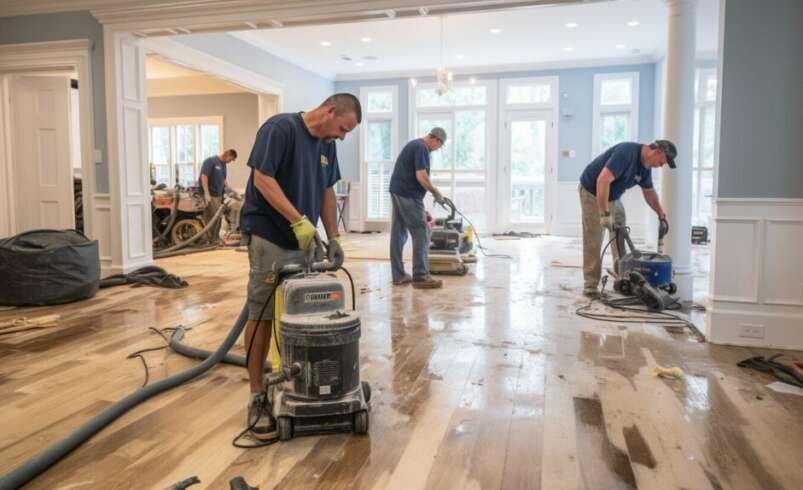
Next comes extraction. Technicians may use wet vacuums, pumps, extraction equipment, air movers, and commercial dehumidifiers depending on the amount of water and the materials affected.
In Everett, we’ve noticed that most homeowners initially judge the severity of water damage by what they can see. That can be misleading. Water may travel underneath flooring, behind drywall, beneath cabinets, or into insulation before stains or swelling become obvious.
Moisture readings can provide a better picture. Professionals may check drywall, subflooring, framing, flooring, and other materials at multiple locations to determine whether drying is actually complete.
The type of water also matters. Clean water from a broken supply line presents different concerns from gray water containing contaminants or black water associated with sewage and other hazardous sources. The appropriate cleanup method depends on the source and level of contamination.
A water damage contractor in Everett, WA may also coordinate demolition and rebuilding if materials such as drywall, insulation, flooring, trim, or cabinetry cannot be restored.
The Real Water Damage Challenge in Everett, WA
Everett has a significant local drainage and stormwater factor that homeowners should understand. The city manages stormwater across 23 drainage basins and three watersheds, and it provides specific guidance for private-property drainage and flooding concerns.
Heavy rainfall can expose weak points around roofs, gutters, crawl spaces, foundations, yards, and drainage systems. The city’s own information explains that runoff can come from roofs, driveways, lawns, roads, and other surfaces, while poorly maintained drainage systems can contribute to localized flooding.
A client in Everett reached out after discovering damp flooring near an exterior wall following several days of heavy rain. The visible moisture seemed limited to one area, but further inspection found moisture beneath the flooring and along part of the wall. The immediate priority was drying the affected materials and identifying how water had entered before replacing the damaged finishes.
That raises an objection homeowners often have: Can I just dry the area myself with fans and replace the damaged surface later?
Sometimes a small, isolated spill can be handled by a homeowner. A larger event is different. If water has reached concealed spaces or remained trapped inside materials, surface drying may create the appearance of improvement while moisture remains underneath.
Another question that generic restoration pages often avoid is whether every wet material needs to be removed. No. Some materials can be dried and restored if contamination, swelling, structural damage, and other conditions are within acceptable limits. Removing sound materials unnecessarily can increase the cost and length of a project.
The better question is not “How much can we tear out?” It is “What has been damaged, what can be dried, and what needs replacement?”
Current Everett restoration providers commonly emphasize rapid response, extraction, drying equipment, mold prevention, insurance documentation, and reconstruction. A useful content gap is helping homeowners understand the decision between drying, removal, repair, and full reconstruction instead of treating every water event as the same type of project.
How North Cascades Concrete Approaches Water Damage Differently
North Cascades Concrete takes a damage-first approach: determine the source, identify affected areas, evaluate the materials, and then establish the repair plan.
That sequence matters because replacing a damaged floor without correcting the underlying moisture problem can simply hide the issue. The same principle applies to drywall, baseboards, cabinets, insulation, and structural components.
An initial assessment should look beyond standing water. Signs can include discoloration, swelling, buckling, soft flooring, peeling paint, musty odors, warped trim, and changes in indoor humidity.
Moisture meters can help identify damp areas that are not obvious visually. Thermal imaging may also assist with locating temperature differences associated with moisture, although readings should be interpreted by someone who understands the limitations of the equipment.
Drying should be controlled rather than based on guesswork. Air movers increase evaporation, while dehumidifiers remove moisture from the indoor environment. The equipment setup depends on the affected materials, room conditions, water category, temperature, and humidity.
One unique insight that generic articles often miss is that drying the room and drying the building materials are not necessarily the same thing. A room can feel comfortable while moisture remains inside a wall cavity or beneath flooring. That is why moisture verification matters before reconstruction.
The repair stage comes after the affected area has reached an appropriate dry condition. Depending on the damage, work may include drywall replacement, flooring repair, insulation replacement, cabinet work, trim replacement, painting, or structural repairs.
Documentation is another useful part of the process. Photos, moisture readings, equipment logs, material conditions, and repair estimates can help create a clearer record for property owners and insurance adjusters.
Homeowners should also understand that insurance coverage depends on the policy and cause of loss. Sudden and accidental events may be covered under some policies, while gradual leaks, maintenance issues, or certain flood-related losses may have different coverage requirements.
Practical Tips: What to Know Before You Decide
Working with clients in Everett, our team found that homeowners make better decisions when they take a few basic steps before restoration work begins.
First, stop the water source if it is safe to do so. Shut off the appropriate water supply for plumbing leaks and contact the relevant utility or professional if the source cannot be safely controlled.
If water is near electrical outlets, appliances, or electrical panels, avoid entering the affected area until it is safe. Do not operate electrical equipment while standing in water.
Next, document the damage. Take photographs and videos before moving or discarding affected property, provided doing so does not create a safety risk. Documentation can be useful when discussing the loss with an insurance company.
Remove items from standing water when it is safe. Furniture, rugs, boxes, and other belongings can sometimes be moved to a dry location to prevent additional exposure.
Do not assume that a ceiling stain is the entire problem. Water can travel along framing and appear some distance from the original leak. The visible stain may simply be the point where water finally became noticeable.
For emergency water damage cleanup, response time matters, but speed should not replace proper assessment. A crew that arrives quickly but fails to identify hidden moisture can leave you with a second problem later.
Everett’s stormwater system and private drainage responsibilities also make exterior water management worth checking after a weather-related incident. The city advises property owners about runoff, drainage maintenance, and private-property flooding concerns.
Look at downspouts, gutters, grading, crawl-space conditions, exterior penetrations, and areas where water collects near the foundation. Fixing the source can be just as valuable as repairing the interior damage.
For homeowners comparing water damage repair services, ask for a written scope that separates emergency mitigation from reconstruction. You should know which materials will be dried, which will be removed, what repairs are proposed, and what additional conditions could change the estimate.
If permits are required for reconstruction or related building work, confirm who handles them. Everett’s Permit Services processes construction permits and provides current application information for building and trade work.
Finally, check insurance, licensing, references, written agreements, warranty information, and the contractor’s process for documenting unexpected damage. Clear communication is especially valuable during a stressful property emergency.
Stop the Moisture Before Rebuilding the Space
The most effective response to water damage is not simply removing what looks wet. The source, moisture levels, affected materials, contamination, and underlying conditions all need to be considered before permanent repairs begin. For homeowners dealing with water damage in Everett, WA, North Cascades Concrete can be part of the conversation as you assess the damage, compare repair options, and plan the next step.
FAQs
1. How much does water damage restoration cost in Everett, WA?
Costs vary based on the water source, affected square footage, materials involved, contamination level, drying requirements, and reconstruction needs. A small localized leak can cost far less than a flooded crawl space or multi-room incident. Ask for a written assessment separating extraction, drying, demolition, repairs, and other potential charges.
2. How quickly should I respond to water damage?
Act as soon as possible, especially if water is still entering the property. Remove the source if safe, protect electrical safety, document the condition, and contact appropriate help. Delayed drying can allow moisture to spread into flooring, drywall, insulation, and framing, increasing the amount of material that may require repair or replacement.
3. How do I know a water damage contractor is legitimate?
Check the contractor’s Washington licensing information, insurance, references, written agreement, and experience with similar projects. Ask how moisture is measured and documented, who handles demolition and reconstruction, and how unexpected damage is addressed. A trustworthy professional should explain the work clearly instead of relying on vague promises about getting everything fixed quickly.
4. Will homeowners insurance cover water damage restoration?
Coverage depends on the cause of the loss and the specific policy. Sudden accidental events such as some burst-pipe incidents may be covered, while gradual leaks, maintenance-related damage, or certain flood losses may have different rules. Contact your insurer promptly and ask what documentation they require before major repairs begin.
5. Can water-damaged flooring or drywall be repaired instead of replaced?
Sometimes. Materials may be restorable if they can be safely dried without significant swelling, contamination, structural deterioration, or permanent damage. Flooring type, drywall condition, water category, and exposure time all matter. A proper assessment should determine whether drying and cleaning are reasonable or whether replacement provides the safer long-term result.