
Kratom products have attracted growing attention across the United States, particularly those associated with a compound called 7-hydroxymitragynine. Often shortened to 7-OH, this substance has become an important topic in discussions about botanical products, public health, and consumer safety.
People researching opia kratom may encounter terms such as Opia 7OH, kratom extracts, and 7-hydroxymitragynine tablets. Although these names can appear alongside one another, they do not necessarily describe products with the same ingredients, concentrations, or health risks.
The distinction matters. Traditional kratom leaves naturally contain several alkaloids, while concentrated 7-OH products can contain substantially higher amounts of a particularly potent opioid-active compound.
This 2027 educational guide explains what 7-hydroxymitragynine is, how it interacts with the body, what makes concentrated products different from botanical kratom, and what American consumers should understand about safety and regulation.
1. What Is Opia 7 Hydroxymitragynine?
7-Hydroxymitragynine is an opioid-active alkaloid that occurs naturally in very small amounts in the kratom plant, scientifically known as Mitragyna speciosa.
The compound is commonly abbreviated as 7-OH. It is chemically related to mitragynine, the primary alkaloid found in kratom leaves.
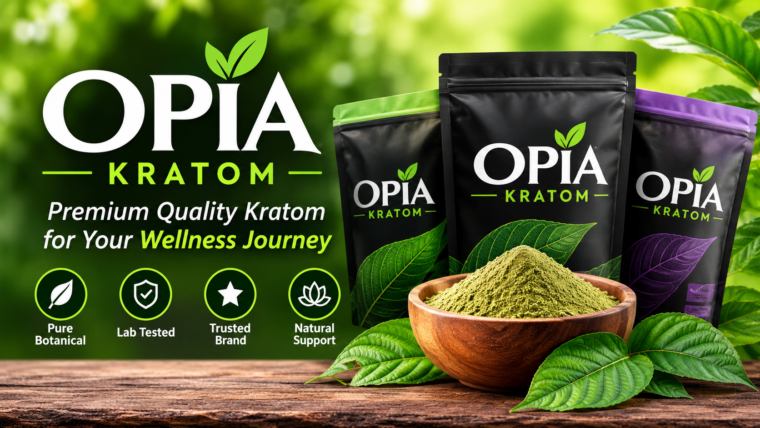
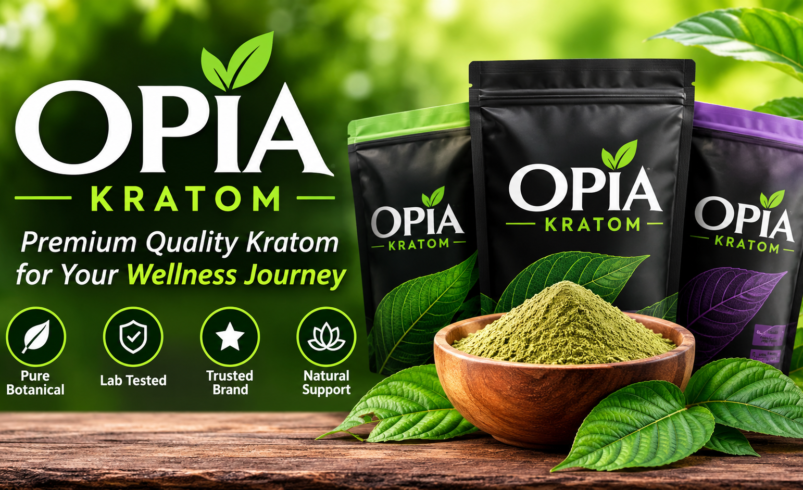
The name Opia may appear in discussions of branded kratom-related products. However, a brand name alone cannot establish the actual 7-OH concentration, product composition, or regulatory status.
Understanding the Kratom Plant
Kratom is a tropical tree native to Southeast Asia, particularly countries such as Thailand, Indonesia, and Malaysia.
Its leaves contain numerous naturally occurring compounds, including mitragynine and small quantities of 7-hydroxymitragynine.
These substances have attracted scientific interest because they interact with biological systems involved in pain signaling and other neurological functions.
However, naturally occurring does not automatically mean harmless.
The concentration of a compound, its chemical activity, and the way it is presented in a product all influence potential risks.
What Makes 7-Hydroxymitragynine Different?
One of the most important distinctions is the compound’s activity at opioid receptors.
7-Hydroxymitragynine can produce opioid-like effects, making it a significant concern for scientists and public health authorities.
Concentrated products may contain levels far beyond the trace quantities found naturally in botanical kratom.
The FDA specifically distinguishes conventional kratom leaf material from products containing added or enhanced levels of 7-OH.
2. How Does Opia 7OH Interact With the Body?
Understanding 7-hydroxymitragynine begins with a basic explanation of the body’s opioid receptors.
These receptors are proteins found throughout the nervous system. They participate in processes involving pain perception, mood, and other physiological responses.
The Role of Opioid Receptors
7-Hydroxymitragynine interacts with mu-opioid receptors.
These are among the same receptor systems affected by prescription opioid medications.
As a result, 7-OH presents risks associated with opioid activity, including dependence and potentially dangerous effects on breathing.
The FDA warns that concentrated 7-OH products have not been established as safe or effective for any use.
FDA
Why Concentration Matters
Consider the difference between a botanical ingredient containing trace amounts of a particular chemical and a manufactured product designed to contain an enhanced concentration of that chemical.
Even when the underlying molecule is identical, its concentration can create substantially different safety concerns.
This principle is especially relevant to 7-hydroxymitragynine.
High-concentration formulations should not be assumed to have the same characteristics as traditional kratom leaf material.
Does 7-OH Have Recognized Medical Benefits?
As of November 2026, there are no FDA-approved medicines containing 7-hydroxymitragynine.
Although researchers have investigated the compound’s biological activity, scientific investigation does not establish that a commercial product is medically effective or safe.
People experiencing pain, anxiety, sleep difficulties, or other health concerns should seek evidence-based guidance from a qualified healthcare professional rather than relying on unapproved 7-OH products.
3. Opia Kratom vs. Concentrated 7-OH Products
One common source of confusion is the assumption that all products described as kratom have similar chemical compositions.
They do not.
The distinction between botanical kratom and concentrated 7-OH is particularly important.
| Feature | Botanical Kratom | Concentrated 7-OH Products |
| Source | Leaves of Mitragyna speciosa | Manufactured or processed formulations |
| Main alkaloid | Generally mitragynine | Enhanced 7-hydroxymitragynine |
| Natural 7-OH levels | Typically trace amounts | Potentially much higher |
| Product forms | Often leaf powder or capsules | May include tablets, gummies, liquids |
| Safety concerns | Potential adverse effects and dependence | Significant opioid-related risks |
| FDA-approved medical use | None | None |
What About Opia Tablets?
The phrase opia tablets may describe a branded commercial product, but its name or physical form cannot establish its ingredients.
Tablets can look familiar because many everyday medications and supplements use that format.
However, familiar packaging does not indicate FDA approval or proven safety.
Consumers should be aware that concentrated 7-OH tablets and similar products have been specifically identified in FDA safety warnings.
FDA
Why Product Labels Can Be Misleading
A label may contain botanical terminology, numerical claims, or references to laboratory testing.
Such details can appear scientific without necessarily demonstrating that a product has undergone independent safety evaluation.
A laboratory result identifying a chemical compound is not equivalent to a clinical study establishing safety or effectiveness.
This is an important distinction for anyone researching Opia kratom or other products associated with 7-OH.
4. What Are the Health Risks of 7-Hydroxymitragynine?
Public health authorities have raised serious concerns about concentrated 7-hydroxymitragynine products.
These concerns are not limited to the chemical itself. They also involve inconsistent formulations, misleading marketing, and insufficient clinical evidence.
Potential Adverse Effects
Opioid-active substances may cause effects such as:
- Nausea and vomiting
- Dizziness and drowsiness
- Reduced alertness
- Physical dependence
- Withdrawal symptoms
- Dangerous breathing problems
The likelihood and severity of adverse effects depend on multiple factors, and there is no established safe consumer-use regimen for concentrated 7-OH products.
Dependence and Withdrawal
Dependence occurs when the body adapts to repeated exposure to a substance.
If that exposure ends, withdrawal symptoms may develop.
This distinction matters because a product marketed using botanical or wellness terminology may still have meaningful dependence potential.
Individuals concerned about dependence should speak with a healthcare professional rather than attempt to manage the problem without medical guidance.
The Danger of Combining Substances
Combining opioid-active substances with alcohol, sedatives, or other medications that reduce central nervous system activity can increase the risk of serious harm.
Even substances sold without a prescription can interact with medications or existing medical conditions.
Anyone who experiences severe drowsiness, difficulty breathing, or unresponsiveness after exposure needs emergency medical attention.
Why the FDA Advises Against Concentrated 7-OH
The FDA has warned that products containing added or enhanced 7-OH levels are not proven safe or effective and should be avoided.
Its public health communications also emphasize that such products are not lawful dietary supplements or conventional food ingredients.
FDA
For readers researching this category in 2027, official public health information should take priority over advertising claims or online testimonials.
5. Opia 7-Hydroxymitragynine and U.S. Regulations in 2027
The American regulatory environment surrounding 7-hydroxymitragynine has been changing.
Understanding these developments is essential because federal action, state restrictions, and product-specific classifications can affect legal status.
FDA Regulatory Concerns
In July 2025, the FDA announced warning letters concerning products marketed with 7-hydroxymitragynine.
The agency stated that 7-OH is not a lawful dietary supplement ingredient, cannot lawfully be added to conventional foods, and is not an ingredient in any FDA-approved medication.
FDA
These findings are especially relevant to products marketed under supplement or botanical wellness categories.
DEA Scheduling Developments
In October 2026, the U.S. Department of Health and Human Services recommended an updated regulatory approach for 7-OH and a related substance called mitragynine pseudoindoxyl.
The proposed approach uses chemical concentration and composition thresholds to distinguish certain enhanced products from botanical materials containing trace amounts.
The DEA subsequently issued a revised notice of intent addressing temporary scheduling.
Importantly, a notice of intent is not identical to a final scheduling order. As of the verified October 2026 government updates, the DEA had not yet issued the temporary scheduling order for 7-OH under that revised approach.
United States Department of Justice+1
Why State Regulations Matter
Individual states may impose additional restrictions beyond federal requirements.
These rules can change and may address particular substances, concentrations, product classifications, or distribution activities.
For that reason, an article prepared for 2027 should not imply that one nationwide rule covers every 7-OH product.
Readers should consult current FDA, DEA, and state government information for updated requirements.
6. How Can Consumers Evaluate 7-OH Health Claims?
Search results and product advertisements may contain claims about quality, strength, natural origins, or laboratory verification.
Understanding what these claims actually demonstrate is an important part of consumer awareness.
Separate Marketing From Scientific Evidence
A product description is written to communicate information about an item, but it is not necessarily based on independent medical research.
For example, statements suggesting that a botanical compound can address pain or other health conditions require appropriate clinical evidence.
Testimonials and customer reviews cannot substitute for controlled scientific studies.
Understand the Limits of Laboratory Testing
Chemical testing may help identify what compounds are present in a sample.
However, even an accurate laboratory report does not prove that consuming the tested substance is safe.
Testing for identity, purity, or concentration is different from evaluating long-term effects, interactions, or dependence potential.
Consumers should avoid interpreting a laboratory certificate as an FDA endorsement.
Recognize Warning Signs in Health Marketing
The following claims deserve particular scrutiny:
- Promises of guaranteed medical outcomes
- Suggestions that natural ingredients have no side effects
- Statements that a product is FDA-approved without verifiable evidence
- Assertions that concentrated compounds are equivalent to traditional botanical materials
- Claims that scientific uncertainty has already been resolved
Reliable health information should acknowledge limitations and distinguish established findings from preliminary research.
What Responsible Educational Content Should Include
An informative article about 7-hydroxymitragynine should explain both what researchers know and what remains uncertain.
It should also identify the difference between botanical kratom, chemically enhanced formulations, and prescription medicines.
Most importantly, it should not present unapproved substances as substitutes for professional healthcare.
7. What Should Readers Know About Opia Kratom in 2027?
Interest in 7-OH has created a need for clearer consumer education.
The most useful approach is to focus on scientific evidence, transparent terminology, and authoritative public health guidance.
Three points deserve particular attention.
First, product names are not chemical definitions. The terms kratom, Opia, and 7-OH should not automatically be treated as interchangeable.
Second, concentration changes the risk profile. A trace constituent naturally present in a plant can present substantially different concerns when incorporated into concentrated commercial formulations.
Third, regulation is evolving. Information published earlier may no longer reflect the latest federal or state requirements.
For anyone researching these substances, current regulatory notices and medical evidence are more reliable than promotional claims.
Frequently Asked Questions About Opia 7OH
1. What is Opia 7-hydroxymitragynine?
Opia may refer to a branded product associated with kratom or 7-OH. 7-Hydroxymitragynine itself is an opioid-active alkaloid found naturally in trace amounts in kratom leaves. A specific branded product’s composition must not be inferred from its name alone.
2. Is Opia 7OH the same as regular kratom?
Not necessarily. Botanical kratom contains multiple alkaloids and typically only trace quantities of 7-hydroxymitragynine. Concentrated 7-OH formulations may contain significantly enhanced levels of that compound.
3. Is 7-hydroxymitragynine FDA-approved?
No. As of November 2026, 7-hydroxymitragynine is not an ingredient in an FDA-approved medicine. The FDA also warns against concentrated products containing added or enhanced 7-OH.
4. Are 7-OH tablets considered safe?
The FDA has not established concentrated 7-OH tablets as safe or effective for consumer use. Such products raise concerns involving opioid activity, dependence, and other serious adverse effects.
5. Will 7-OH regulations change in 2027?
They may. Federal regulatory actions were developing during 2026, and state requirements can also change. Readers should verify the latest information through official government sources rather than relying on older articles.
Conclusion: Understanding Opia Kratom and 7-OH in 2027
Understanding opia kratom and 7-hydroxymitragynine requires more than recognizing a brand name or reading a product description.
The essential distinction is between traditional botanical kratom, which naturally contains trace levels of 7-OH, and enhanced formulations that may contain much higher concentrations of this opioid-active compound.
Ready to compare for yourself? Browse KratomPoint, check the full Opia Kratom page, and pick a small size to try first. Questions? Their support team is available by phone and email on weekdays.
Stay informed: Review the latest FDA and DEA guidance, discuss health concerns with a licensed medical professional, and prioritize independently supported medical evidence over commercial claims.