

Choosing the right dermal filler is one of the most important decisions when considering jawline enhancement. Different fillers have different textures, lifting abilities, longevity, and suitability for specific areas of the face. For people considering jawline contouring, understanding which filler is commonly used can make the consultation less confusing and help set realistic expectations.
In most cases, practitioners prefer a firm, supportive dermal filler that can provide structure and definition along the jawline. When considering Jawline Filler in Abu Dhabi, the exact product depends on your facial anatomy, skin quality, desired outcome, and the clinician’s assessment. Rather than choosing a filler based only on brand or price, it is important to understand why a particular type may be recommended for your jawline.
Why Is a Specific Filler Needed for the Jawline?
The jawline requires more structural support than some softer facial areas. A filler used around the lips, for example, may be designed to create subtle volume and movement, while jawline filler needs to provide enough support to create or improve facial definition.
A suitable jawline filler should have properties that allow the practitioner to place it precisely and create controlled contouring. The goal is generally not to add excessive volume but to strategically improve the appearance of the lower face.
The amount and placement of filler can vary considerably between individuals. Someone with a naturally defined jawline may require only small adjustments, while another person may need treatment at several points along the jaw to achieve better proportions.
Hyaluronic Acid Is Commonly Used
Hyaluronic acid, often abbreviated as HA, is one of the most commonly used materials in modern dermal fillers. It is a substance that naturally occurs in the body and has the ability to attract and retain water.
For jawline treatment, clinicians may select a denser or more structurally supportive HA filler rather than a very soft formulation. These products are designed to provide volume and definition while allowing the practitioner to shape the treated area according to the patient’s facial structure.
One important advantage of HA fillers is that they are temporary. Over time, the body gradually breaks down the injected material, meaning the results are not considered permanent. This can be useful for people who want to assess how a more defined jawline affects their appearance before deciding whether to maintain the treatment.
What Makes a Jawline Filler Different From Other Fillers?
Not every dermal filler is appropriate for every facial area. Fillers are formulated with different characteristics depending on where they are intended to be used.
A filler used for the jawline generally needs greater firmness and structural support than a filler designed for delicate areas. The practitioner may consider factors such as gel consistency, elasticity, cohesiveness, and the ability of the product to maintain its shape after injection.
This does not mean that one specific filler is automatically the best choice for everyone. Facial anatomy differs from person to person, and the same product may produce different results depending on how it is placed and how much is used.
For this reason, the product should be selected as part of an individualized treatment plan rather than according to a generic recommendation.
Can Jawline Filler Be Used to Improve Facial Proportions?
Jawline filler is not simply about making the jaw larger. A skilled practitioner may use filler strategically to improve the relationship between the chin, jawline, and lower face.
For example, a person with a less prominent chin may feel that their lower face lacks definition. In some cases, adding carefully placed filler to the chin and jawline can create a more balanced appearance. Similarly, filler may be used along specific sections of the jaw to create greater visual continuity.
The objective should be proportion rather than maximum volume. Overfilling the jawline can produce an unnatural or overly heavy appearance, which is why conservative treatment and careful assessment are important.
How Does the Practitioner Choose the Right Filler?
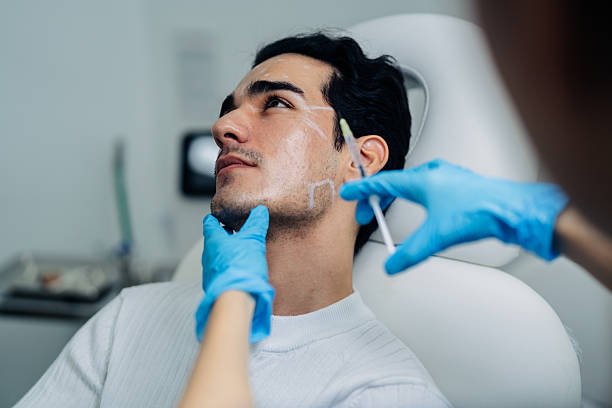
During a consultation, the practitioner should assess your facial structure before recommending a particular product. This may include looking at the width and projection of the jaw, chin position, skin elasticity, existing facial volume, and your desired level of definition.
Your treatment goals also matter. Someone seeking a subtle improvement may need a different approach from someone looking for a more pronounced contour.
The practitioner may also consider whether you have previously received dermal fillers and how your face responded to earlier treatments. Your medical history, allergies, medications, and previous cosmetic procedures should also be discussed before treatment.
This consultation is particularly important because the product itself is only one part of the outcome. Injection technique, placement, product quantity, and the practitioner’s understanding of facial anatomy can all influence the final appearance.
How Long Does Jawline Filler Last?
The longevity of jawline filler varies according to the product used, the amount injected, individual metabolism, and the treatment area. Hyaluronic acid fillers are gradually broken down by the body, so the results are temporary.
Some people may maintain their results with periodic treatments, while others may prefer to wait until the filler has significantly reduced before considering another session. It is important not to assume that a longer-lasting product is automatically better.
A longer-lasting filler may not always be appropriate for someone who wants flexibility or is trying jawline enhancement for the first time. Your practitioner can explain the expected duration of the selected product and whether maintenance treatments may eventually be needed.
Is Jawline Filler in Abu Dhabi Safe?
When performed by a qualified and experienced medical professional using an appropriate product, dermal filler treatment can be performed safely. However, like any injectable cosmetic procedure, it carries potential risks.
Temporary swelling, redness, tenderness, bruising, and sensitivity can occur after treatment. These effects commonly improve as the treated area settles. More serious complications are uncommon but can occur if filler is accidentally injected into a blood vessel or if the procedure is not performed correctly.
This is why selecting a qualified practitioner is more important than simply choosing a treatment based on cost. Patients should also make sure they understand what product is being used, why it has been selected, and what aftercare is recommended.
What Should You Ask Before Treatment?
Before receiving jawline filler, ask the practitioner which type of filler they recommend and why it is appropriate for your facial structure. You can also ask whether the product is hyaluronic acid based, how long the expected results may last, how much filler may be required, and what side effects or complications you should be aware of.
It is also reasonable to ask about the practitioner’s experience with jawline contouring. A strong understanding of facial anatomy is essential because the jawline contains important blood vessels, nerves, and surrounding structures.
You should leave the consultation with a clear understanding of the proposed treatment rather than feeling pressured to proceed immediately.
Finding the Right Approach for Your Jawline
There is no single filler that is ideal for every person. Hyaluronic acid-based fillers with sufficient structural support are commonly considered for jawline contouring because they can provide controlled volume and definition while offering a temporary result.
However, the most appropriate product depends on your individual anatomy and goals. If you are considering Jawline Filler in Abu Dhabi, focus on finding a qualified practitioner who can evaluate your face and explain why a particular filler and injection technique are suitable for you.
Ultimately, successful jawline enhancement is about achieving balanced definition rather than simply adding volume. A personalized treatment plan, appropriate filler selection, careful placement, and realistic expectations can all contribute to a more natural-looking result.