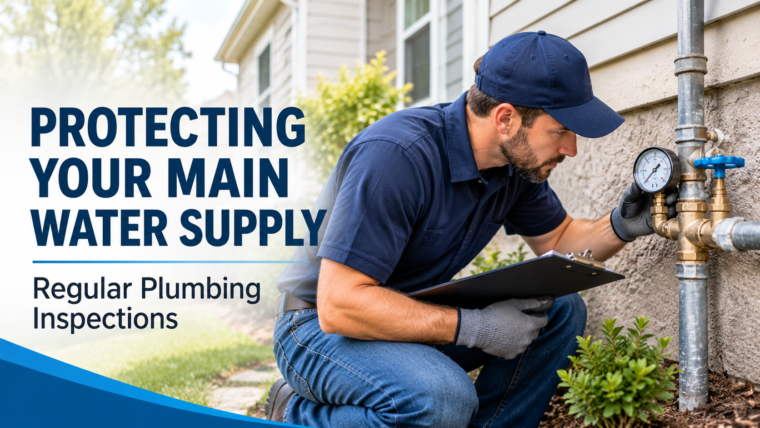
Most homeowners never think about the pipe buried between the municipal main and their foundation until something goes wrong. By then, the damage is already done: a soggy yard, a spiking water bill, or a sudden drop in pressure that turns a shower into a trickle. Routine water line maintenance is the practical alternative. A scheduled inspection catches the early signs of deterioration, corrosion, or shifting that, left alone, turn into a repair job measured in days rather than hours.
This article explains what a plumbing inspection actually looks at, what it can and cannot catch, and how to read the results so the findings are genuinely useful rather than just a checklist someone hands you at the end.
What a Plumbing Inspection Covers for the Main Line
A general home inspection and a dedicated plumbing inspection are not the same thing. A general inspector typically checks fixtures, visible supply lines, and drain function. A plumbing-specific inspection, particularly one focused on the main water supply line, goes further.
The inspector will check water pressure at multiple points in the house. Pressure that is consistently low throughout the home, rather than just at one fixture, often points to a restriction or partial blockage in the service line rather than a fixture-level problem. Pressure that is too high is a separate concern: it accelerates wear on joints, valves, and appliance connections across the entire residential plumbing system.
Beyond pressure, the inspection looks at accessible sections of pipe for visible corrosion, joint condition, and signs of past repairs. For underground or concealed sections, a camera inspection or acoustic leak detection equipment can reveal what a visual check cannot. Not every inspection automatically includes these tools; it is worth asking specifically whether the service line from the street to the house is in scope.
Pipe Material Matters More Than Most Homeowners Realize
The age of a home is a rough guide to what its service line is probably made of, and pipe material lifespan varies significantly across materials. Understanding what is in the ground helps set realistic expectations for inspection frequency and what to watch for.
| Pipe Material | Typical Lifespan Range | Common Failure Mode | Inspection Priority |
| Galvanized steel | 40 to 70 years | Interior rust buildup, pinhole leaks | High if approaching or past midpoint |
| Copper | 50 to 70+ years | Pitting corrosion in acidic soil or water | Moderate; check soil conditions |
| Polyvinyl chloride (PVC) | 25 to 40 years | Brittleness, joint separation in cold climates | Moderate after 20 years |
| High-density polyethylene (HDPE) | 50+ years | Relatively low; watch for installation damage | Lower, but still worth periodic checks |
| Lead or galvanized with lead fittings | Indefinite but unsafe | Leaching, corrosion, health risk | Immediate evaluation recommended |
Homeowners in older neighborhoods may not know what material was used when the service line was originally installed. A plumber can often identify the material at the point where the line enters the house, and a camera inspection can confirm what is happening further along.
The Signs That Prompt an Inspection Between Annual Visits
An annual plumbing inspection is a reasonable baseline for most homes, but certain conditions call for a closer look outside that schedule. Water pressure monitoring is something any homeowner can do with an inexpensive gauge that threads onto a hose bib. A reading that has shifted noticeably since the last check, without any change in municipal supply pressure, is worth investigating.
Other signs that suggest the main water supply line deserves attention before the next scheduled visit:
- A water bill that has risen without an obvious explanation, such as a new appliance or seasonal irrigation
- Soft or unusually green patches in the yard along the path from the street to the house
- Discolored water, particularly rust-brown or yellowish, at cold-water taps
- A hissing or gurgling sound near the meter or foundation when no fixtures are running
- Visible wet spots at the foundation or around the meter box after dry weather
None of these signs is conclusive on its own. Discolored water, for example, can come from the municipal supply during a main flush, from a corroding water heater anode, or from the service line itself. The point of early investigation is to determine the actual source rather than assume it will resolve on its own.
What Inspections Actually Prevent: Corrosion, Leaks, and Pressure Loss
The value of water line maintenance is not that it makes pipes last forever. It is that it gives you the information to act before a slow problem becomes a sudden one. Corrosion prevention is a good example of this. Once corrosion is established inside a galvanized line, it cannot be reversed, but an inspection can tell you how far it has progressed and whether the pipe is still structurally sound or approaching the point where a pinhole leak is likely. That distinction changes the decision from “repair or replace?” to “replace now or replace in two years?” which is a very different financial conversation.
Leak detection is the other major benefit. A small leak in a buried service line can run continuously for weeks without surfacing in an obvious way, especially in areas with clay-heavy soil that absorbs water slowly. Over time, that water can undermine the soil around the pipe, accelerate corrosion at the leak point, and erode the area near the foundation. Early problem detection through a scheduled inspection or a camera run after any unexplained pressure drop can catch this before the ground shifts enough to affect the pipe further.
For plumbing system maintenance more broadly, the inspection also covers the pressure regulator valve, if the home has one, and the main shutoff valve. A shutoff valve that has not been operated in years can seize or fail to close fully, which becomes a serious problem if a pipe bursts and the valve needs to work immediately. Confirming it operates correctly is a small check with significant practical value.
How Inspection Findings Connect to Water Pipe Condition and Household Efficiency
A plumber reviewing inspection findings should be able to tell you not just what was found but what it means for water pipe condition over the next several years. A single area of surface corrosion on a copper line in otherwise good condition is a different situation from widespread pitting or a section of galvanized pipe that has already lost significant wall thickness. The distinction matters because it determines whether monitoring is the right response or whether a targeted repair or full replacement makes more sense.
Household water efficiency is also affected by line condition in ways that are easy to overlook. A partially restricted service line forces fixtures and appliances to work harder to pull adequate flow. Over time, this can shorten the life of washing machine valves, dishwasher inlet screens, and irrigation system components. Addressing a restriction in the service line often improves flow throughout the house without any changes to the fixtures themselves.
Inspection findings should be documented. A written report with photographs, pressure readings, and any camera footage gives a useful baseline for the next inspection and makes it easier to track whether a noted condition is stable or progressing.
What to Do With the Results
If an inspection comes back clean, the main action is to schedule the next one and note any conditions to watch, such as a pipe material that is approaching the upper end of its expected lifespan or a pressure reading that is on the high side of normal.
If the inspection identifies a problem, the response depends on severity. A small external leak at a fitting may be repairable with minimal disruption. A section of pipe showing significant corrosion or structural weakness, or a line that has already failed underground, typically requires a more involved repair or replacement of that section. For issues involving the buried portion of the main water supply line, trenchless repair methods are available in many areas and can address the problem with less excavation than traditional open-trench work, though the right approach depends on the pipe material, depth, and the nature of the damage.
When inspection results point to a problem with the service line itself, connecting with a licensed plumber who can assess the specific situation is the right next step. There are many services who connect homeowners with local licensed plumbing professionals who can evaluate the findings and recommend the appropriate repair. For confirmed line damage, Dependable Water Line Repair Services can address the problem before a slow deterioration turns into an unplanned emergency.
Staying ahead of service line problems is rarely dramatic, but it is consistently less expensive and disruptive than responding to a failure after the fact. An annual inspection, combined with attention to the signs that warrant an earlier look, is the most straightforward way to keep the water coming in cleanly and at the right pressure for the long term.